5052 h32 aluminum sheet bending
In 5052 h32 aluminum sheet bending, three problems tend to appear: flat patterns that do not match the finished part, cracking at the bend line, and angles that fall out of tolerance after springback. This guide covers bend allowance, minimum bend radius, and springback control so you can set bending parameters with more confidence.
Why 5052 H32 Is Often Chosen for Bending
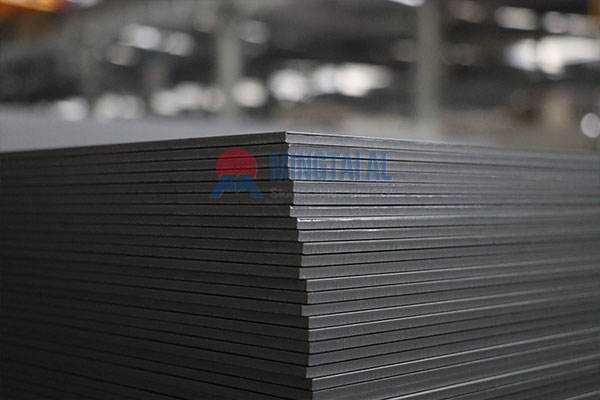
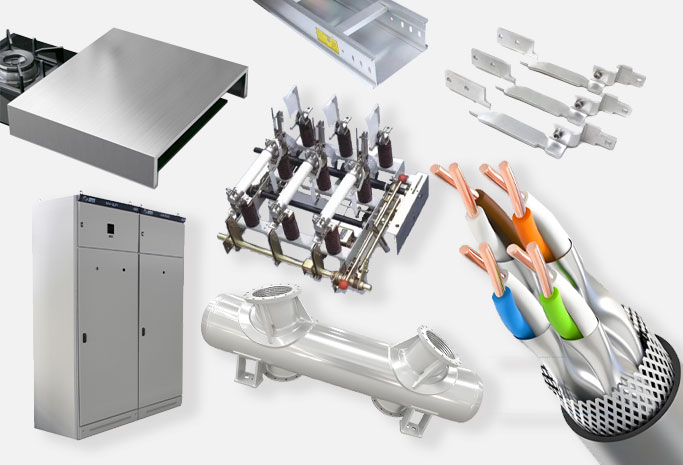
5052 is an aluminum-magnesium alloy. The H32 temper offers a useful balance between strength and formability. It is harder than 3003, yet easier to bend than 6061-T6, which makes it common for enclosures, brackets, marine parts, and general sheet metal work.
Successful 5052 h32 aluminum sheet bending depends on matching the material to the tooling and bend radius.
This article covers the material's bending behavior only. We do not provide surface treatment or further processing of aluminum coil; those steps are handled by the fabricator.
Bend Allowance: Formula and K-Factor
The core bend allowance formula is:
BA = A × (π/180) × (R + K × T)
Where A is the bend angle in degrees, R is the inside bend radius, K is the neutral-axis location factor, and T is the material thickness.
K is not a fixed number. It changes with the R/T ratio, tooling setup, grain direction, and material lot. Some shops estimate the inside radius with the “V/6 rule,” but for 5052 H32, the actual inside radius in air bending is not always a simple fraction of the die opening. A more reliable approach is to ask your material supplier for K-factor reference values for the thickness and temper, then confirm them with a trial bend.
How to Determine the Minimum Bend Radius
There is no single minimum bend radius that fits every job. Use these guidelines:
- As thickness increases, the required inside radius usually increases.
- A bend line perpendicular to the rolling direction can use a tighter radius.
- Bending with the grain is more likely to crack, so pay close attention during nesting.
- Burrs, sharp corners, or edge defects increase the risk of cracking.
In production, start with a conservative radius, then tighten it gradually until you find the balance between formability and crack-free results.
Springback Control: First-Article Checks Matter More Than Experience
5052 H32 springback is more noticeable than with mild steel. Compensation usually involves over-bending, adjusting the punch angle, or changing die clearance. Parts with multiple bends can accumulate error, so first-article inspection should measure both angle and flange length.
Follow this sequence:
1. Bend one piece to the target angle.
2. Measure the actual springback angle.
3. Adjust the punch angle or compensation amount.
4. Lock the parameters, then run the batch.
What to Share with Your Fabricator
To avoid repeated adjustments to the flat pattern and bending parameters, provide these details before quoting or ordering:
- Material thickness and temper, such as 5052 H32
- Target bend angle and inside radius
- Bend line direction relative to the rolling direction
- Whether multiple bends are required
- Allowed tolerance for springback
This information helps the fabricator select tooling and compensation faster.
How 5052 H32 Compares with 6061-T6 and 3003
- 5052 H32: Good balance of bendability, strength, and corrosion resistance; suitable for bent parts.
- 6061-T6: High strength, but it needs a larger bend radius and has a higher cracking risk; better for machined or structural parts.
- 3003: Easy to bend, but lower strength; suitable for decorative or light-duty parts.
For parts that require multiple bends, 5052 H32 is usually the safer choice.
FAQ
Q: Can 5052 H32 aluminum sheet be bent 90 degrees?
A: Yes, with a suitable minimum inside radius and grain direction, but confirm it with a trial bend.
Q: Is the K-factor a fixed value?
A: No, it changes with R/T, tooling, and material lot, so use measured values.
Q: How do I compensate for springback?
A: Use over-bending and verify the angle with a first-article check.
Q: Is 5052 H32 easier to bend than 6061-T6?
A: Yes, 6061-T6 usually needs a larger bend radius and carries a higher cracking risk.
Sourcing 5052 H32 Sheet for Bending
Henan Mingtai Aluminum supplies 5052 H32 aluminum sheet suitable for bending. Contact our team for selection and parameter support.