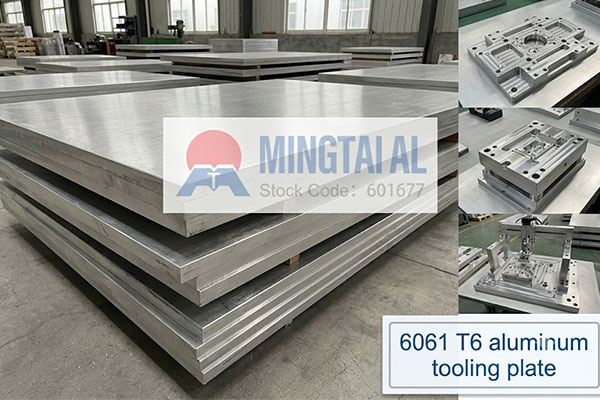
6061 T6 aluminum tooling plate
In a CNC workshop, choosing the right tooling plate directly affects efficiency, accuracy, and your bottom line. 6061 T6 aluminum tooling plate is widely recognized as the go‑to material for good reason: it strikes an optimal balance between strength, machinability, and cost.
This article breaks down its key advantages from three angles—material properties, processing benefits, and real‑world applications.
Solid Material Performance
Good strength, low weight
6061 T6 delivers a tensile strength above 310 MPa and yield strength over 276 MPa. That is enough for most mechanical parts and fixtures. At the same time, its density is only 2.70 g/cm³, less than one third that of steel. The machine table sees less load, and operators handle lighter pieces—real gains in daily work.
Flat surface, stable dimensions
Flatness of a tooling plate determines your reference accuracy. 6061 T6 (especially the T651 temper) goes through strict rolling and stretching to remove internal stress. Thickness tolerances are tight, and the plate stays straight. When you machine large parts or deep cavities, removing a lot of material does not cause warping. Your finished parts keep consistent dimensions.
Corrosion resistance for long service life
6061 is an Al‑Mg‑Si alloy. It resists rust in normal air and humid environments. Fixtures and tooling last longer without frequent replacement. This is especially useful for coastal workshops or projects exposed to moisture.
Easy and Cost‑Effective Machining
Smooth cutting, less tool wear
At T6 temper, the material has moderate hardness. It produces short, broken chips that do not stick to the cutter and are easy to clear. You can run higher cutting speeds and feed rates on CNC mills and lathes. Tool wear is much lower than with stainless steel or alloy steels. In batch production, one tool does more parts—fewer tool changes, less downtime, lower cost.
Excellent weldability
Many high‑strength aluminum alloys (like 7075) cannot be welded reliably. But 6061 welds very well with 4043 or 5356 filler rods using MIG or TIG. This means you can join several plates into a large fixture without being limited by a single sheet size. When modifications are needed later, you simply weld the changes instead of replacing the whole plate.
Low distortion during machining
Thanks to the stress‑relieved T651 temper, the material has very low internal stress. When you mill away 50% or more of the material, the workpiece stays flat. Compared to poorly stress‑relieved plates, the yield rate can be 10‑15% higher.
Wide Applications and Great Value
Common use cases
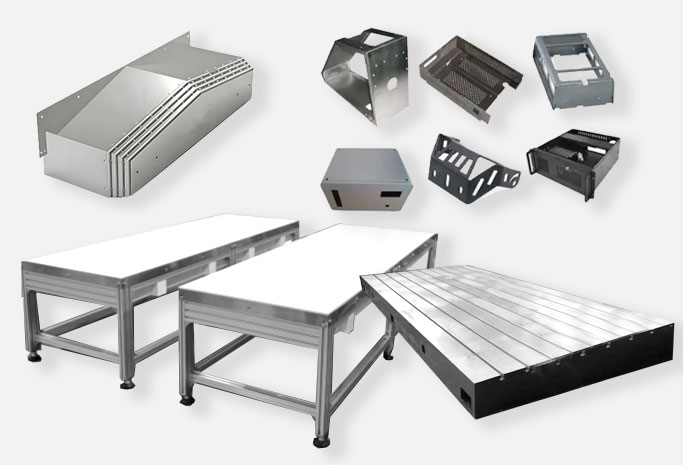
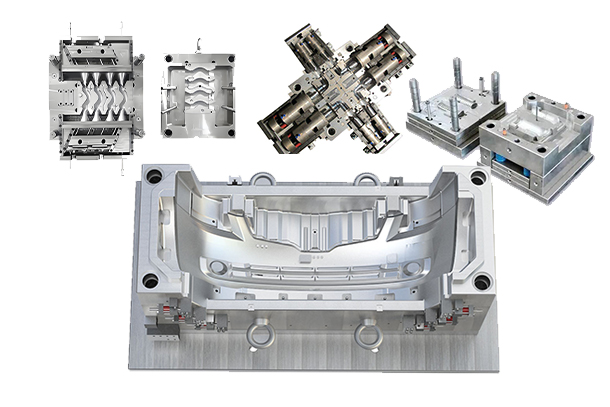
- Molds & tooling: fixture plates, inspection bases, CNC tables, templates
- Automation & robotics: machine frames, robot arm parts, mounting plates
- Precision instruments & medical devices: equipment housings, internal supports
- Aerospace & automotive: lightweight structural parts, prototypes, heat sinks
- Electronics & semiconductors: chip trays, test fixtures, heat spreader bases
How it compares to alternatives
|
Feature |
6061 T6 |
7075 T6 |
Cast aluminum plate (MIC6) |
|
Tensile strength |
310 MPa |
570 MPa |
~260 MPa |
|
Machinability |
Excellent |
Fair (high tool wear) |
Excellent |
|
Weldability |
Excellent |
Very poor |
Fair |
|
Material cost |
Low |
High |
Medium |
|
Typical use |
General tooling |
High‑stress aerospace |
Precision measurement bases |
Simple conclusion: unless your part must endure extreme loads, 6061 T6 gives you the best performance for the price.
Brand Recommendation
For consistent quality and reliable supply of 6061 T6 aluminum tooling plate, trust Mingtai Aluminum—contact us to discuss your specifications.
FAQ
Q1: What is the difference between 6061 T6 and 6061 T651?
A: T651 adds a stretching step to relieve internal stress, giving better dimensional stability for heavy cuts and high‑precision work.
Q2: Is 6061 T6 suitable for welding?
A: Yes, it welds very well with 4043 or 5356 filler rods using MIG or TIG.
Q3: How much faster can I machine 6061 T6 compared to steel?
A: Typically 2‑3 times higher cutting speed and feed rate, plus longer tool life.
Q4: How much does flatness affect machining results?
A: Flatness affects every downstream operation—poor flatness leads to non‑parallel faces, tilted holes, and assembly problems.
Q5: Can 6061 T6 be anodized?
A: Yes, anodizing increases surface hardness and corrosion resistance.
Q6: What thickness range is commonly available?
A: Usually 3mm to 150mm, with custom thickness up to 350mm; width and length can be cut to order.