Aluminum Sheet for ROPP Caps
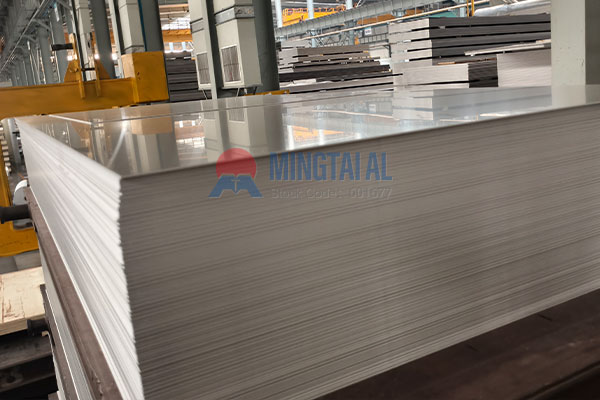
ROPP caps are widely used in wine, beverage, pharmaceutical, health product, and cosmetic packaging. They provide reliable tamper-evident sealing while also carrying branded printing. The selection of Aluminum Sheet for ROPP Caps is critical to producing high‑quality closures.
Manufacturing involves blanking, deep drawing, shell forming, knurling, and thread rolling. Among these, deep drawing and printing are the two core processes that determine cap quality. Yet they place different—and sometimes competing—demands on the aluminum material.
Deep Drawing – Testing Formability
Deep drawing is the process of forming a flat sheet into a three‑dimensional cap shape through stamping and stretching. For tall or specially shaped caps, extra‑deep drawing is often required.
A qualified aluminum sheet for deep drawing should offer:
- High ductility – no cracking or tearing during stretching.
- Low earing rate – “Earing” refers to the wavy edges that appear after drawing. High earing means extra trimming, more scrap, and higher costs. For premium caps, the earing rate must be kept very low.
- Fine grain structure – to prevent an “orange peel” surface after forming.
- Low anisotropy – consistent stretch performance in all directions.
When deep‑drawing performance falls short, the problems are immediate: cracks raise rejection rates, ears affect subsequent knurling and thread quality, and surface defects interfere with printing.
Printing – The Role of Surface Quality
ROPP cap printing typically includes multi‑color lithography on the top and multi‑color dry offset on the side wall. Logos, product information, and decorative patterns all depend on it.
The sheet surface is the “canvas” for printing. Its quality directly affects:
- Flatness – influences ink adhesion and pattern sharpness.
- Cleanliness – freedom from oil residue and oxides is essential for good print results.
- Coating adhesion – a good base material allows inks and coatings to bond firmly, without peeling or blurring.
There is a balance to strike: deep drawing requires a softer material (for easy stretching), while printing and final use demand sufficient rigidity (to hold shape and resist deformation).
How to Select the Right Aluminum Sheet for ROPP Caps?
3.1 Alloy Choice
8011 aluminum alloy is the mainstream choice for ROPP caps. With iron and silicon additions, it offers excellent deep‑drawing performance and good strength. It handles the complex deformations of cap manufacturing with ease. For standard wine and beverage closures, 8011 is a proven, reliable option.
3105 aluminum alloy serves high‑strength applications. As an Al‑Mn alloy, it provides higher mechanical strength than 8011 while retaining good formability. It suits larger caps or those that must withstand higher internal pressure, such as carbonated drink closures.
In short: choose 8011 for standard caps, and 3105 for large‑size or high‑pressure scenarios.
3.2 Temper Selection
H14 or H24 (half‑hard) are the recommended options. This temper delivers the ideal “plasticity” – enough to allow smooth forming, yet firm enough to give the finished cap adequate rigidity.
H14 and H24 offer similar properties. The main difference is that H24 is annealed, giving it a more uniform grain structure and more stable forming performance.
H16 (3/4 hard) is used when higher strength is required.
3.3 Thickness and Tolerances
The typical thickness range for ROPP cap aluminum is 0.15 mm to 0.30 mm.
However, thickness tolerance matters more than the nominal value. Inconsistent thickness leads to uneven feeding, unstable pressure, wrinkles, cracks, and higher rejection rates. Tight tolerances are the foundation for stable, high‑speed multi‑cavity stamping lines.
Other Properties Worth Noting
- Corrosion resistance – ensures caps do not rust or degrade during storage and transport.
- Barrier performance – aluminium’s natural advantages: light‑blocking, moisture‑proof, and high barrier properties protect the contents.
- Recyclability – aluminium ROPP caps are fully recyclable, supporting sustainability goals.
Focus on What Drives Quality
Choosing the right aluminum sheet for ROPP caps ultimately comes down to three factors: alloy (8011 vs. 3105), temper (H14/H24), and thickness precision. Together, they determine both forming success and print appearance.
Mingtai Al supplies high‑quality 8011 and 3105 aluminum sheet coils for ROPP cap manufacturers. With stable deep‑drawing performance and excellent surface quality, our products help your caps achieve both reliable forming and outstanding printing results.
FAQ
Q1: Which alloy is most commonly used for ROPP caps?
8011 is the most popular choice, offering a good balance between drawability and strength.
Q2: What is the difference between H14 and H24 temper?
Both are half‑hard; H24 is annealed, giving it a more uniform grain and more consistent forming behavior.
Q3: Why is thickness tolerance so important for ROPP cap production?
Tight tolerance ensures stable feeding and pressure, preventing wrinkles, cracks, and high scrap rates.
Q4: When should 3105 be chosen over 8011?
3105 is stronger and better suited for larger caps or carbonated beverage closures that require higher internal pressure resistance.