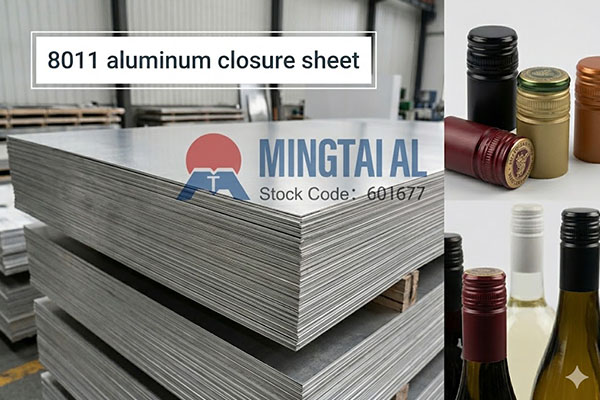
8011 aluminum closure sheet
Why Do Closure Makers Prefer 8011?
8011 is an Al-Fe-Si alloy, which means it contains small amounts of iron and silicon. These additions give it clear advantages over pure aluminium series like 1060. Compared to 1060, 8011 offers higher strength and better formability; compared to 3003, it shows lower earing rates, which means more uniform edges after deep drawing.
The key benefits can be summed up in three points:
- Excellent deep-drawability – it can be formed into caps over 7 cm in height without cracking, making it suitable for a wide range of closure designs.
- Low earing ratio – high-quality 8011 material keeps earing within 2%–3%, resulting in even edges and consistent sealing performance.
- Strong barrier properties – it effectively blocks oxygen, moisture, and light, helping to extend the shelf life of the contents.
In addition, this alloy is non-toxic and odourless, and it meets food‑grade and pharmaceutical‑grade safety standards, which is essential for packaging applications.
Key Technical Specifications to Check Before Buying
Thickness and Tolerance
Typical thickness ranges from 0.15 mm to 0.27 mm. A tolerance of ±0.005 mm is considered industry standard. Tighter tolerances mean more stable operation on high‑speed multi‑cavity stamping lines and lower scrap rates.
Temper Selection
Common tempers for closure stock are H14, H16, and H18.
- H14 is the most widely used temper. It offers tensile strength of 140–160 MPa and elongation ≥2%, making it suitable for most deep‑drawn closures.
- H16 provides higher strength and is used when greater rigidity is required.
- H18 is typically chosen for shallow caps, offering shorter production cycles and lower costs.
Earing Ratio
Earing is a critical measure of deep‑draw performance. A ratio of 3% or less is the mark of a good product. Lower earing directly translates to less scrap and higher material utilisation.
Surface Quality and Pinholes
The surface must be clean, flat, and free from roll marks, scratches, oil stains, or dark lines. Premium material is expected to show A‑grade wettability and minimal pinholes, because even tiny pinholes can compromise barrier performance and seal integrity.
Compliance Certifications
For food and pharmaceutical applications, the material must comply with FDA and EU food‑contact regulations. Suppliers should be able to provide ISO and SGS test reports upon request.
Where Is 8011 Closure Stock Used?
This versatile alloy serves a wide range of industries:
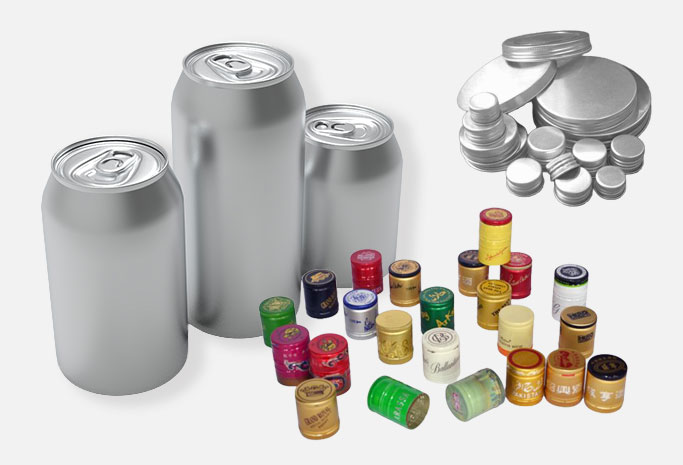
- Alcoholic beverages – tamper‑evident caps for baijiu, screw caps for wine. In China’s premium baijiu market, aluminium anti‑counterfeit closures now account for over 60% of the total.
- Non‑alcoholic drinks – carbonated beverage caps, juice caps, water bottle closures, and yoghurt lids.
- Pharmaceuticals – oral liquid bottle caps, infusion aluminium‑plastic caps, and antibiotic vial seals.
- Cosmetics – perfume caps and skincare product lids.
- Food – milk powder lids, honey jar caps, and sauce closures.
What to Ask When You Talk to a Supplier
How is the price determined?
The price is usually calculated as: base aluminium ingot price + conversion fee. The conversion fee depends on thickness, width, temper, and order volume. Since aluminium ingot prices fluctuate daily, quotes will vary accordingly.
What is the minimum order quantity (MOQ) and lead time?
MOQ typically ranges from 3 to 8 metric tonnes. Standard lead time is 7–35 days; for stock items, delivery can be as quick as 3 days. Customised specifications may take longer.
Can I get samples?
Most suppliers support sample requests. It is highly recommended to request samples and run a small trial before placing a bulk order, to confirm that the material works well with your production line.
How are packaging and shipping arranged?
For export, the material is usually packed on ISPM‑15‑compliant, fumigation‑free wooden pallets. Make sure the packaging meets the customs requirements of your destination country.
After the Goods Arrive – What Then?
Upon receiving the shipment, perform an incoming inspection to verify thickness, width, and surface quality against the contract. Store the coils in a dry, ventilated warehouse, away from moisture. Because minor variations can occur between batches, always run a small pilot batch before full‑scale production to fine‑tune stamping parameters such as pressure, speed, and lubrication.
FAQ
Q1: Which is better for closures – 8011 or 1060?
A: 8011 contains iron and silicon additions, giving it higher strength, better formability, and lower earing than pure 1060 – that is why it is the preferred choice for most closures.
Q2: What thickness range is commonly used?
A: 0.15–0.27 mm, with thickness tolerance usually held within ±0.005 mm.
Q3: How do I choose between H14, H16, and H18?
A: H14 is the go‑to temper for most deep‑drawn caps; H16 offers higher strength; H18 works well for shallow caps and offers faster production and lower cost.
Q4: Can this material be used for food and pharmaceutical packaging?
A: Yes – it meets FDA and EU food‑contact standards and is widely used for oral‑liquid caps, beverage closures, and similar applications.
Q5: How is the final price quoted?
A: The price equals the daily ingot market price plus a conversion fee; thinner gauges and more customised requirements usually mean a higher conversion fee.
When sourcing 8011 aluminum closure sheet, it pays to look beyond the price tag – focus on tolerance control, earing ratio, surface cleanliness, and supplier certifications. A reliable partner will offer consistent quality, flexible MOQ, and dependable delivery.
Henan Mingtai Al provides stable-quality 8011 closure stock with tight tolerances and responsive service. Feel free to reach out for more details or to request a sample trial.