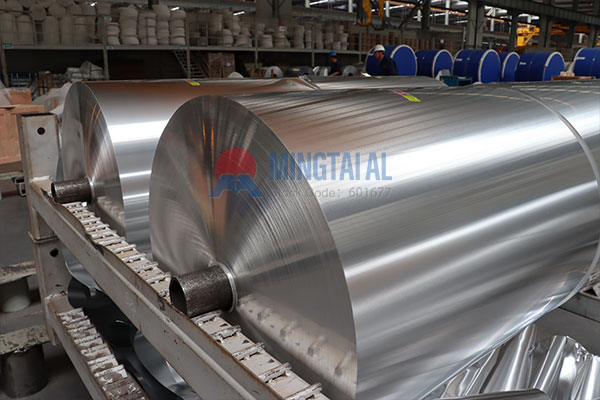
1060 h18 aluminum foil
Why Tensile Strength Matters
Tensile strength is one of the core metrics for evaluating 1060 H18 aluminum foil. It directly affects performance during downstream processing—insufficient strength may cause breakage during slitting, coating, or laminating, while excessive strength can reduce elongation and increase forming difficulty. For H18 (full‑hard) foil, tensile strength is a key indicator of its hard‑temper characteristics.
*This article focuses on the material’s mechanical properties and does not cover surface treatment or secondary processing.*
What Does “H18” Mean?
Before discussing tensile strength, it helps to understand what “H18” signifies.
H18 means full‑hard—the material has been sufficiently cold‑worked without subsequent annealing. This results in:
- Maximum strength for this alloy
- Good stiffness and shape retention
- Relatively low elongation
1060 is a 1‑series commercially pure aluminum with a minimum content of 99.60%. Since it cannot be strengthened by heat treatment, the strength in H18 temper comes entirely from cold rolling. Greater cold reduction leads to higher dislocation density and thus higher tensile strength.
Thickness Makes a Difference
It is worth noting that even within the same 1060 H18 aluminum foil grade, tensile strength can vary noticeably across different thicknesses. Thinner foils undergo greater deformation during cold rolling, so they typically exhibit higher strength. Heavier gauges, with less cold work, show comparatively lower values.
This difference is a normal result of the manufacturing process, not a quality issue. When evaluating material, thickness must be taken into account—do not apply the same strength standard for a heavy gauge to a thin gauge, or vice versa.
Common Application Scenarios
Different industries have different requirements for tensile strength in 1060 H18 foil. Here are a few typical use cases:
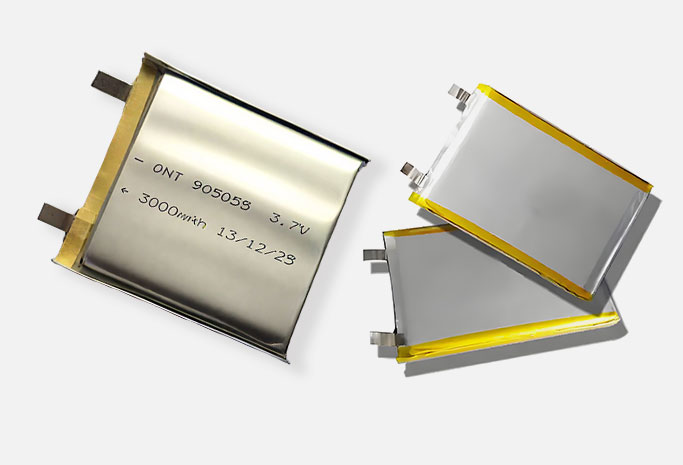
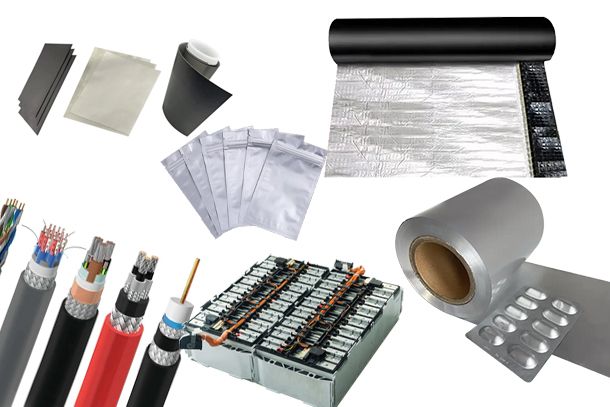
- Lithium‑ion battery current collectors – This application demands relatively high strength to prevent breakage during coating, calendering, slitting, and assembly tension.
- Cable shielding and electronic shielding – The high strength and good stiffness of H18 temper make it a common choice for shielding applications, where rigidity and dimensional stability are important.
- Composite packaging and industrial laminating – 1060 foil is easily laminated with paper, plastic, or other foils for use in composite packaging, cables, and electromagnetic shielding. Strength requirements are moderate.
- Decorative foil and honeycomb core – A certain level of strength is needed to maintain structural form, along with surface quality requirements.
Strength Is Not the Only Thing
While tensile strength is important, it is not the only criterion for selection. Several other factors deserve equal attention:
- Elongation – Higher strength usually comes with lower elongation. If forming or bending is involved, a balance between strength and ductility is necessary.
- Purity – With ≥99.60% aluminum content, the high‑purity matrix ensures good electrical conductivity, thermal conductivity, and corrosion resistance.
- Surface quality – A flat, clean surface free from pinholes or oil stains directly affects final performance.
It is advisable to find the right balance among strength, ductility, and purity based on specific processing methods and application needs.
Checklist for Technical Evaluation
For practical material selection, consider the following steps:
1. Determine the required thickness – Different thickness ranges correspond to different typical strength levels. Start with the target gauge, then review the corresponding performance data.
2. Understand industry standards – For applications like batteries, confirm whether the material meets the common strength requirements for that sector.
3. Request mill test certificates – Always ask the supplier for the Mill Test Certificate (MTC) for the specific batch, and verify the actual test values.
4. Evaluate forming methods – If the process involves stamping, bending, or other forming operations, pay attention to elongation to avoid cracking due to excessive strength.
Putting Strength into Context
The tensile strength of 1060 H18 aluminum foil varies with thickness and application, so understanding this metric is not about memorizing a single number. The key is to build a proper evaluation framework—one that accounts for your thickness requirements, processing techniques, and end‑use scenario. The combination of high purity (≥99.60%) and full‑hard H18 temper gives 1060 foil a distinct advantage where both strength and purity are needed.
FAQ
Q: What is the typical tensile strength range for 1060 H18 aluminum foil?
A: The range varies with thickness—ultra‑thin gauges generally show higher values than heavier gauges, and different application standards may specify different requirements.
Q: Can 1060 H18 foil be used for forming‑intensive applications?
A: H18 temper has high strength but limited elongation, making it less suitable for deep drawing or complex forming—consider O temper for such applications.
*Henan Mingtai Al offers a wide range of high‑purity aluminum foil with stable mechanical properties and full mill test certification for each batch. Contact our team for application‑specific recommendations.*