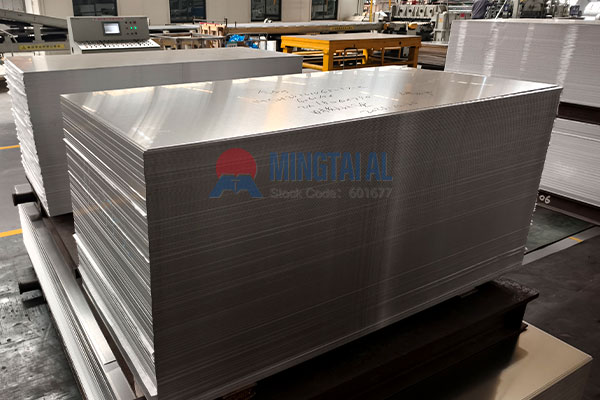
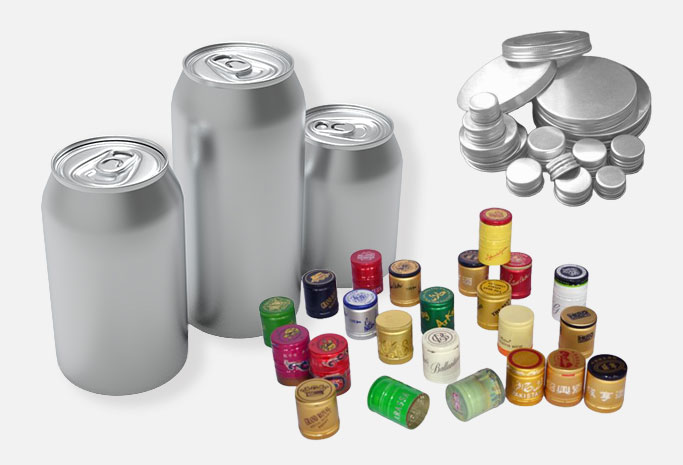
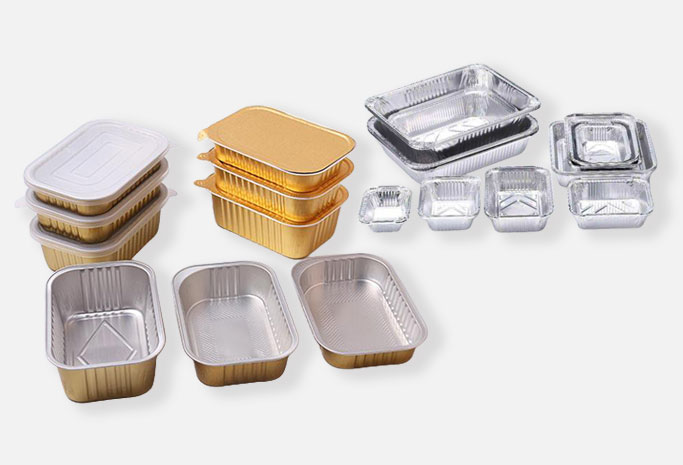
aluminum sheet for kitchenware
The deep drawing process is central to kitchenware manufacturing – pressing flat blanks into pots, pans, containers, and other shapes. The performance of aluminum sheet for kitchenware directly affects forming success, yield rate, and final surface quality. For those responsible for material selection and process design, understanding what drives deep drawability is far more valuable than simply comparing prices.
This article focuses on the base material properties themselves – no surface treatments or secondary processing are discussed.
Alloy choice: balancing formability and strength
Different alloys behave very differently under deep drawing. Picking the wrong one can’t be fixed by adjusting the press later. Here’s a quick comparison of the most common grades:
- 1100‑O – commercially pure aluminum, O‑temper gives excellent ductility. The go‑to choice for deep‑drawn lunch boxes, round containers, and general cookware.
- 3003‑O – roughly 20% stronger than 1100 while retaining good formability. Well suited for pressure cookers, stockpots, and large‑capacity deep‑drawn parts.
- 3004‑O – offers an even better balance between strength and formability, ideal for complex structural components or heavier‑duty kitchenware.
- 1060‑O – higher purity, maximum ductility but lower strength; often used for shallow drawn decorative items.
The golden rule – for any significant deep drawing, always use O‑temper (fully annealed) . H‑temper (work‑hardened) lacks the necessary plasticity and will crack reliably.
Beyond elongation – the real indicators of deep drawability
Most material certificates list only tensile strength and elongation. Those alone are not enough to predict deep drawing performance. The three metrics that really matter are:
1. Elongation (A) – the basic measure of overall ductility. Higher values allow more deformation before fracture.
2. n‑value (strain hardening exponent) – indicates how well the material resists local thinning during stretching. A higher n‑value means lower risk of tearing.
3. r‑value (plastic strain ratio) – measures the resistance to thickness reduction. Higher r‑values give more uniform wall thickness and fewer splits.
Always ask your supplier for a full mechanical report that includes n‑ and r‑values. Relying solely on grade or tensile strength will not give you a reliable picture of forming yield.
Common defects – cracks, wrinkles, and rough surfaces
Three typical problems on the shop floor – and their root causes usually point back to the material:
- Cracking – occurs at deep corners or stretched areas. Common triggers: insufficient ductility, using H‑temper by mistake, too‑sharp die radii, or excessive blankholder pressure. During drawing, wall thickness keeps thinning; if the plastic reserve is inadequate, fracture is inevitable.
- Wrinkling – appears on flanges or sidewalls. The main cause is insufficient blankholder force to suppress compressive instability. Thinner gauges make this worse.
- Rough or orange‑peel surfaces – often linked to internal metallurgical issues like coarse grains or segregation. These are material quality problems, not processing errors.
A crucial takeaway: many forming defects cannot be solved by tweaking the press. They stem from insufficient deep drawing performance in the material itself. Choosing the right grade upfront prevents most headaches down the line.
Process factors that make or break the result
Even with the right alloy, process details matter. Keep these in mind:
- Temper is non‑negotiable – O‑temper is the only correct choice for deep drawing. H‑temper belongs only in shallow or non‑forming operations.
- Draw depth and tooling must match – achievable depth depends on sheet thickness, die radius, blankholder pressure, and lubrication. Too small a radius causes tearing; too large invites wrinkling. Fine‑tuning is case‑specific.
- Directional properties cause earing – rolling creates differences in plasticity along different directions, leading to wavy edges (earing) after drawing. High earing not only affects appearance but also increases trimming scrap. Optimized rolling practices can significantly reduce earing and improve material utilization.
Evaluating suppliers – three levels to check
When sourcing material for deep‑drawn kitchenware, assess suppliers on these three dimensions:
1. Alloy and temper suitability – confirm that the grade and O‑temper meet your forming and strength needs.
2. Key properties and batch‑to‑batch consistency – demand full reports including n‑ and r‑values, and check how much variation exists between lots. Inconsistent batches may pass trials but cause sudden yield drops in mass production.
3. Supply reliability – a supplier who delivers stable quality over the long term is worth more than a one‑time low price.
In practice
Choosing aluminum for deep drawing is not just “buying sheets.” It is a combined decision based on alloy characteristics, mechanical indicators, process compatibility, and batch stability. Getting these factors right reduces trial‑and‑error costs and boosts production efficiency.
Mingtai Aluminum has long focused on the development and supply of deep‑drawing grades, covering 1xxx, 3xxx, 5xxx, and 8xxx series. We provide stable, high‑performance aluminum sheet for kitchenware that helps manufacturers achieve consistent forming results.
FAQ
Q: Which grade is best for deep‑drawn cookware?
A: For pure aluminum, 1100‑O is the first choice; for added strength, use 3003‑O; for complex shapes, consider 3004‑O.
Q: What is the most common reason for cracking during drawing?
A: Using H‑temper material – switch to O‑temper.
Q: What’s the difference between O‑temper and H‑temper?
A: O‑temper is soft and highly formable; H‑temper is hard and lacks ductility for deep drawing.
Q: What is “earing” and why does it matter?
A: Earing is the wavy edge formed after drawing – it affects appearance and increases trimming waste.
Q: Which indicators should I focus on when purchasing?
A: Besides elongation, pay close attention to n‑value (tear resistance) and r‑value (thinning resistance), plus batch‑to‑batch consistency.