Aluminum Foil for Food Container
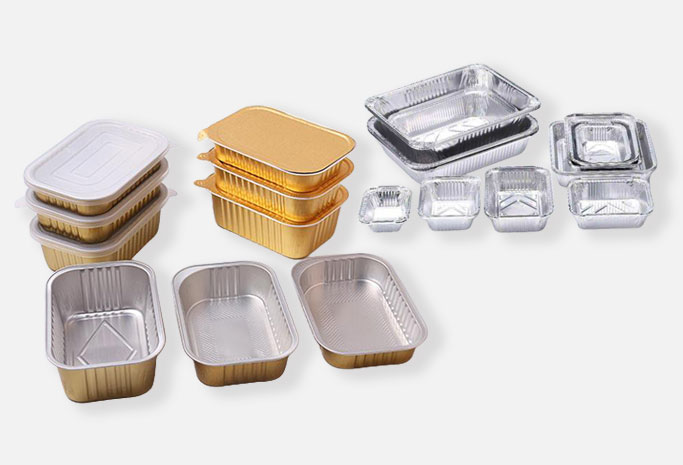
The market for aluminum foil containers continues to expand, driven by food delivery, airline meals, bakery retail, and prepared foods. Among the many material choices, one type stands out for production efficiency and end‑use performance: lubricated aluminum foil for food container.
What Exactly Is Lubricated Container Foil?
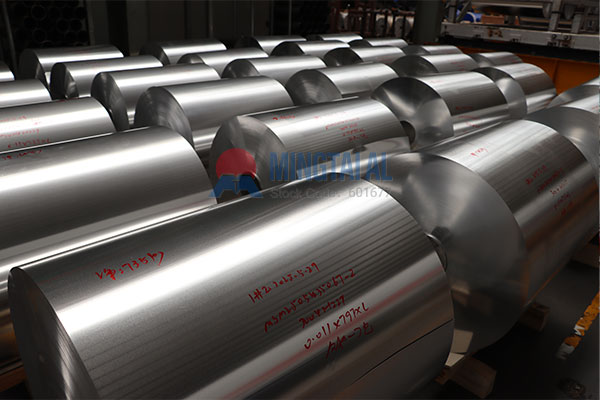
This is aluminum foil base stock that receives a food‑grade lubricant during the rolling process – not a post‑production coating or a secondary treatment. The lubricant becomes an integral surface property of the foil itself.
Why does that matter? It delivers three tangible benefits:
- Lower forming friction – the foil flows more smoothly through forming dies, reducing tears and surface defects.
- Better food release – baked goods and other products come out of the container more cleanly, which is especially valuable for bakery items.
- Higher line efficiency – the foil runs reliably on high‑speed automated lines, with fewer stoppages and less scrap.
In short, lubricated foil isn’t just an extra layer; it makes the entire container‑making process run smoother – from stamping to the final meal.
Choosing the Right Alloy
Container foils typically use 3xxx series (3003, 3004) or 8xxx series (8011, 8006, 8079) alloys. The “best” alloy depends entirely on your forming process and the final container’s intended use.
|
Alloy |
Key Characteristics |
Best Suited For |
|
8011 |
Cost‑effective, stable forming behavior |
High‑volume standard disposable containers |
|
3003 |
Good formability, high elongation |
Complex shapes, regular meal trays |
|
3004 |
High strength, excellent deep‑drawing performance |
Deep‑drawn containers, heavy‑duty industrial trays |
Determining the Right Thickness
Most container foils fall in the 0.03 mm – 0.20 mm range, with the majority of food containers using 40–60 microns (0.04–0.06 mm).
However, thickness alone does not guarantee performance. The same gauge can behave very differently depending on the alloy and temper. A practical approach: instead of focusing only on the number, ask your supplier:
- What yield rate can we expect with this alloy and thickness on our specific forming line?
- How does the finished container resist deformation when filled with hot or heavy food?
Food Safety & Regulatory Compliance
Meeting food‑contact regulations is non‑negotiable. Requirements vary by destination:
- United States – complies with FDA 21 CFR regulations, using the TOR (Threshold of Regulation) approach.
- European Union – follows Regulation (EC) No 1935/2004, with a specific migration limit for aluminium at 5 mg/kg of food.
Always request from your supplier:
- Material composition reports (e.g., from SGS)
- Official food‑contact compliance declarations
- Certificates tailored to your target market
Evaluating a Supplier Beyond Price
Price is important, but reliability matters just as much. Look for these four indicators:
- Consistent quality – tight thickness tolerances, low pinhole counts, stable surface finish from batch to batch.
- Production capacity & delivery – can they handle your order volumes and meet shipping deadlines?
- Technical support – do they offer alloy selection and thickness matching advice based on your equipment?
- Export‑ready packaging – are they experienced in moisture‑proof and damage‑preventive packaging for ocean freight?
A dependable supplier isn’t just selling foil; they are helping you solve the material challenge so you can produce better containers.
Ultimately, selecting the right aluminum foil for food container involves balancing alloy, thickness, regulatory compliance, and supplier capability. Getting these factors right directly impacts your production cost, product quality, and customer satisfaction.
Henan Mingtai Aluminium supplies food‑grade container foil base material in 3003, 3004, and 8011 alloys, with custom thickness and width options. All products meet FDA and EU food‑contact standards.*
FAQ
Q1: What is the difference between lubricated and regular container foil?
Lubricated foil has a food‑grade lubricant that reduces friction during forming and improves food release, making it ideal for high‑speed production.
Q2: Which alloys are commonly used for container foil?
The most common are 3xxx (3003, 3004) and 8xxx (8011, 8006) series, chosen based on container depth, shape, and forming requirements.
Q3: Can aluminium foil containers be recycled?
Yes, aluminium is 100% recyclable with no loss of quality, and recycling requires only a fraction of the energy used for primary production.
Q4: What certifications should I check for container foil?
Focus on FDA (USA) and EU 1935/2004 (Europe) food‑contact compliance, plus any specific local regulations for your destination market.