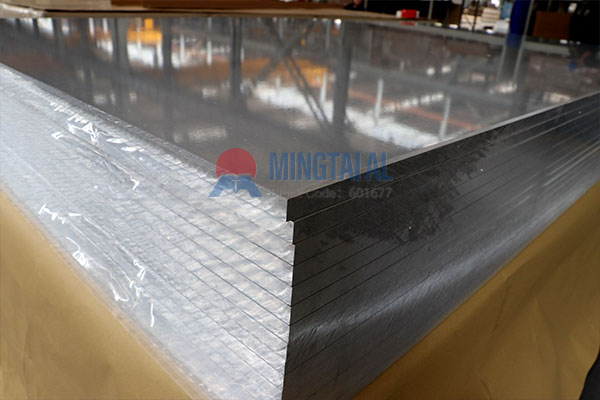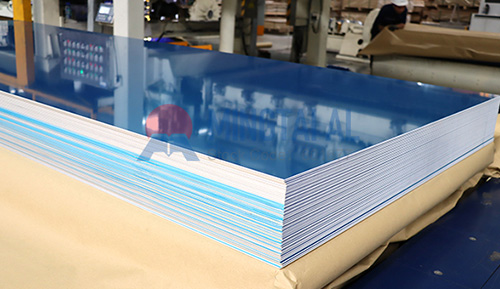
aluminum sheet for solar panel frame
Aluminum – The Industry Standard Material for Solar Frames
Most photovoltaic modules worldwide use aluminum alloy for their frames. The reasons are straightforward:
- Density is only about one-third that of steel, yet strength remains sufficient
- Lighter frames mean lower shipping costs and easier handling during installation
- Thermal expansion closely matches that of photovoltaic glass, allowing frame and glass to expand and contract together without building up internal stress
Choosing the right aluminum sheet for solar panel frame applications directly affects how well the frame holds up under wind and snow loads. Getting this choice right is the first step toward a reliable project.
Five Mechanical Performance Indicators You Need to Know
Before selecting a material, take a moment to understand what each indicator actually means:
Tensile Strength – The maximum stress the material can withstand before breaking. This number tells you whether the frame could fracture under extreme wind pressure.
Yield Strength – The stress level at which the material begins to deform permanently. After a storm passes or snow melts, whether the frame returns to its original shape depends on this value.
Elongation – A measure of plasticity. Smooth bending, punching, and other forming processes rely on adequate elongation.
Hardness – Resistance to surface indentation. This affects scratch resistance during installation and long-term durability in the field.
Elastic Modulus – Approximately 69 GPa for aluminum. Under the same load, aluminum alloy deflects more than steel, so section design must compensate for this characteristic.
6061, 6063, or 6005 – Which Alloy Fits Your Project?
Three aluminum alloys dominate the solar frame market: 6063, 6061, and 6005. Each has a distinct role.
6063-T5 – The go-to alloy for photovoltaic frames
Tensile strength around 150 MPa, yield strength around 110 MPa, elongation around 8%. Excellent extrudability and surface finish make it ideal for high-volume production. For standard rooftop distributed PV projects, 6063-T5 offers a cost-effective solution.
6063-T6 – Upgraded strength
Tensile strength around 205 MPa, yield strength around 170 MPa. The T6 temper delivers a clear step up from T5, making it suitable for high-wind regions or applications with stricter load requirements.
6061-T6 – When high strength matters most
Tensile strength around 290 MPa, yield strength around 240 MPa. Significantly stronger than the 6063 series, this alloy is preferred for coastal environments with high humidity, high-power modules, and projects in extreme climates.
6005-T5 – A strong choice for structural components
Tensile strength not less than 260 MPa, yield strength not less than 240 MPa. Often used in mounting structures, it balances high strength with good corrosion resistance.
> Quick selection reference: For cost efficiency and extrusion speed, choose 6063-T5. For higher strength margins, go with 6063-T6 or 6061-T6. For coastal or demanding environments, prioritize 6061-T6.
Balancing Thickness and Strength
Common aluminum sheet thickness for solar frames ranges from 1.5 mm to 3.0 mm, with some projects going up to 4.0 mm.
More thickness is not always better
Increasing thickness boosts load capacity, but it also raises material costs and adds weight. The right approach is to select the most economical thickness that still meets the structural calculations.
Stiffness depends on more than thickness
Bending stiffness is influenced not only by thickness but also by section geometry. Optimized designs—such as multi-cavity sections—can improve stiffness without adding material.
Thickness tolerance: a frequently overlooked variable
Two sheets both labeled 2.0 mm may have noticeably different actual thicknesses depending on the supplier. This directly affects the final mechanical performance of the frame. Verifying the tolerance range during procurement is essential to ensuring that the design performs as expected.
Three Checks Before You Order
1. Request full mill test reports
Ask the supplier for chemical composition certificates and mechanical property test reports. Confirm that the alloy grade (6061, 6063, etc.) and temper (T5, T6, etc.) match your specifications exactly.
2. Verify thickness tolerance
Deviations in thickness directly affect whether the frame meets the required mechanical standards. The tolerance range should align with the project's design requirements.
3. Inspect grain structure uniformity
A fine, uniform grain structure contributes to better fatigue strength and corrosion resistance. The sheet should be flat, free of waves and scratches, ensuring close contact with the glass to avoid stress concentration.
> This article focuses on mechanical performance selection for aluminum sheet for solar panel frame applications and does not cover surface treatment or secondary processing. Henan Mingtai Aluminum supplies PV-grade coils and sheets in 6061, 6063, and other alloys with customizable thicknesses, supported by over 20 years of processing expertise and an annual production capacity of 1.5 million tons.
FAQ
Q: Should I choose 6061 or 6063 for solar frames?
A: Choose 6061 for high-wind, coastal, or high-power projects; choose 6063 for standard rooftop installations where cost and corrosion resistance matter more.
Q: How much difference does the T5 vs. T6 temper make?
A: T6 is roughly 20%–30% stronger than T5—6063-T6 offers about 205 MPa tensile strength versus around 150 MPa for T5.
Q: What thickness is sufficient for solar frame applications?
A: Most standard projects use 1.5–3.0 mm; extreme conditions or oversized modules may call for up to 4.0 mm.
Q: How can I verify the mechanical properties of the sheet?
A: Request third-party test reports and check tensile strength, yield strength, elongation, and hardness.
Q: What is the most common oversight when purchasing aluminum sheet?
A: Thickness tolerance and grain uniformity are often neglected, yet both directly impact the frame's final performance and long-term fatigue life.