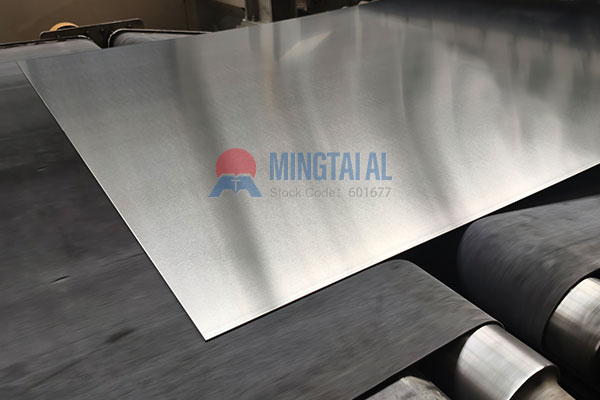
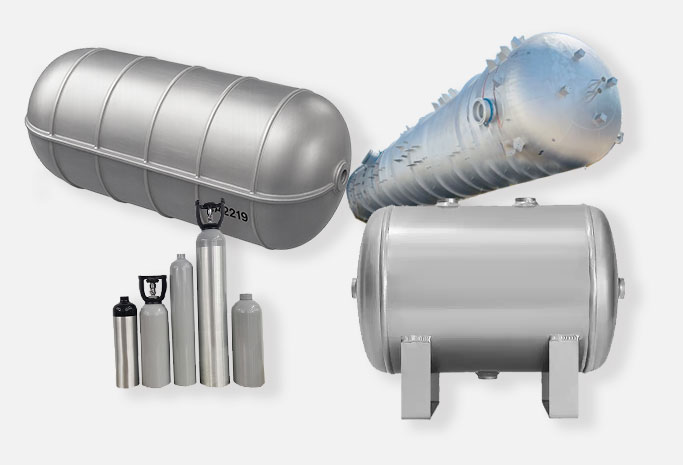
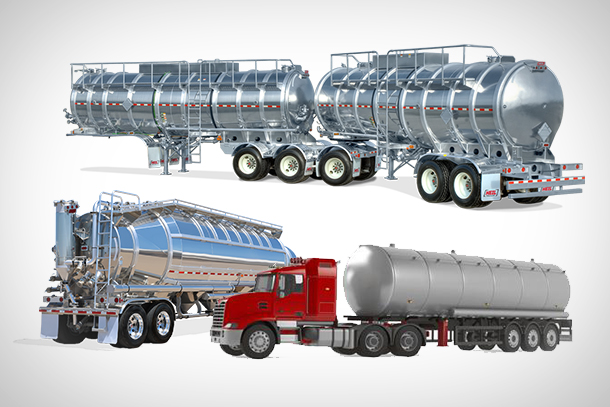
aluminum plate for cryogenic vessel
A Critical Fact
For cryogenic vessels such as LNG tanks and liquid nitrogen containers, the impact toughness of the aluminum plate for cryogenic vessel is the decisive safety factor. Operating temperatures can drop to –162°C or even –196°C. At these extremes, a material that loses its ability to absorb impact energy can turn into a brittle hazard—with potentially catastrophic consequences.
Why Aluminum Is the Natural Choice
Most metals undergo a ductile-to-brittle transition as temperature falls—they suddenly become glass-like and fracture easily. History has painful examples: the Liberty ships of World War II that cracked apart in cold seas.
Aluminum behaves completely differently.
Its face‑centered cubic crystal structure has no ductile‑to‑brittle transition. As temperature drops, both strength and impact toughness of aluminum alloys remain stable or even increase.
Charpy V‑notch tests clearly show:
- Carbon steel loses impact energy rapidly below freezing.
- 5083 aluminum alloy at –196°C often delivers higher impact values than at room temperature.
This is the fundamental reason why aluminum is the preferred material for cryogenic service.
How Is It Measured? — Tests and Standards
The industry standard is the Charpy V‑notch impact test. The procedure is straightforward:
1. Prepare a standard specimen (10mm × 10mm × 55mm with a V‑notch).
2. Soak it at the target temperature (e.g., room temperature, –78°C, –196°C).
3. Strike it with a pendulum and record the absorbed energy (in Joules).
Two key indicators determine pass/fail:
- Impact absorbed energy (J) – higher means better toughness.
- Lateral expansion (mm) – a supplementary check for ductility.
Relevant international standards to reference:
- ISO 21028‑1 – Toughness requirements for metallic materials below –80°C
- ASTM B209 – Standard specification for aluminum plate and sheet
- ASME Sec. VIII Div.1 – Pressure vessel construction
- EN 14620 – European standard for cryogenic storage tanks
For LNG tank applications, the 5083 plate must meet specified impact energy values at –196°C for the base metal, with separate requirements for weld and heat‑affected zones.
Selecting the Right Alloy — by Application
|
Application Area |
Recommended Alloy |
Recommended Temper |
Toughness Characteristic |
|
Inner tank walls, floor, roof (primary load‑bearing) |
5083 |
H116 / H321 |
Excellent, no brittle transition at –196°C |
|
Tank components requiring extensive forming and bending |
5083 |
O (fully annealed) |
Best formability, stable toughness |
|
Roof trusses, external support structures |
6061 |
T6 |
Good strength at low temperature, moderate toughness |
|
Baffle plates, internal supports |
5052 or 5454 |
H32 / H34 |
Good weldability and corrosion resistance |
> In short: 5083‑H116/H321 for primary load‑bearing parts, 5083‑O for forming‑intensive applications, and 6061‑T6 for non‑load‑bearing external members.
Key Factors That Affect Low‑Temperature Impact Toughness
Even with the same 5083 grade, processing quality makes a real difference. Pay attention to these three aspects:
① Alloy purity and cleanliness
- Magnesium content must be precisely controlled (4.0%–4.9% for 5083).
- Excess iron or silicon impurities can significantly reduce low‑temperature impact energy.
- Internal porosity and inclusions act as crack initiation sites.
② Processing state and heat treatment
- Cold working may lower impact absorbed energy within certain temperature ranges.
- Stabilization annealing (around 300–320°C) helps relieve residual stress and preserve toughness.
③ Weld heat‑affected zone (HAZ)
- Local heating during welding can precipitate β‑phase, reducing toughness in the HAZ.
- Always use matching filler wire (e.g., ER5183 for 5083).
- Impact testing of the weld zone must be performed separately—never substitute base metal data.
Three Practical Steps for Qualification
When evaluating a material supply, these actions will help ensure reliable low‑temperature performance:
- Step 1 – Request the –196°C impact test report
The material test certificate (MTC) must include this data. It is the primary evidence of cryogenic safety.
- Step 2 – Verify standard compliance and certifications
Check that the material meets ASTM B209 or EN 485, and that the design conforms to ASME, EN 14620, or other applicable codes. For marine projects, look for ABS, DNV, or LR type approval.
- Step 3 – Review internal quality indicators
Assess pinhole rating and ultrasonic inspection results—they reflect internal soundness and correlate with impact toughness stability.
> Plates are supplied in the mill‑finished condition, directly as rolled. You can choose the alloy, temper, and dimensions that fit your project requirements—no additional surface treatment or secondary processing is involved.
Built for the Extremes
Low‑temperature impact toughness is the lifeline of any cryogenic vessel. Selecting an aluminum plate for cryogenic vessel with rigorous process control and independent third‑party verification means building safety into the foundation. Henan Mingtai Aluminum’s 5083 series plates deliver consistent low‑temperature impact performance, providing reliable material support for LNG and cryogenic storage projects worldwide.
FAQ
Q: Why doesn't aluminum become brittle at low temperatures?
A: Its face‑centered cubic structure has no ductile‑to‑brittle transition, so it remains ductile even at –196°C.
Q: What impact energy is typically required for 5083 at –196°C?
A: Requirements vary by project, but the industry often expects 15 J or higher, with quality products reaching 25 J or more.
Q: Which test report is the most important to check during procurement?
A: The –196°C Charpy V‑notch impact test report—it is the hard evidence of low‑temperature safety.
Q: What is the difference between 5083‑O and 5083‑H116?
A: O‑temper is fully annealed for maximum formability; H116 is cold‑worked and stabilized for higher strength in load‑bearing structures.
Q: Does welding affect the low‑temperature impact toughness?
A: Yes, the weld zone and HAZ usually show lower toughness than the base metal, so use matching filler wire and perform separate impact tests on welds.