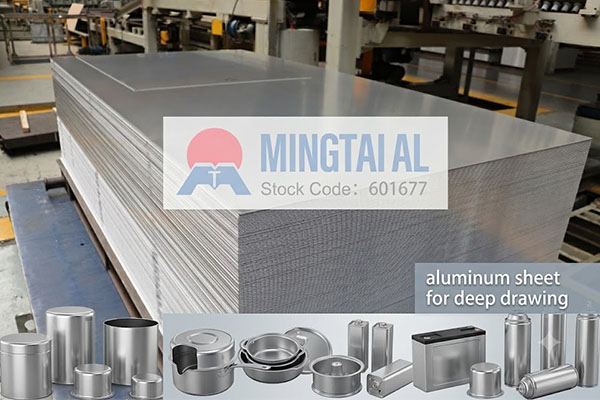
aluminum sheet for deep drawing
When selecting aluminum sheet for deep drawing, many buyers focus only on price or pick an alloy arbitrarily, leading to cracking, wrinkling, and dimensional deviations during forming—costly rework that could have been avoided. This article cuts through the noise and gives you a practical, engineering‑based approach to choosing the right material, understanding the critical quality metrics, and steering clear of the most common pitfalls.
Three Core Alloy Series – 1xxx, 3xxx, and 5xxx
Deep‑drawing applications typically use alloys from the 1xxx, 3xxx, or 5xxx series. Each offers a distinct balance of formability, strength, and corrosion resistance.
1xxx Series (1050, 1060, 1100) – Commercially pure aluminium (≥99% Al). In the O‑temper (fully annealed) condition, they deliver excellent elongation and can withstand large deformation without cracking. Surface quality is good and cost is low.
- Best for: Shallow to medium‑depth draws where strength requirements are modest – lamp shades, small kitchen utensils, decorative parts, and general signage.
- Watch out: Not suitable for very deep draws or load‑bearing components.
For example, 1060 sheet (≥99.6% Al) offers high plasticity and low yield strength, ensuring uniform deformation during drawing.
3xxx Series (3003, 3004, 3104, 3005) – Manganese is the main alloying element, boosting strength over 1xxx while retaining good ductility. They also show better corrosion resistance and stable drawing behaviour, with low earing rates and tight dimensional precision.
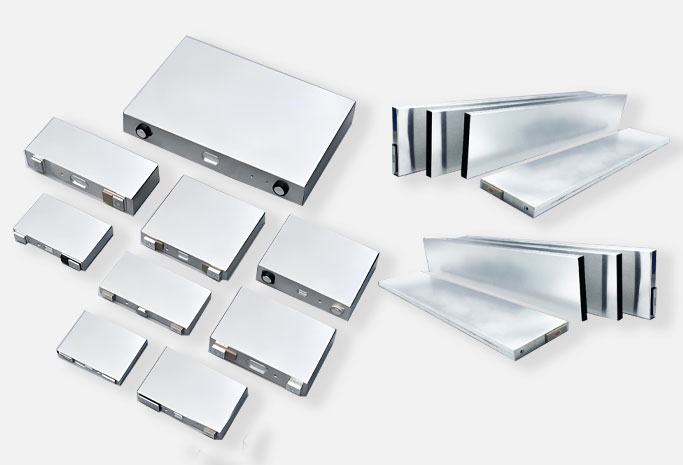
- Best for: Medium‑depth draws that require some strength – cookware, pressure‑vessel heads, automotive heat exchangers, compressor parts, and battery housings.
- Popular grades:
- 3003 – the versatile “workhorse”.
- 3104 – tensile strength around 270‑320 MPa, ideal for can ends, lamp caps, and fuel tanks.
- 3005 – earing rate can be controlled below 3%, making it suitable for multi‑stage draws like mobile‑phone battery shells and capacitor cases.
5xxx Series (5052, 5182) – Magnesium adds excellent resistance to marine and humid environments. 5052‑O (annealed) offers very high elongation, allowing deep draws and complex bends without cracking.
- Best for: Corrosion‑sensitive applications – automotive fuel tanks, interior panels, marine components, laptop covers, and smartphone mid‑frames.
- Note: Strength in O‑temper is higher than 1xxx and 3xxx (around 170‑190 MPa for 5052‑O), but still lower than hard‑temper grades.
Four Critical Factors to Check When Procuring
Temper
Always choose O‑temper (fully annealed) for deep drawing. It gives maximum ductility and is the safest, most stable option. Never substitute H‑temper unless your process is specifically designed for it.
Thickness Tolerance and Consistency
Precise thickness directly affects final part dimensions. In high‑speed automated lines, thickness variation often causes more trouble than the nominal value itself. Specify tight tolerances in your purchase contract.
Earing Rate
Earing refers to the wavy unevenness that appears at the cup rim after drawing. It is a core quality indicator: lower earing means higher material utilisation and lower trimming costs. Ask your supplier for actual earing‑rate test data.
Surface Quality
Surface condition influences subsequent painting, anodising, and final appearance. Look for:
- No black spots or corrosion marks
- No roll marks or scratches
- Uniform grain structure after annealing
Main Application Scenarios
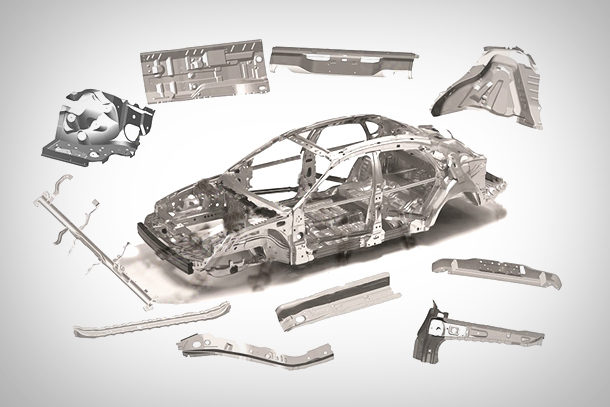
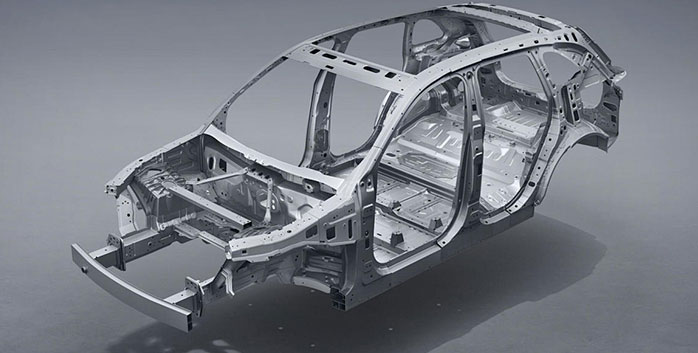
- Automotive – fuel tanks, heat exchangers, body panels, and engine hoods. Aluminium weighs about one‑third of steel, contributing to lighter vehicles and better fuel efficiency.
- Cookware and consumer goods – pressure cookers, frying pans, bakeware – leveraging aluminium’s excellent thermal conductivity and formability.
- Electronics enclosures – smartphone, tablet, and laptop shells, where surface quality and dimensional accuracy are paramount.
- Packaging and industrial containers – can ends, food cans, storage drums. 3104 sheet is particularly favoured for its drawability and thinning capability, enabling lightweight designs.
Four Frequent Quality Issues in Deep Drawing
- Cracking – typically occurs at the punch radius when local strain exceeds the material’s limit. Ensure sufficient elongation (e.g., O‑temper 1xxx or 3xxx) as the first line of defence.
- Wrinkling – caused by insufficient blank‑holder force or poor lubrication, leading to material buckling in the flange area. Adjust process parameters accordingly.
- Earing – arises from crystallographic texture and anisotropy developed during rolling. Choosing material with well‑controlled earing rate reduces post‑draw trimming waste.
- Springback – elastic recovery after tool release. Using O‑temper material significantly lowers springback risk.
Selecting the right material is not about “the most expensive” or “the cheapest” – it is about matching the alloy, temper, and quality parameters to your specific draw depth, strength needs, and service environment. 1xxx for shallow and cost‑sensitive jobs, 3xxx for a balanced performance, and 5xxx when corrosion resistance is critical. And always prioritise temper, tolerance, earing rate, and surface finish – these are the real game‑changers.
If you need detailed technical data or samples of aluminum sheet for deep drawing, feel free to reach out to the Henan Mingtai Al team – we have over 20 years of production experience in this field.-
FAQ
Q: Which aluminium alloy is best for deep drawing?
A: It depends: 1xxx for shallow draws and low cost, 3xxx for balanced strength/formability, and 5xxx for corrosion‑prone environments.
Q: What does O‑temper mean?
A: Fully annealed – maximum ductility and the safest choice for deep drawing.
Q: How can I prevent cracking during drawing?
A: Use an alloy with sufficient elongation (preferably O‑temper), optimise blank‑holder force, and ensure proper lubrication.
Q: What is “earing” and why does it matter?
A: Earing is the wave‑like rim after drawing caused by material anisotropy – lower earing means less material waste and lower trimming cost.
Q: What thickness range is available for deep‑drawing sheet?
A: Typically from 0.15 mm up to 200 mm, depending on alloy and supplier.