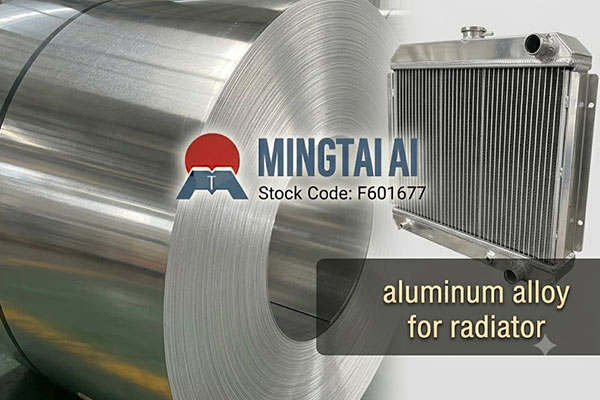
aluminum alloy for radiator
For buyers and business owners in the radiator industry, the most common situation when requesting quotes for aluminum sheets or coils is this: the supplier gives you an alloy grade, gives you a price, and that’s it. But whether that material actually suits your product, whether it will cause problems during processing, and whether batch quality stays consistent – that often comes down to luck.
This article cuts straight to the point. From a purchasing decision perspective, we’ll walk through the key questions about selecting aluminum for radiators.
First, Know What Type of Radiator You Are Making
Many buyers ask “which grade is best” right away, but the answer depends on your product type.
For air‑cooled radiators (extruded profiles) – these are the finned heatsink profiles commonly used in LED lighting, power supplies, frequency converters, and telecom base stations. The most common choice is 6063 aluminum alloy. It extrudes well, allows complex fin shapes, has a good surface finish, and offers strong cost‑performance. In the industry, 6063‑T5 is widely used because it balances thermal performance and workability.
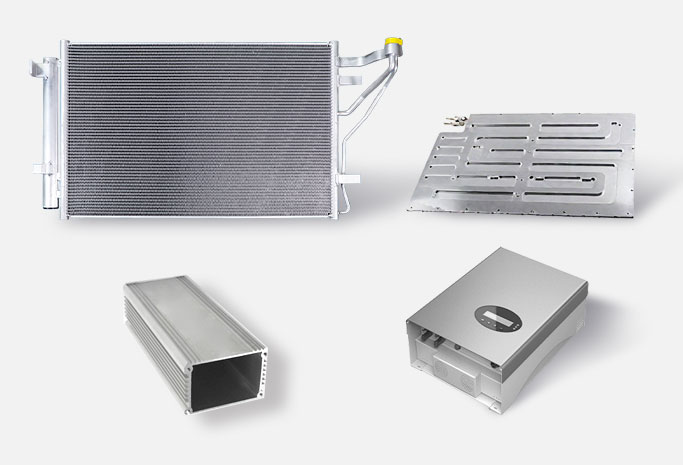
For liquid‑cooled cold plates (stamped and brazed) – used in automotive radiators, EV battery cooling, and heavy machinery. The preferred material is 3003 aluminum due to its excellent weldability, corrosion resistance, and suitability for flow‑channel structures. For brazed assemblies, 3003/4343 clad materials are also common.
For high‑power or special‑structure radiators – when extra strength is required, 6061 aluminum is considered for its better stability and hardness. Another option is 6101, which offers good thermal and electrical conductivity and finds use in high‑end electronic cooling.
A quick guideline: for air‑cooled, start with 6063; for liquid‑cooled, start with 3003. If you are unsure, tell your supplier your product type and processing method and ask for their recommendation.
Three Practical Details That Matter More Than the Grade
Once the alloy is decided, these details often have a bigger impact on your actual experience.
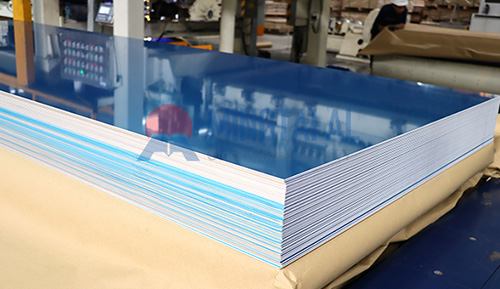
- Thickness and dimensional tolerances. When the aluminum arrives, you will stamp, cut, or bend it. If the thickness varies or the sheet is not flat, scrap rates increase. Asking “what is your thickness tolerance” is more valuable than just negotiating price.
- Temper (hardness). The same grade with different tempers behaves completely differently. If you need bending, don’t buy a hard temper; if you need strength, don’t buy a soft one. Tell your supplier your fabrication process – they will recommend the right temper.
- Lead time and supply stability. This point is often overlooked. Radiator orders tend to be seasonal. If material runs out, your production line stops. Choosing a supplier with stable inventory and on‑time delivery matters far more than saving a few dollars per ton.
What Smart Buyers Look for in a Supplier – Not Just Price
Do they ask about your application? A reliable supplier will ask “what product are you making and what process do you use?” before giving a price. They won’t just quote blindly.
Can they provide complete mill test reports? Every batch should come with test certificates covering composition and properties – not as a formality, but to ensure batch‑to‑batch consistency.
Do they have large‑scale production capabilities? Bigger mills have better control over raw materials, melting, and rolling. Smaller mills may be cheaper, but quality stability often depends on luck. For radiators, which demand consistent material, stability is more important than low price.
Real Changes Happening in the Industry
The growth of electric vehicles has boosted demand for liquid‑cooled plates, with 3003 clad aluminum seeing a clear increase in usage. Electronic devices are becoming more powerful, driving higher cooling requirements, and 6063 extruded heatsinks remain the mainstream choice. Many customers are switching from copper to aluminum for radiators, driven by both cost reduction and weight savings.
Overall, supply of 6063 and 3003 is sufficient, but quality varies significantly between suppliers. Choosing the right supplier is even more critical than choosing the right grade.
FAQ
Q1: For air‑cooled radiators, which is more common – 6063 or 6061?
6063 is more common; 6061 is used only when extra strength is required.
Q2: Why do automotive cold plates mostly use 3003 instead of 6063?
3003 offers better weldability and corrosion resistance, ideal for stamping and brazing.
Q3: What is the most overlooked detail when buying aluminum for radiators?
Temper and thickness tolerance – they directly affect your downstream scrap rate.
Q4: Can I use cheaper aluminum coils?
Buy cheaper only from reputable mills; avoid material with loose tolerances or unstable quality.
Q5: I am not sure which grade to choose – what should I do?
Tell your supplier your product type, process, and cooling needs, and they will recommend the grade.
Choosing the right aluminum alloy for radiator applications is not just about the grade – it is about finding a supplier who understands your process and delivers consistent quality.
Mingtai Aluminum has nearly three decades of experience in supplying 6061, 6063, 3003 and other radiator‑grade aluminum sheet and coil. If you have specific needs for your radiator project, feel free to contact us to discuss the right material solution.