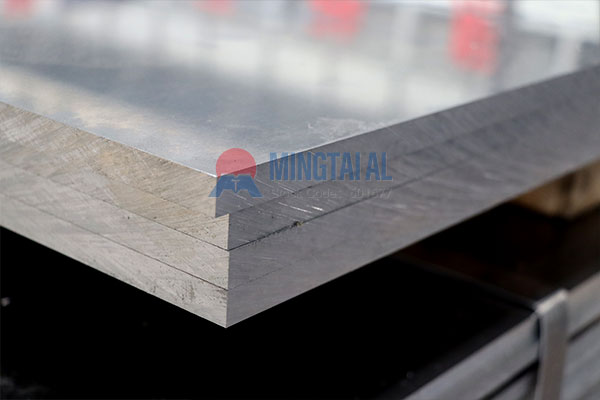
aluminum plate for laser cutting
Laser cutting has become the mainstream method for processing aluminum in industries from aerospace to electronics. But there is a big difference between just cutting and achieving a clean, smooth edge. That difference often starts with selecting the right aluminum plate for laser cutting. This article covers alloy selection, thickness matching, edge quality, and common issues – to help you make an informed choice.
Why laser cutting is a preferred method for aluminum
Compared with plasma or waterjet cutting, laser cutting offers clear advantages in precision and edge finish:
- High precision – tight dimensional tolerances and narrow kerf widths, ideal for complex shapes and fine details.
- Smooth edges – typically clean enough to eliminate secondary polishing or blasting.
- Better material utilisation – narrow kerf means less scrap.
- Non‑contact process – no tool wear, and minimal risk of mechanical distortion.
Fibre lasers are especially well‑suited for aluminium. Their shorter wavelength is absorbed more efficiently, and modern systems include anti‑reflection protection to handle aluminium’s natural reflectivity.
Three main challenges – and how to tackle them
Aluminium’s physical properties make laser cutting trickier than steel. Here are the most common issues and practical solutions.
- High reflectivity
Pure aluminium reflects a large portion of laser energy, which reduces efficiency and can damage equipment. That is why pure grades (like 1050) are more difficult than alloys – adding magnesium, silicon or other elements lowers reflectivity.
How to manage: Use a fibre laser. Its shorter wavelength gives better absorption, and built‑in anti‑reflection safeguards allow safe cutting of most aluminium alloys.
- High thermal conductivity and distortion
Aluminium conducts heat very quickly. Heat spreads before the molten metal can be blown out, especially on thin sheets, leading to warping.
How to manage: Use lower power with higher speed for thin material; pulse mode gives better heat control than continuous wave; and always clamp the sheet firmly to avoid vibration and movement.
- Burr and dross formation
This is the most frequent defect – molten metal is not fully ejected and solidifies along the bottom edge. Aluminium dross is harder and more difficult to remove than steel dross.
The root causes are often: contaminated nitrogen assist gas (oxygen content rising from ≤50 ppm to >200 ppm), or worn nozzles disrupting the gas flow.
How to manage:
- Use high‑pressure nitrogen (typically 8–20 bar) to blow out the melt – it also prevents oxidation and gives a bright edge.
- Apply a negative defocus ( –1 to –3 mm) to place the beam focus below the surface.
- Find the right speed – too fast and the cut won't penetrate; too slow and heat builds up, worsening dross.
> The flatness and internal stress of the plate itself directly affect cutting stability – these are qualities to check at the selection stage, not something to fix afterwards.
Which alloy works best for laser cutting?
Among all factors, the alloy grade of your aluminum plate for laser cutting has the biggest impact on edge quality and process stability. Here is a quick comparison of common choices.
|
Alloy |
Key traits |
Suitability for laser cutting |
|
5052‑H32 |
Magnesium and chromium for strength and corrosion resistance |
Excellent – stable cutting, clean edges, good value. Ideal for panels and marine parts. |
|
6061‑T6 |
Magnesium and silicon, heat‑treatable, higher strength |
Good – requires tighter parameter control. Suited for structural and automotive components. |
|
3003‑H14 |
Manganese alloy, soft and workable |
Very user‑friendly – wide process window, consistent edge quality. Great for general sheet metal work. |
|
7075‑T6 |
Zinc and copper for aerospace‑grade strength |
Cuttable but needs fine‑tuning. Used where ultimate strength is critical. |
Thickness considerations: Laser cutting performs best on thin to medium thicknesses (typically up to 20 mm). Heavier plates demand higher laser power and more precise parameter adjustment.
Key factors that affect edge quality – beyond the alloy
Even with the same alloy, different shops get different results. The following variables are crucial:
- Laser power and cutting speed – must be matched to thickness. Thicker plates need more power and slower speeds.
- Focus position – determines energy density at the cut front.
- Assist gas – nitrogen is preferred because it prevents oxidation and yields a bright edge. Oxygen cuts faster but oxidises the edge.
- Equipment condition – lens cleanliness, nozzle condition, and beam alignment all play a role.
What to check when sourcing plates for laser cutting
If you are preparing to order, here are three practical questions to ask your supplier:
- What is the flatness tolerance? Uneven plates destabilise cutting and harm edge quality.
- Is the alloy and temper clearly specified? 5052‑H32 and 6061‑T6 require completely different settings – do not mix them without adjusting parameters.
- What is the thickness tolerance? Even small deviations can throw off your power/speed settings.
Frequently Asked Questions
Q1: Which alloy is the best all‑round choice for laser cutting?
A: 5052‑H32 offers the best balance of cost, edge quality and stability; 6061‑T6 is better when higher strength is needed.
Q2: What is the maximum thickness that can be laser cut?
A: Generally around 20 mm, depending on laser power and the specific alloy.
Q3: Should I use nitrogen or oxygen for cutting aluminium?
A: Nitrogen is preferred – it prevents oxidation and produces a clean, bright edge.
Q4: What should I do if I see dross on the cut edge?
A: Check nitrogen purity, adjust power/speed, and inspect the nozzle – these are the most common causes.
Q5: Which cuts better – 5052 or 6061?
A: 5052 gives more consistent, smoother edges; 6061 offers higher strength but requires more careful parameter tuning.
Practical tips for your next order
Choosing the right aluminium plate is the foundation of a flawless laser‑cut edge. Focus on flatness, precise alloy specification, and consistent thickness tolerance. A reliable supplier who understands these requirements can save you significant time and rework.
Henan Mingtai Aluminum specialises in producing aluminium plate for laser cutting – with a wide range of alloys including 5052 and 6061, consistent quality, and flexible specifications. Contact us to discuss your project needs.