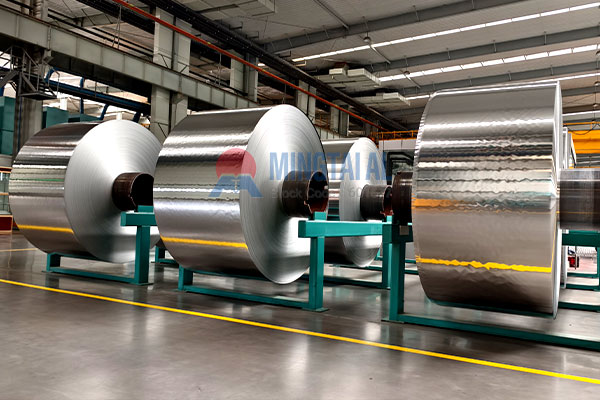
5052 aluminum coil properties
When you search for "5052 aluminum coil properties," the two questions that matter most are: Can this material be bent and stamped reliably? And is the elongation good enough for my process? This guide gives you straight answers – no fluff, just practical data and selection advice.
Note: The content below covers raw coil performance and forming characteristics only – we do not offer surface treatment or secondary processing services.
Where does 5052 rank in formability among aluminum alloys?
Among all common aluminum alloys, 5052 sits second in formability, just behind 3003. So why not always pick 3003? Because 5052 delivers roughly 20–30% higher strength than 3003 while still offering very good forming performance.
The trade‑off is simple: 3003 is easier to form, but 5052 gives you a better balance between "easy to shape" and "strong enough for real parts."
A detail many engineers overlook: in the annealed (O temper) condition, 5052's formability actually exceeds that of 3003. So if your product requires deep drawing or complex shaping, O‑temper 5052 can be an even better option.
Common forming processes for 5052 coil include:
- Stamping
- Bending
- Deep drawing
- Roll forming
One key behaviour: 5052 work‑hardens during forming – the more you shape it, the stronger it gets. That means your choice of initial temper directly determines how smoothly your production runs.
Elongation – big differences between tempers
Elongation is the most direct measure of ductility. 5052 shows widely different elongation values depending on temper:
|
Temper |
Typical Elongation |
Best For |
|
O (annealed) |
18%–25% |
Deep drawing, complex forming |
|
H32 |
8%–14% |
Bending, general stamping |
|
H34 |
6%–10% |
Structural parts needing higher strength |
O‑temper elongation can exceed 20%, while pure aluminum (like 1060) typically offers only about 5% – the gap is significant.
But elongation alone isn't the full story. The spread between yield strength and tensile strength matters just as much – a larger spread gives you more "safety margin" between permanent deformation and fracture. 5052 performs consistently well in this regard.
Which temper should you choose?
5052‑O (annealed)
- Highest ductility, lowest strength
- Ideal for deep drawing, complex stamping, tight bend radii
- Common uses: fuel tanks, chemical vessels
5052‑H32 (most popular)
- The best balance of strength and formability
- Tensile strength ~210–260 MPa, yield ~160–210 MPa
- Suited for sheet metal bending, general structural parts
- This is the most stocked and versatile temper on the market
5052‑H34 (higher strength)
- Stronger, but with slightly lower ductility
- Tensile ~230–280 MPa, yield ~180–230 MPa
- For components that demand extra strength
- Requires larger bend radii than H32
Quick selection guide:
- Complex forming / deep drawing → O temper
- Balance strength & formability → H32 temper
- Strength first → H34 temper
What about bending – key parameters to know
Bending is one of the most common operations for 5052. Here are the practical points:
- For H32, the minimum bend radius is typically recommended at about 1.5 times material thickness
- O temper accepts tighter radii
- Bending direction matters – bending along the rolling direction usually needs a larger radius than bending across it
- Thicker material requires larger radii
> If you need a 90° bend, H32 usually handles it well – but always validate with sample tests using your actual thickness and tooling.
Where is 5052 actually used?
The combination of good formability, corrosion resistance, and moderate strength makes 5052 a go‑to material across many industries:
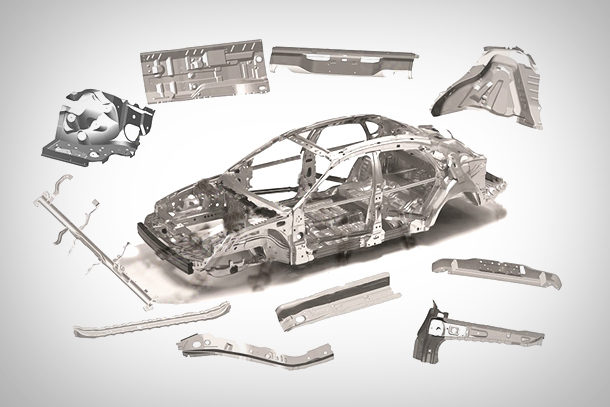
- Automotive: fuel tanks, body panels, engine hoods, battery enclosures
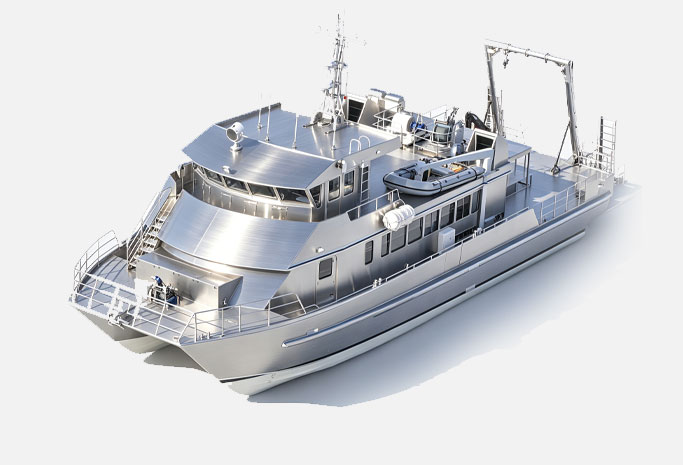
- Marine: hulls, decks, bulkheads – corrosion resistance in saltwater is a major asset
- Electronics: enclosures, brackets
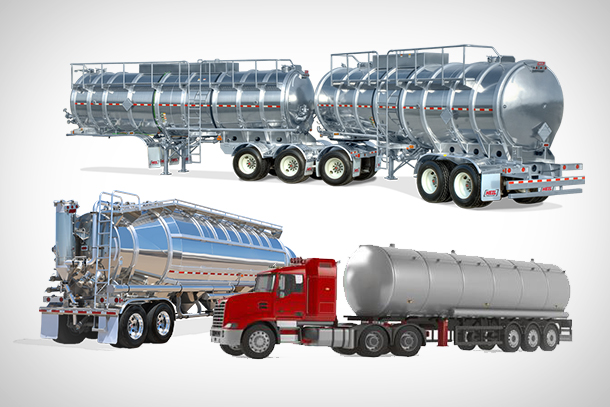
- Pressure vessels & storage tanks: chemical tanks, oil pipes
Wherever lightweight and corrosion resistance are required, 5052 is often the first choice.
What to remember
5052 aluminum coil gives you different formability and elongation profiles depending on temper – O for maximum ductility, H32 for the best all‑round balance, and H34 for higher strength. Choosing the right temper solves most of your processing challenges. In short: complex shapes → O; regular bending → H32; strength priority → H34.
Understanding 5052 aluminum coil properties helps you avoid trial‑and‑error and get your project right from the start.
Henan Mingtai Aluminum supplies 5052 coil in multiple tempers with consistent mechanical performance – reach out for technical datasheets and sample support.
FAQ
Q: Can 5052‑H32 be used for deep drawing?
A: Yes, but not as well as O temper – use O for complex deep drawing, and H32 for regular stamping and bending.
Q: Which is more formable, 5052 or 3003?
A: 3003 is slightly better, but 5052 is 20–30% stronger – your choice depends on whether ductility or strength matters more.
Q: What is the minimum bend radius for 5052‑H32?
A: Generally about 1.5× material thickness – always verify with samples for your specific thickness and tooling.
Q: Is 5052 aluminum coil weldable?
A: Yes, it offers good weldability with TIG, MIG, and other common methods.
Q: Which is easier to bend, 5052 or 6061?
A: 5052 is noticeably more formable – 6061 is stronger but more prone to cracking during bending, while 5052 bends reliably.