8011 o aluminum foil
Why 8011 O?
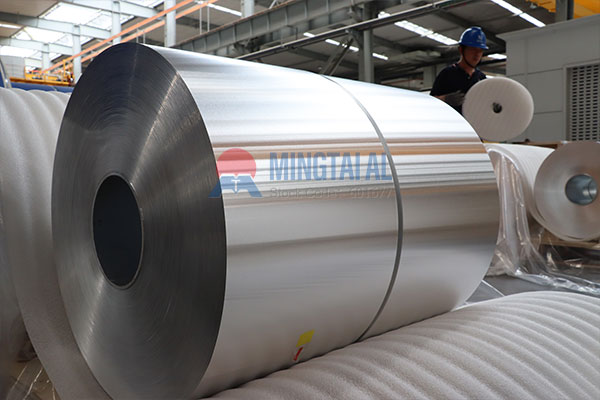
Why is 8011 o aluminum foil so widely specified in food and pharmaceutical packaging? The answer lies in the "O" – it stands for fully annealed temper. In simple terms, the foil is placed in an annealing furnace after rolling to soften it and remove internal stress through precise temperature control.
What this delivers in practice: exceptional flexibility and bending performance – it can be stamped, folded, and shaped without cracking.
Why the alloy matters: 8011 is an aluminum-iron-silicon alloy. Compared to pure grades like 1235, the added iron and silicon give it a firmer structure while keeping it soft, so it runs smoothly on high-speed packaging lines without wandering or wrinkling.
What real benefits does soft-annealing bring to production?
Four key advantages directly impact efficiency and yield:
- Formability – High elongation supports deep drawing, embossing, scoring, and other complex deformation. Easy-tear lids and irregular container seals form cleanly without cracking.
- Barrier stability – The annealed microstructure is uniform, and pinhole counts are kept very low. Protection against oxygen and moisture is reliable, which helps extend product shelf life.
- Lamination and heat-seal compatibility – The soft surface conforms tightly to heat-seal tooling. It bonds firmly with PE, PP, and other sealant layers, and also serves as an excellent substrate for gravure printing.
- Clean, flat surface – Residual rolling oil is thoroughly removed. The foil surface is free from oil stains, corrosion spots, or scratches. The wettability test achieves Grade A, so downstream users can work with it directly without extra treatment.
How does it compare with other alloys?
The advantages of 8011 O become clearer in side-by-side comparisons.
Versus 1235 pure foil (99.35%+ aluminum): 8011 contains iron and silicon as strengthening elements. It offers noticeably higher tensile strength and can withstand greater tension at the same thickness without deforming. Pinhole density is lower, and barrier properties are more stable. While 1235 is often used for simple overwrap, 8011 handles applications that demand puncture or tear resistance.
Versus 1100 alloy foil: 8011 delivers better combinations of strength and elongation after partial annealing. This is why many manufacturers of fin stock and container foil have shifted from 1100 to 8011.
Overall, 8011 O provides a wider performance window across strength, formability, and barrier properties – at a controlled cost. It is a cost-effective, general-purpose soft-temper foil.
Primary application areas
Based on these properties, 8011 O foil serves three main categories:
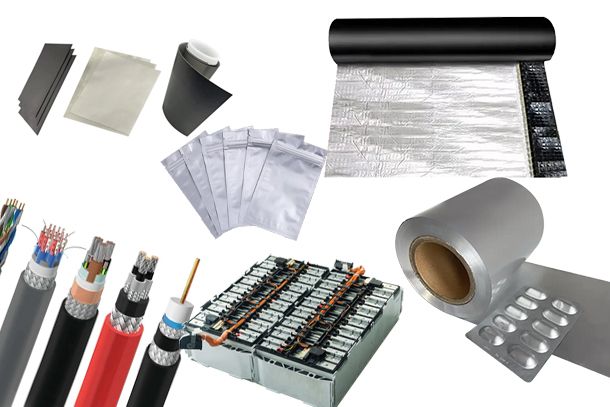
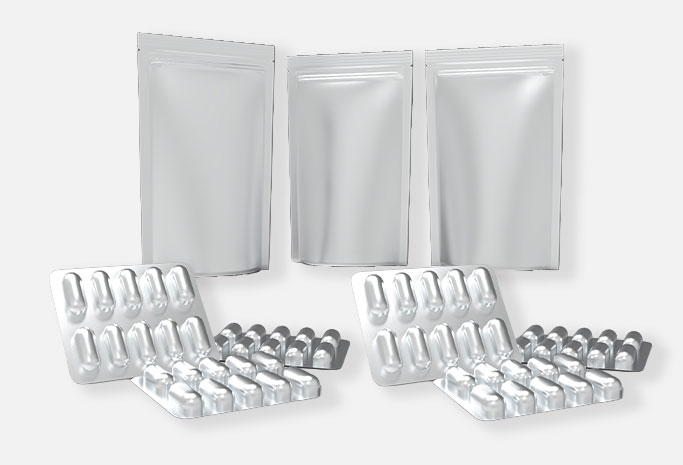
① Food packaging: Yogurt lid film, milk powder can easy-tear lids, beverage cup seals, instant noodle bowl lids, chocolate wrapping, butter/cheese packaging, inner layers of flexible composite bags, baking tray container foil, and more.
② Pharmaceutical packaging: PTP blister backing foil, medicinal sealing gaskets, oral liquid bottle seals – all requiring odor-free, sterile conditions with superior barrier performance.
③ Industrial and personal care: Aluminum foil tape base (insulation tape, waterproof tape), cable shielding tape, transformer winding foil, thermal insulation materials, wine capsule foil, cosmetic tube sealing film, and more.
All these applications require the foil to run on automated packaging lines without breaking, seal without curling, and provide good ink adhesion after printing – and 8011 O consistently delivers stable processing performance.
Available specifications
The following information helps determine if this product fits current production lines:
- Thickness: Starting from 20 microns (0.02mm) , common gauges include 0.02, 0.025, 0.03, 0.05, 0.06, 0.07, 0.08, and 0.1mm.
- Width: Adjustable range typically covers 100–1600mm, customizable upon request.
- Key tolerances: Thickness deviation is generally controlled within ±5%. Surface wetting tension meets required standards to ensure secure adhesive or lamination bonding.
- Custom orders: Special widths or larger coil lengths can be arranged; minimum order quantity depends on specific dimensions.
The primary supply condition is O temper (soft), as this state is best suited for downstream processes including lamination, heat sealing, stamping, and printing.
The value of 8011 o aluminum foil lies not in excelling at any single extreme, but in combining softness, strength, barrier protection, and processability into one highly dependable solution. From everyday yogurt lids to pharmaceutical blisters, from industrial tape to food containers, this material quietly performs the essential role of a protector.
Key considerations when selecting foil:
- Thickness tolerance uniformity
- Surface cleanliness – no oil spots or pinholes
- Supply stability and batch-to-batch consistency
These factors directly determine final product yield – and they are also marks of a reliable production operation.
Mingtai Aluminum supplies 8011 O foil with consistent mechanical properties, strict surface quality control, and flexible gauge options – backed by integrated production to ensure stable batch-to-batch performance for your packaging operations.
FAQ
Q: What does the "O" in 8011 aluminum foil mean?
A: "O" means a fully annealed soft state, giving the foil high ductility and easy formability.
Q: What thickness range is available?
A: Available from 20 microns upward, with common options like 0.02mm, 0.03mm, 0.05mm, 0.06mm, and 0.1mm.
Q: Where is 8011 O foil most commonly used?
A: In food lids, pharmaceutical blister backing, flexible packaging laminates, and industrial tape/cable foil.
Q: How does 8011 O compare with 1235 pure foil?
A: It offers higher tensile strength and fewer pinholes, making it more reliable for demanding packaging applications.