8011 h14 aluminum foil
What exactly does H14 temper mean? It represents a half‑hard state achieved through cold working followed by partial annealing. For 8011 h14 aluminum foil, this temper strikes a crucial balance – higher strength than O‑temper (soft) yet better formability than H18 (full hard). This equilibrium makes it ideal for applications that need both structural rigidity and reliable stamping performance.
What makes 8011 the base alloy?
8011 belongs to the 8xxx series, with aluminium content above 97.5% and small additions of silicon (0.50–0.90%) and iron (0.60–1.0%). These elements are not random – they boost strength and workability while preserving aluminium’s light weight and good ductility. That is why 8011, in H14 temper, can deliver the dual requirement of strength and formability without compromise.
Mechanical performance at a glance
In H14 temper, 8011 foil typically offers:
- Tensile strength: 125–165 MPa
- Yield strength: around 110 MPa – about 30% higher than pure aluminium foil (e.g., 1235)
- Elongation: 2%–5% (minimum 2% for thickness ≤0.2 mm, and 4% for thickness >0.2 mm)
These numbers mean real benefits: high yield strength reduces spring‑back after stamping, while sufficient elongation prevents cracking during deep drawing.
Choosing the right temper – a quick comparison
|
Temper |
Characteristics |
Typical use cases |
|
O (soft) |
Maximum ductility and softness |
Deep‑drawing, embossing, flexible laminates |
|
H14 (half‑hard) |
Best balance of strength and formability |
Bottle caps, pharmaceutical seals, food closures |
|
H16 (3/4 hard) |
Higher strength than H14 |
Air‑conditioning fins, insulation foil |
|
H18 (full hard) |
Maximum strength and stiffness |
Industrial foil, printing base stock |
If your process involves stamping or forming while expecting the final part to hold its shape, H14 is the most proven choice.
8011 vs 1235 – which one fits?
- 8011 offers higher tensile and yield strength, making it suitable for applications that require puncture resistance and dimensional stability.
- 1235 has higher purity (≥99.35% aluminium) and is softer, preferred when extreme flexibility is needed.
In practice, choose 8011 when strength matters, and 1235 when pure softness is the priority.
Where is 8011 h14 aluminum foil commonly used?
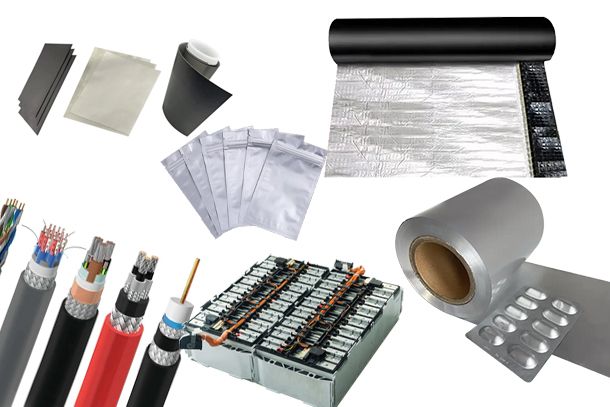
This temper and alloy combination serves a wide range of industries:
Caps and closures
- ROPP screw caps, wine and beverage caps, medicinal vial seals, syringe closures
- Typical thickness: 0.15–0.25 mm
- Low earing ratio and good deep‑drawing properties ensure consistent production
Pharmaceutical packaging
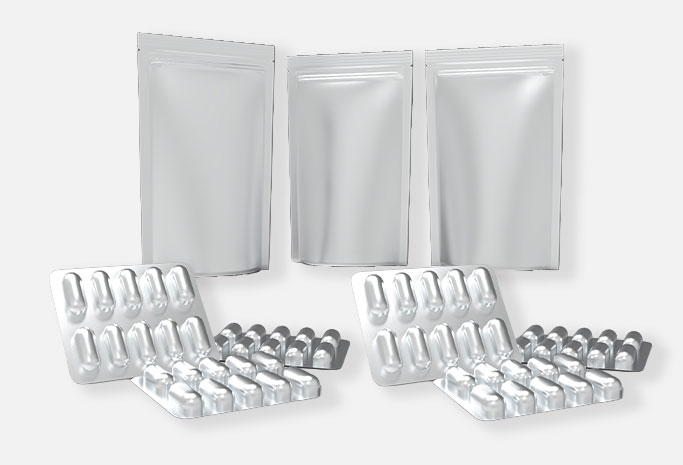
- PTP blister base foil, cap liners
- Excellent barrier performance: oxygen transmission <0.5 cm³/(m²·24h·0.1MPa), water vapour <0.5 g/(m²·24h), and 100% light blocking
- Non‑toxic, odourless, and sterilisation‑compatible
Food packaging
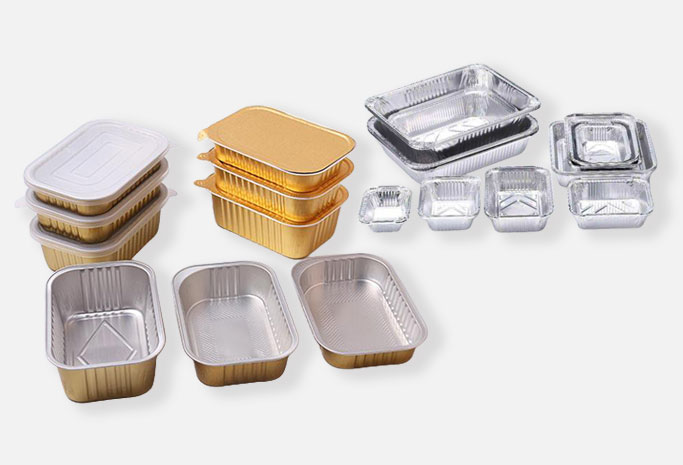
- Containers, baking trays, chocolate/sweets wrappers, yoghurt lids – all meet food‑grade safety standards
Industrial uses
- Air‑conditioner fin stock (thickness 0.08–0.10 mm), adhesive tape base foil, cable foil
*All the above applications rely on the base material properties of 8011 H14 foil – no surface coating or secondary processing is involved.*
Factors that matter in actual use
When selecting this material for your production line, pay attention to:
- Thickness precision – High‑speed automated lines demand tight tolerances. Typical deviation is ±0.005 mm. Even small variations can affect stamping yield.
- Surface quality – The foil should be clean, uniform in colour, and free from scratches, rolling marks, corrosion, or stains.
- Consistency of mechanical properties – Tensile strength and elongation must stay within narrow bands to keep your line running smoothly without frequent adjustments.
- Width and coil weight – These can be customised to match your specific equipment and part sizes.
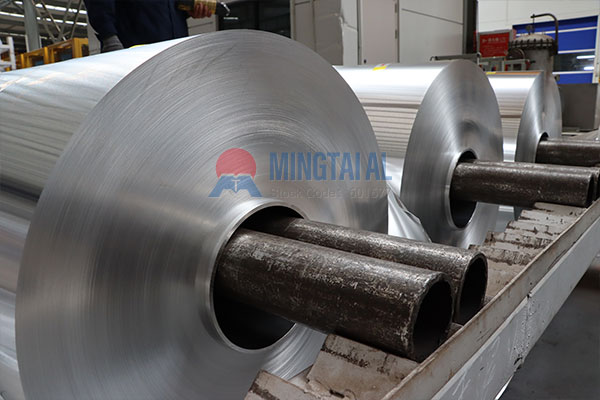
For reliable supply of 8011 h14 aluminum foil across a full thickness range (0.016–0.5 mm), Mingtai Aluminum offers tailored solutions backed by decades of production experience and an annual capacity exceeding 1.4 million tonnes.
FAQ
Q: What is the tensile strength of 8011 H14 aluminum foil?
A: Tensile strength ranges from 125 to 165 MPa, with yield strength around 110 MPa – about 30% higher than pure aluminium foil.
Q: What is the difference between H14 and O temper?
A: H14 is half‑hard with much higher strength than O temper (soft), while still preserving good formability for stamping.
Q: What are the main applications of 8011 H14 aluminum foil?
A: It is widely used for bottle caps, pharmaceutical blister packs, food packaging foil, air‑conditioner fins, and adhesive tape base foil.
Q: How do I choose between 8011 and 1235?
A: Choose 8011 when higher strength and rigidity are needed, and 1235 when maximum softness and purity are preferred.
Q: What is the typical thickness range for 8011 H14 aluminum foil?
A: The range is 0.016–0.5 mm, with cap stock commonly at 0.15–0.25 mm.