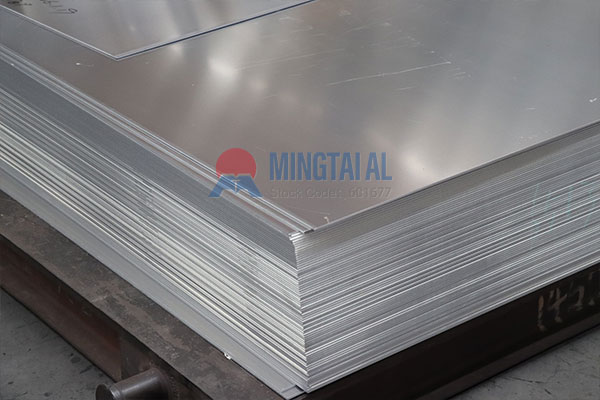
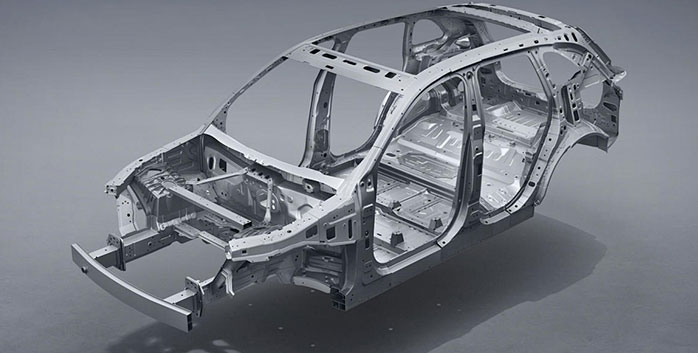
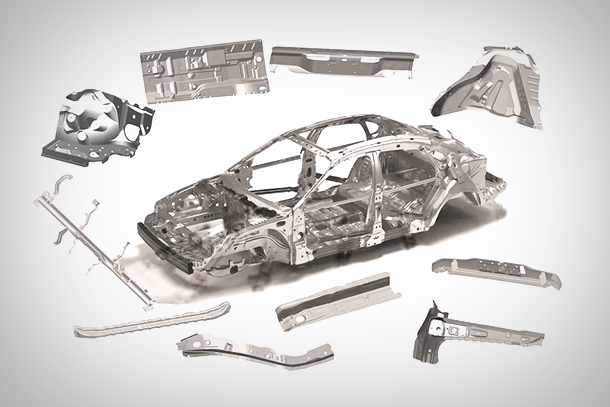
5182 aluminum sheet for car hood
The hood is one of the toughest automotive panels to form. Large surface area, complex curves, deep‑drawing required, and zero tolerance for surface defects. Steel is too heavy; ordinary aluminum risks cracking. That’s why 5182 aluminum sheet for car hood is gaining serious attention from engineers and production teams.
What Makes 5182 Suitable for Deep‑Stamped Hoods?
Not just because it’s an aluminum alloy. It brings several concrete advantages to the stamping press:
- High elongation – In the O‑temper (fully annealed), 5182 offers excellent ductility. It handles deep draws and intricate shapes without cracking – a basic requirement for outer hood panels.
- Work‑hardening in action – During stamping, the material stiffens naturally (strain hardening). Strength increases as you form it, so no post‑forming heat treatment is needed. That saves steps, cuts cost, and avoids distortion or discoloration risks from thermal processing.
- Visible weight reduction – Aluminum has about one‑third the density of steel. Switching to 5182 trims hood weight significantly, which directly improves fuel economy or EV range.
- Corrosion resistance and weldability – As a 5xxx‑series alloy, it resists rust and pitting. Welding performance is stable, so joining to other body parts doesn’t become a bottleneck.
> All the above describes the base material performance of 5182. We do not offer surface treatment or further processing of the sheets. Our product is delivered as high‑quality bare stock, and subsequent finishing steps are handled by you according to your own process requirements.
O‑Temper or H‑Temper? And What Thickness?
This question comes up in almost every hood project. Here’s a quick guide:
|
Application |
Recommended Temper |
Reason |
|
Outer panel – deep stamping |
O (annealed) |
Highest elongation, most stable forming, lowest cracking risk |
|
Inner panel / reinforcement |
H32 or H34 |
Higher strength, less demanding forming, still adequate |
Thickness typically falls between 0.8 mm and 1.2 mm.
Thinner (0.8–1.0) → for maximum lightweighting.
Thicker (1.1–1.2) → if you prioritise panel stiffness and dent resistance.
The right choice depends on your vehicle segment and design targets.
How Does 5182 Compare with 5052?
Both are 5xxx alloys, but 5182 has more magnesium (4.0–5.0% vs. 5052’s 2.2–2.8%). That difference gives you two real benefits:
- Higher strength – The finished hood resists dents better; it feels more solid when pressed.
- Better deep‑drawing performance – In highly deformed areas, 5182 gives you a larger safety margin, so you encounter fewer forming issues.
For demanding hood applications, 5182 is generally the safer bet.
The Two Biggest Headaches in Deep Stamping
Aluminium stamping always brings two stubborn challenges:
1. Cracking
Cracking happens when the material’s elongation isn’t enough for the actual deformation, or when process parameters (blank holder force, draw bead design) are off. Choosing 5182‑O reduces the risk at the material level, but tooling adjustments are still critical.
2. Springback
Aluminium has a lower elastic modulus, so after forming, the part tends to “spring back” and lose dimensional accuracy.
The solution is a dual approach – material + process. Use CAE simulation to optimise die design, apply springback compensation upfront, and fine‑tune through trial stamping. With a systematic method, production yield can often climb from around 60‑70% to above 90%.
Three Details to Check When Sourcing 5182 Hood Sheets
Even with the right alloy, these points can make or break your results:
- Thickness tolerance – Hoods are large panels. Any variation in thickness directly affects forming quality and final appearance. Tight tolerance control is a non‑negotiable quality indicator.
- Surface quality – Scratches, inclusions, or oil residue get magnified during deep stamping and will show up in the paint finish. The sheet must be clean and have uniform grain structure.
- Supply stability – Automotive production cannot afford line stoppages. Consistent properties from batch to batch and reliable delivery schedules are essential. Choosing a supplier with mature quality systems and ample capacity saves you a lot of headaches.
What Really Counts
Using 5182 for hoods is not a simple swap‑and‑go. It’s a systematic exercise that involves material behaviour, process windows, and die matching. Understand how the alloy responds, pick the right temper and gauge, and combine that with well‑tuned stamping parameters – then you’ll unlock the full potential of deep stamping with 5182 aluminum sheet for car hood.
Mingtai Aluminum supplies IATF 16949‑certified 5182 automotive sheets in a full range of specifications, with customisation available. Feel free to reach out for more details.
FAQ
Q1: Is 5182 suitable for outer hood panels or inner panels?
Both – outer panels prefer O‑temper, while inner panels can use H‑temper depending on forming complexity.
Q2: Does 5182‑O crack easily during deep stamping?
With its high elongation and proper process settings, it reliably forms complex shapes without cracking.
Q3: Which is better for hoods – 5182 or 6016?
Both are common; 5182 excels in deep‑drawing, while 6016 gains strength through paint‑bake hardening – your choice depends on part design and process route.
Q4: Does 5182 need heat treatment after stamping?
No – it work‑hardens during forming and can be used directly.
Q5: How much weight can a 5182 hood save over steel?
A significant amount – the exact percentage depends on your selected thickness and structural design.