5083 h116 vs h321 aluminum plate
If you are reviewing a marine aluminum plate specification, you may face a common question: two plates are both 5083, one lists H116, the other H321, and their chemical composition is identical. Which one should you choose? That is exactly the decision behind 5083 h116 vs h321 aluminum plate. The answer is not about which temper is “better.” It is about where the processing route splits and what that means for your structure.
One Alloy, Two Processing Routes
5083 belongs to the Al-Mg family. It cannot be strengthened by heat treatment; its strength comes mainly from cold work and solid-solution strengthening by magnesium.
H116 and H321 share the same chemical composition. The difference starts after cold rolling:
- H116: after cold rolling, it receives a stabilization treatment designed for marine corrosion performance. The main goal is to control susceptibility to exfoliation corrosion and intergranular corrosion.
- H321: after cold rolling, it receives an additional low-temperature stabilization anneal. This lowers residual stress, improves flatness in thick plate, and maintains strength.
In simple terms, H116 is tailored for seawater corrosion resistance. H321 is tailored for stability in large welded structures. They are built for different priorities.
Strength Is Not the Real Dividing Line
Strength baseline: closer than many expect
On mechanical properties, H116 and H321 do not sit in completely separate tiers.
- Under ASTM B928, both have the same minimum tensile strength requirement;
- Both have the same minimum yield strength requirement;
- H321 has a slightly higher upper tensile strength limit, but in practice the two often fall into a similar selection range.
If you choose only by strength, you may miss the factors that actually affect project results.
Dividing line one: residual stress
H321 receives a low-temperature stabilization anneal, so its internal residual stress is generally lower than that of H116. This matters in thick plate processing and large welded structures:
- Less distortion after cutting;
- Better dimensional stability in the heat-affected zone during welding;
- Easier fit-up and less rework during assembly.
Dividing line two: performance after welding
The heat-affected zone of 5083 will always be weaker than the base metal. This is inherent to Al-Mg alloys. The question is how controlled that loss is.
- H321 has a more uniform structure, so strength loss in the heat-affected zone is relatively controlled;
- For weld-intensive hull sections and pressure vessel shells, this difference can directly affect welding procedure qualification;
- H116 is better suited to structures with limited welding, mainly bolted or riveted connections.
Selection conclusion
- If the structure is mainly bolted with limited welding: H116 is sufficient.
- If welding is extensive and distortion control matters: H321 is the safer choice.
Choose by Service Condition, Not by “Grade”
A common mistake is to treat H321 as an “upgraded” version of H116. There is no hierarchy between them. There is only fit for the application.
Where 5083-H116 fits:
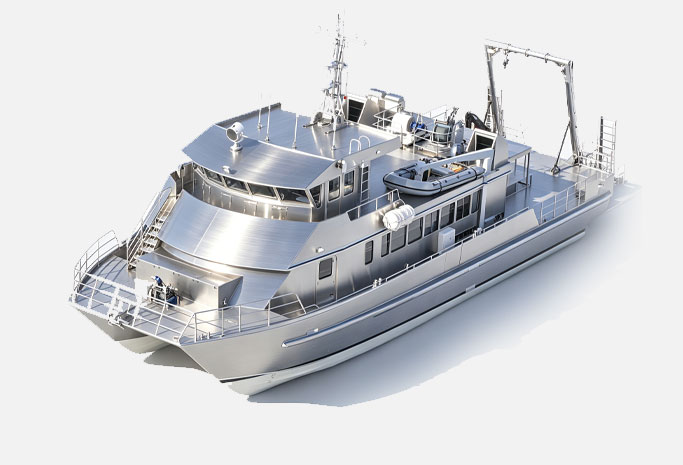
1. Hull shell, side shell, deck and other plates directly exposed to seawater;
2. Structural parts mainly joined by bolts or rivets;
3. Marine engineering components requiring excellent exfoliation corrosion resistance;
4. Shell plates for fast craft and patrol boats.
Where 5083-H321 fits:
1. Welded structures for large hull sections;
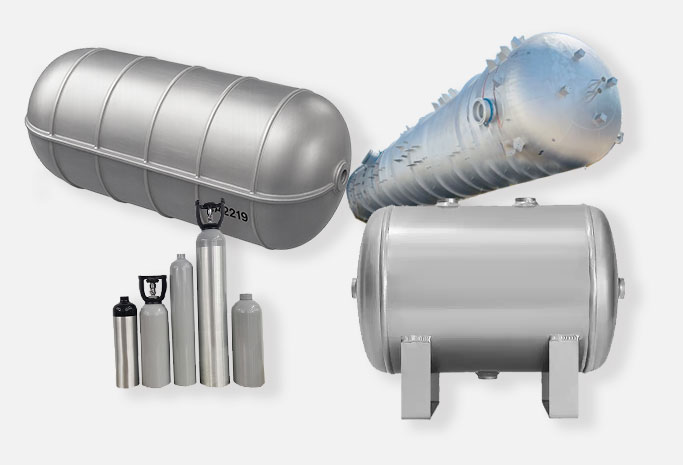
2. LNG/LPG cargo tanks and low-temperature pressure vessels;
3. Load-bearing modules and thick plate structures for offshore platforms;
4. Applications with high requirements for flatness after cutting and welding distortion control.
One More Point That Is Often Overlooked
Confirming the temper is only the first step. H116 and H321 both have clear corrosion testing requirements in class society rules. Plate that has not passed ASTM G66 or G67 testing should not be used in classed vessels.
Before confirming the specification, three items are essential:
- Product standard: ASTM B928 is a core standard for marine high-magnesium aluminum plate. Confirm that supply follows it.
- Corrosion test reports: Exfoliation corrosion (G66) and intergranular corrosion (G67) results should be provided with the goods.
- Class society certificates: Factory approval and material certificates from the target class society are both required.
Aluminum plate and coil are supplied in rolled condition. Downstream surface treatment or further processing is not included in the supply scope; those steps should be arranged according to the project process.
Certification and Supply Support
For projects that require certified marine aluminum plate, Mingtai Aluminium China supplies 5083 H116 and H321 plate with CCS, ABS, BV, LR and other major class society approvals, and can support specification and certification review. For a specific 5083 h116 vs h321 aluminum plate inquiry, contact our technical team.
FAQ
Can H116 and H321 be used interchangeably?
No. They share the same chemistry but follow different processing routes, so welding behavior and residual stress differ.
Which temper has better corrosion resistance?
H116 is optimized for seawater exfoliation and intergranular corrosion; H321 is more stable under temperature cycling or elevated-temperature service.
Which one should be selected for welded structures?
H321 is generally preferred when welding is extensive, because its stabilized structure gives more controlled heat-affected zone performance and less distortion.
What key documents should be checked during sourcing?
At minimum, confirm ASTM B928 applicability, G66/G67 corrosion test reports, and class society factory approval and material certificates.