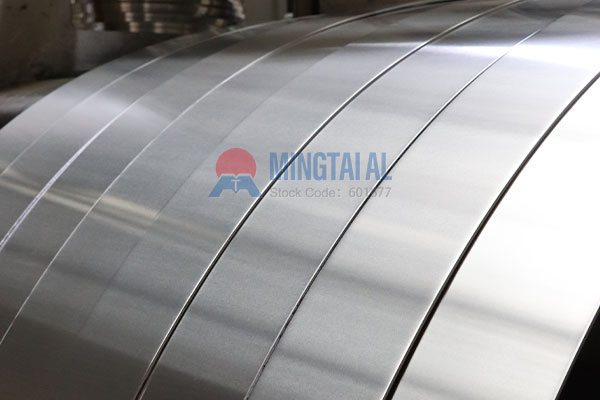
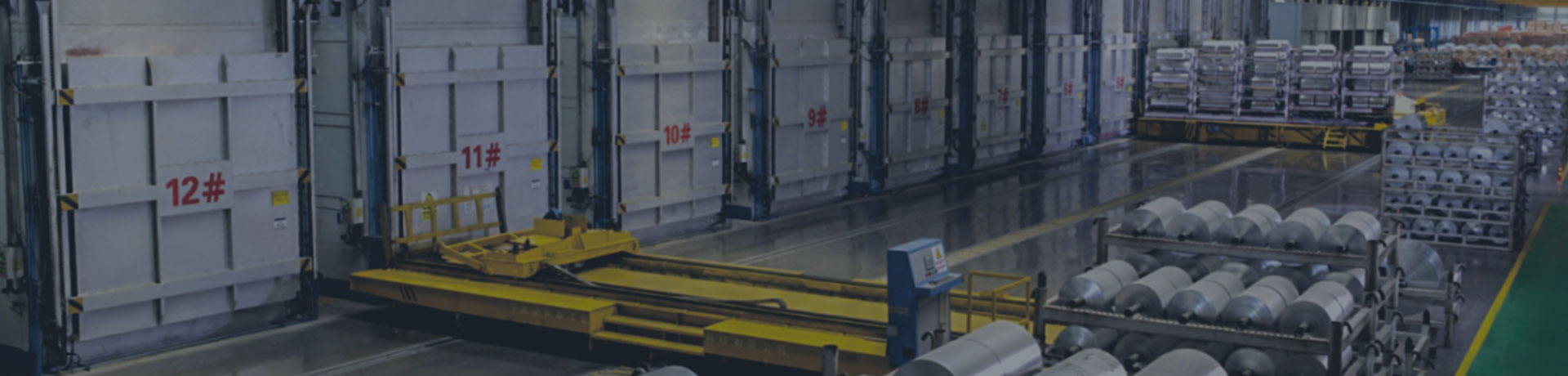
aluminum coil for transformer strip
Aluminum coil for transformer strip is now widely used in both dry-type and oil-immersed transformer windings. It is lighter than copper and often offers more stable cost, but grade selection cannot be based on metal type alone. Conductivity, alloy choice, edge quality, and batch consistency all affect winding loss, temperature rise, and long-term reliability.
Conductivity First, Price Second
Conductivity is the first gate for transformer aluminum strip. It directly affects winding resistance loss and temperature rise.
If only price per ton is compared and conductivity stability is ignored, the finished winding may lose more energy than the design allows.
A purchase specification should therefore state:
- The minimum acceptable conductivity — not just “high conductivity”
- The test method and temperature condition
- A % IACS or resistivity report for each batch
This gives purchasing, incoming inspection, and winding design one common language. Once conductivity is stable, winding, insulation, and temperature control have a reliable base.
Choosing Between 1050, 1060, 1070, and 1350
Four 1xxx pure aluminum grades are common choices. They differ in purity, conductivity, and application.
- 1050: economical general-purpose pure aluminum, for projects where loss requirements are not strict and budget matters.
- 1060: balanced purity and conductivity, good formability and winding performance, often used in general transformers.
- 1070: higher purity and better conductivity, for high-efficiency, renewable-energy, and precision power transformers.
- 1350: electrical-grade aluminum with tighter impurity control and stable conductivity, often used for ASTM or IEC compliant equipment.
A simple selection guide: general distribution — 1060; high efficiency and low loss — 1070; standards compliance — 1350; cost-sensitive with moderate requirements — 1050.
Aluminum vs. Copper: Possible, But Redesign Is Required
Aluminum has lower conductivity than copper, but lower density and often a more stable price.
Replacing copper with aluminum is not a simple same-size swap. To reach similar resistance, the aluminum conductor cross-section must be larger. Winding window, insulation thickness, and cooling method all need to be recalculated.
Where aluminum works well:
- Dry-type transformers, where aluminum windings are already widely used
- Weight-sensitive projects
- Cost-sensitive projects
Where copper still has an edge:
- Extremely space-limited designs
- Highly compact layouts
Connection methods must also be adapted. Aluminum requires dedicated welding and joining techniques.
What to Check in Specifications and Incoming Inspection
When buying aluminum coil, put the following into the specification:
1. Alloy grade and chemical composition standard;
2. Conductivity or resistivity test report;
3. Thickness, width, and tolerances;
4. Edge burr, wave, and camber limits;
5. Clean, dry, oxide-free surface;
6. Batch consistency of tensile strength and elongation.
Edge quality is often overlooked. Burrs or waves can pierce interlayer insulation during winding and create short-circuit risk. Surface condition affects insulation adhesion and contact stability. We supply aluminum coil by rolling and slitting only. We do not perform surface treatment or further processing. If insulation coating or lamination is required, it must be completed by a downstream specialist.
How Strip Quality Affects Transformer Performance
Quality-stable aluminum strip makes transformer performance more controllable.
Key effects include:
- Conductivity fluctuation: causes winding loss variation and makes temperature rise hard to predict;
- Poor batch consistency: increases winding setup work and scrap risk;
- Edge burrs, waves, and camber: reduce winding quality and efficiency, and may damage interlayer insulation;
- Surface oxidation or oil: affects insulation adhesion and contact stability;
- Inconsistent mechanical properties: makes winding tension difficult to set, especially for thin strip, which may wrinkle or crack.
Therefore, choosing aluminum coil with stable conductivity, strict edge control, and a clean surface is not only a purchasing issue. It also affects transformer efficiency, temperature rise, and long-term reliability.
Supply and Availability
Henan Mingtai China supplies aluminum coil for transformer strip in 1050, 1060, 1070, and 1350 grades. Thickness, width, and edge quality can be customized to winding design. Contact us for specifications and samples.
FAQ
Q1: What conductivity should be specified for transformer aluminum strip?
A: State a minimum acceptable conductivity in the specification and require a % IACS or resistivity report for each batch.
Q2: Which alloy is most common for transformer aluminum strip?
A: 1060 is common for general transformers, 1070 for high-efficiency designs, and 1350 for ASTM or IEC compliant equipment.
Q3: Can aluminum strip fully replace copper windings?
A: Many distribution and dry-type transformers can use aluminum, but conductor cross-section and connection methods must be redesigned.
Q4: What is most often overlooked in purchasing?
A: Edge burrs and batch consistency, because they directly affect winding efficiency and insulation safety.