3003 h14 aluminum sheet formability
Understanding 3003 H14 aluminum sheet formability is key to smooth downstream operations. This alloy is common in stamped and bent parts, but it is not a universal choice. Knowing its forming characteristics helps avoid cracking, wrinkling, and excessive springback.
The Balance of H14 Temper
3003 is an Al-Mn alloy, and H14 is a quarter-hard temper. It is harder than O temper but softer than H18. This middle ground offers a useful combination: enough structural rigidity and enough ductility. As a result, it handles shallow drawing, bending, flanging, and rib forming well. For very large deformations, evaluate carefully and consider a softer temper.
Bending: Radius, Direction, and Springback
Bending is one of the most common forming methods for 3003 H14. To reduce defects, focus on these points:
- Bend radius: The inside radius should not be too small. Thinner sheets need a larger relative bend radius, or the outer surface may crack.
- Grain direction: Keep the bend line perpendicular to the rolling direction. Bending parallel to the rolling direction increases cracking risk.
- Springback control: H14 has higher yield strength than O temper, so springback is more noticeable. Design dies with compensation or use over-bending.
- Die surface: 3003 is not very hard. A rough die surface can cause galling, affecting appearance and later coating adhesion.
Stamping: Process Match and Risk Control
3003 H14 works well for blanking, piercing, shallow drawing, and flanging. Forming loads are moderate, and no special die material is required. However, deep drawing or multi-stage drawing accumulates work hardening and raises cracking risk. In such cases, a softer temper like O may be better.
On the shop floor, also pay attention to lubrication and die clearance. Proper lubrication reduces galling, and suitable clearance prevents wrinkling or excessive thinning. Blank holder force must also match: too high causes cracking, too low causes wrinkling. Among common defects, cracking often relates to bend radius and grain direction, wrinkling to blank holder force and die radius, and galling to die surface and lubrication.
Weighing Your Options
Different alloys and tempers suit different forming needs. Here is a simple way to judge:
1. 3003 H18: High strength but limited ductility. Suitable for parts with almost no bending or only very shallow forming. If bending or drawing is involved, it is usually not the first choice.
2. 5052 H32: Better corrosion resistance and strength, moderate formability, but usually more expensive than 3003. If the service environment is highly corrosive and budget allows, it is worth evaluating.
3. 3003 O: Best ductility, suitable for deep drawing with large deformation. But low rigidity, so parts may distort after forming and need reshaping or support.
4. 3003 H14: Falls between O and H18. Formability is sufficient, with some rigidity. Suitable for most stamped and bent parts, and cost-effective.
If a part needs forming while balancing rigidity and cost, 3003 H14 is often a reliable choice.
Typical Applications
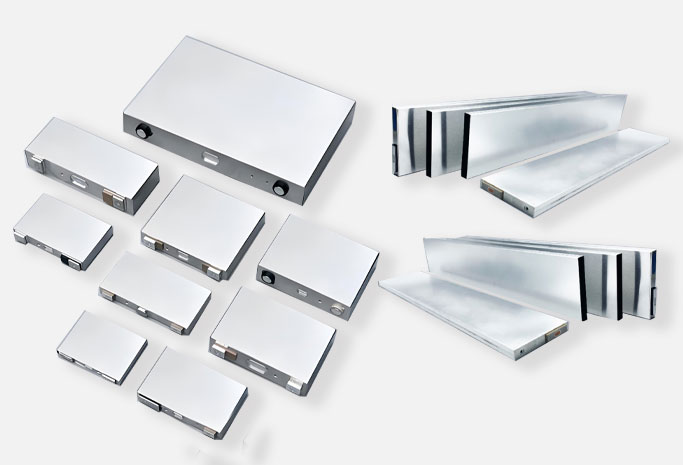
Power battery shells, architectural roof panels, HVAC ducts, and vehicle interior panels often use 3003 H14. These applications require bending or stamping, along with corrosion resistance and lightweight. Mingtai supplies mill-finish aluminum sheet only and does not provide surface treatment or further fabrication; those steps are handled by downstream specialists.
Where 3003 H14 Fits Best
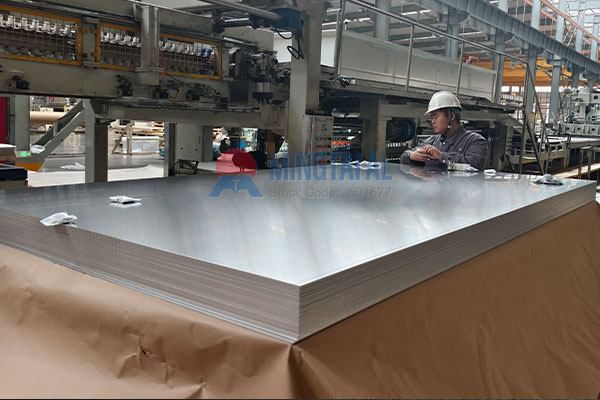
For stamping and bending projects, 3003 H14 aluminum sheet formability offers a practical balance between formability and rigidity. Henan Mingtai Aluminum supplies 3003 H14 sheet with stable properties and customizable thickness and width. Contact us for specifications and a quote.
FAQ
Q: Can 3003 H14 be used for 90-degree bending?
A: Yes, but avoid too small an inside radius and keep the bend line perpendicular to the rolling direction.
Q: Does it need heat treatment after stamping?
A: No, 3003 is a non-heat-treatable alloy, and strength comes from cold work.
Q: How to choose between 3003 H14 and O temper?
A: Choose H14 for shallow forming and bending, and O temper for deep drawing with large deformation.
Q: Who handles surface treatment?
A: Mingtai does not provide surface treatment; downstream specialists handle it.