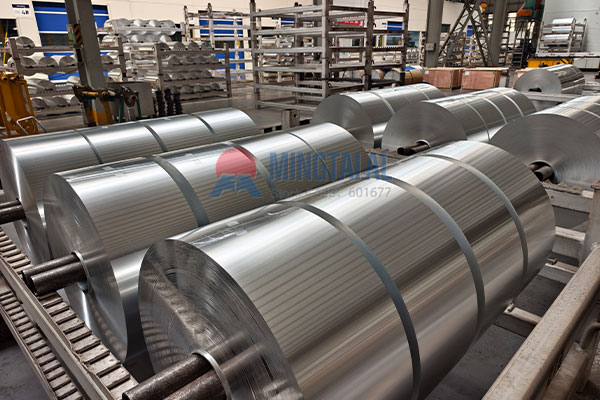
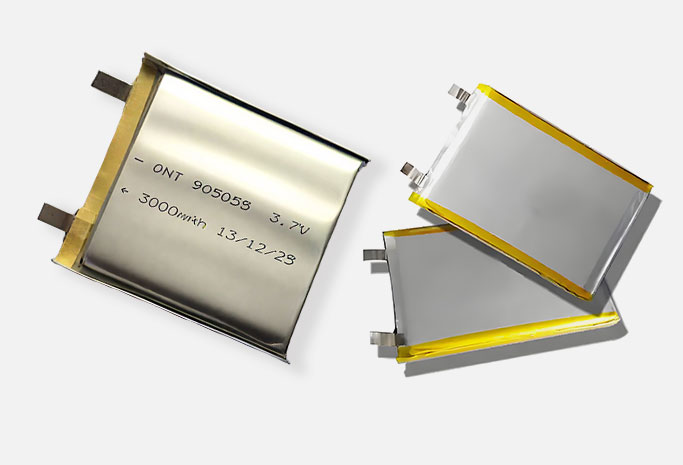
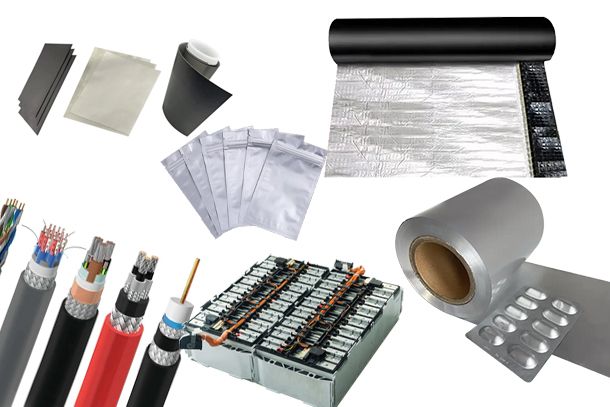
1235 o aluminum foil
For lithium battery cathode current collectors, 1235 o aluminum foil balances purity and soft-temper ductility, making it a common substrate for power and energy storage batteries. Purity, temper, thickness, and surface quality all affect coating yield and cell performance. The following sections break down the key points from a practical use perspective.
Purity: Where 1235 O Aluminum Foil Stands
1235 is a 1xxx series commercial pure aluminum with an aluminum content of no less than 99.35%. Iron and silicon impurities are tightly controlled. Compared with 1060 and 1070, it has slightly lower purity but a more mature balance of processing adaptability and cost.
Purity is not a case of higher is always better. Consider three points:
- Cell internal resistance requirements: Designs with extremely high conductivity demands may lean toward higher-purity grades.
- Cost and supply: In large-scale manufacturing, stable supply and unit cost are often more critical.
- Processing yield: Does the impurity control match your existing coating and rolling processes?
For power and energy storage batteries, 1235 is usually more practical in batch consistency and overall cost. For high-end consumer batteries, the higher conductivity of 1060 or 1070 may be worth the investment.
Why Soft Temper (O Temper) Matters
O temper means fully annealed, with high elongation and relatively low tensile strength. Its value is not in the finished battery itself, but in electrode manufacturing.
Look at three processes:
1. Coating: Soft foil runs at lower tension, reducing wrinkle and tracking risks from tension fluctuations.
2. Rolling: Soft substrate conforms better to the roll surface, reducing local active material shedding.
3. Winding or stacking: High ductility helps the foil resist cracking at corners, especially for pouch cell winding.
> O temper and H18 temper are not about better or worse—they are different routes.
H18 hard temper offers higher strength for ultra-thin gauges and high-speed winding. O temper favors formability and coating tolerance. The choice depends on cell design and equipment matching.
How to Choose Thickness
Common thicknesses for battery 1235 foil are in the low tens of microns. Thinner foil reduces weight and increases energy density, but also raises pinhole and breakage risks.
You can judge by scenario:
|
Scenario |
Focus |
|
Thin gauge |
Pinhole density, thickness uniformity, surface cleanliness |
|
Medium gauge |
Conductivity, processability, cost balance |
|
Special designs |
Energy density targets and coating yield |
When selecting 1235 o aluminum foil, thickness tolerance and batch stability often matter more than extreme thinness. Even good sample data can fail in coating if batch variation is large.
Surface Quality Determines Coating Yield
Active material shedding after coating, dark spots after rolling, and dust at slitting edges are often blamed on the coating process. In fact, they may relate to foil surface condition. If residual oil is too high, wetting tension is insufficient, or roughness is mismatched, the binder cannot spread evenly.
When selecting substrate, pay attention to:
- Residual oil: Leftover rolling oil creates low-surface-energy areas.
- Wetting tension: Affects binder spreading and adhesion.
- Surface roughness: Affects mechanical anchoring.
- Pinhole density: Especially important for thin gauges.
As a substrate producer, Mingtai supplies mill-finish aluminum foil only. We do not perform surface coating or modification. Surface treatment is done in downstream processes. For selection, focus more on batch consistency of factory surface cleanliness.
1235 O vs 1060 O vs 1070 O: A Simple Comparison
All three are 1xxx pure aluminum, differing in purity gradient and performance trade-offs:
- 1235 O: Moderate purity, good elongation, suitable for power and energy storage batteries;
- 1060 O: Higher purity, slightly better conductivity, common in energy storage and general power;
- 1070 O: Higher purity, better conductivity, often used in high-end consumer batteries.
No single grade fits every scenario. The key is matching cell design, equipment, and cost targets.
Three Things Easily Overlooked During Selection
1. Batch consistency: Variations in purity, thickness, and surface condition directly affect coating yield.
2. Temper matching: O and H18 tempers suit different processes. A mismatch can increase breakage or wrinkle risks.
3. Supply stability: Long-term stable supply of the target thickness and temper matters more than one-time sample data.
For 1235 O battery foil substrate, contact Henan Mingtai Aluminium Industrial Co., Ltd. We supply 1235-O and 1235-H18 aluminum foil for global battery manufacturing and material trading.
FAQ
Q: What does O temper mean for 1235 O aluminum foil?
A: O temper means fully annealed soft condition, with high elongation for coating and winding.
Q: Can 1235 O aluminum foil be used for lithium battery cathodes?
A: Yes, its purity and soft temper make it suitable as a cathode current collector substrate.
Q: Does Mingtai provide surface-treated or carbon-coated foil?
A: No, Mingtai supplies mill-finish aluminum foil substrate only; surface treatment is done downstream.