5083 h111 vs h112 aluminum plate
The choice between 5083 h111 vs h112 aluminum plate is not really about which temper is stronger. It is about matching the temper to the forming route and the service location. Both tempers belong to the same 5083 aluminum-magnesium family, but they behave differently on the shop floor.
Why the Wrong Temper Can Cause Big Problems Even with the Right Alloy
5083 is one of the most widely used aluminum-magnesium marine alloys. It is not heat-treatable, so its mechanical properties depend on work hardening and thermal stabilization.
Key point: many selection discussions focus only on the alloy grade and overlook the temper. The temper often decides how the plate performs in a shipyard. For that reason, comparing H111 and H112 is really about matching the production method to the fabrication step and the final service location, not about choosing the “stronger” one.
Two Tempers, Two Production Routes
H111 is fully annealed and then given a controlled amount of cold work to produce light work hardening. This keeps ductility high while raising yield strength slightly.
H112 is hot rolled and delivered without deliberate cold work or annealing to control hardness. The process is simpler and more cost-effective.
> In short: H111 is annealed and lightly stretched; H112 is hot rolled and shipped directly.
Mechanical Properties: What the Numbers Really Mean
From the standard minimum values, tensile strength, yield strength, and elongation look very close. In actual supply, however, a few tendencies are worth noting:
- H111: elongation tends to be more stable in large cold-bending or forming operations.
- H112: yield strength may test slightly higher in some lots, but the difference is rarely the deciding factor.
Standard minimums are only the entry line. Actual order performance can still vary with thickness, rolling practice, and batch consistency. Selection should focus on whether the intended fabrication route will run smoothly, not on a paper comparison alone. That is why 5083 h111 vs h112 aluminum plate should be evaluated by process fit, not by a single tensile number.
Formability and Welding: Where the Real Difference Shows
H111: Built for Forming
- Strong ductility advantage
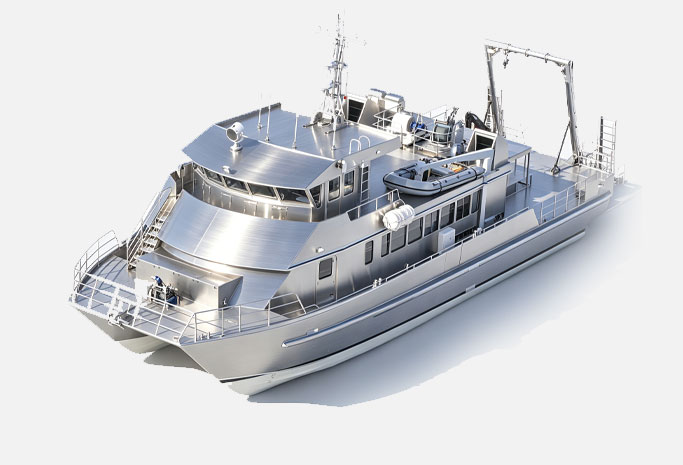
- Ship hull shell plates, tank heads, and deeply curved structural parts
- Less cracking during cold bending and better fabrication yield
H112: Built for Structure
- Suitable for flat structures and welded parts
- Bulkheads, deck plating, engine foundations, and structural frames
- Better dimensional stability and cost advantage
Welding: both support TIG and other common processes, and both retain good strength after welding. H111 tends to have slightly lower heat-affected-zone cracking sensitivity; H112 often offers better distortion control in large welded structures. For a shipyard, one forming crack can lead to rework, repair welding, or even scrap, and that cost often far exceeds the price difference between tempers. This is why forming-intensive projects lean toward H111.
> Note: for long-term immersed critical areas, class societies usually require H116 or H321.
Matching the Temper to the Hull Location
|
Part Type |
Recommended Temper |
Reason |
|
Hull shell, bulbous bow, stern curved areas |
H111 |
Requires large-scale cold bending |
|
Deck, bulkheads, superstructure flat panels |
H112 |
Mainly flat welding, better cost |
|
Engine foundations, equipment platforms |
H112 |
Load-bearing structure, slightly higher yield |
|
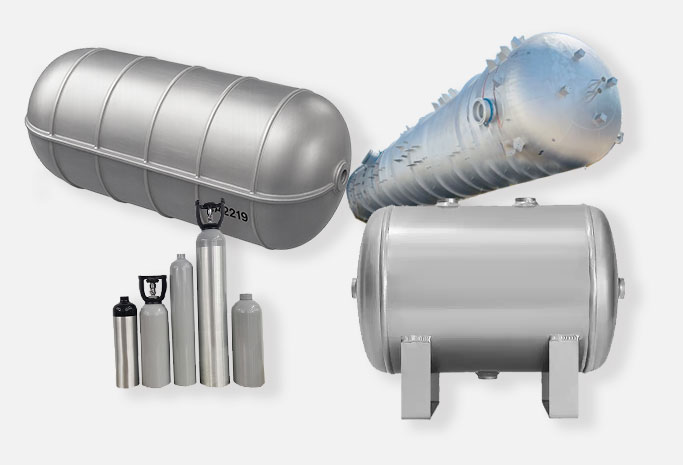
Tank heads, storage tanks |
H111 |
Deep drawing or spinning needs high ductility |
|
Long-term immersed critical areas |
H116/H321 |
Requires corrosion test certification |
Two Details That Often Get Missed Before Ordering
Availability: H112 is usually more abundant in thick plate, with wider options for very heavy gauges. H111 supply tends to lean toward thin and medium plate.
Cost: H111 usually costs slightly more than H112 because of the extra annealing and cold-work steps. For large flat-structure projects, H112 can help control material cost. For forming-heavy projects with tight yield requirements, the yield gain from H111 often covers the price gap.
Before ordering, confirm temper, thickness tolerance, inspection requirements, and lead time. This is far easier than changing temper after a problem appears. We focus on aluminum plate production and supply. We do not perform surface treatment or further processing of aluminum coil; downstream fabricators receive standard mill-condition plate.
If you are sourcing 5083 H111 or H112 aluminum plate for a marine project, Mingtai Al can supply multiple tempers and specifications. Contact us for technical parameters and a quotation.
FAQ
Q: Can 5083 H111 and H112 be used interchangeably?
A: No. Use H111 for parts that need forming and H112 for flat welded structures; swapping them can cause cracking or unnecessary cost.
Q: Which temper has better seawater corrosion resistance?
A: Both perform well in seawater, but long-term immersed critical areas should use H116 or H321.
Q: Can H112 be bent?
A: Light bending is possible, but heavy cold bending or rolling should use H111 to reduce cracking risk.