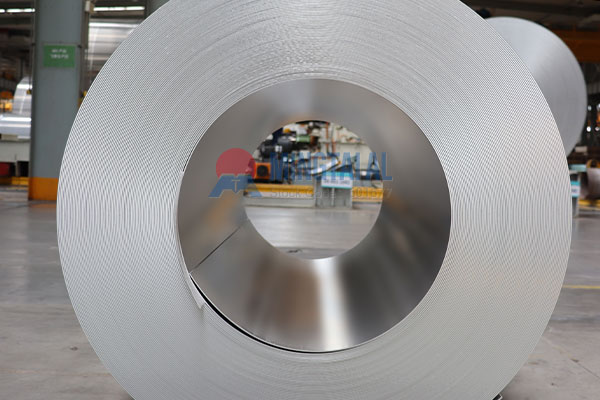
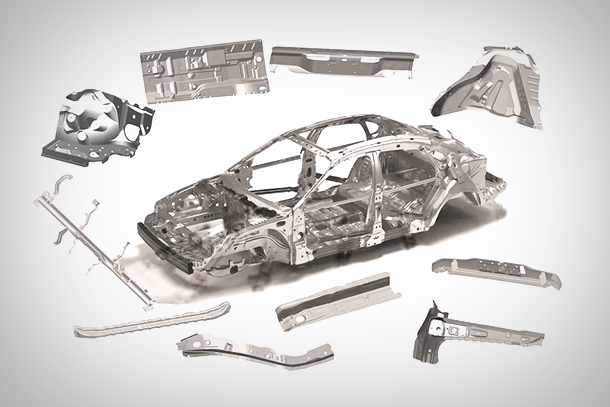
3003 h16 aluminum coil
Choosing 3003 H16 aluminum coil often comes down to finding the right balance between formability, strength, and production requirements. The H16 temper provides a harder condition than softer tempers, while 3003 aluminum remains suitable for a range of forming and fabrication applications.
For purchasing teams, the key is not simply to specify 3003 H16. Coil thickness, width, surface quality, dimensional requirements, and the intended forming process should also be considered when selecting material for production.
What Does 3003 H16 Mean?
3003 is an aluminum-manganese alloy commonly used where a combination of formability, corrosion resistance, and moderate strength is required.
The H16 temper indicates a strain-hardened condition. Compared with softer tempers, H16 provides a higher level of hardness and strength, which can be useful when the finished component needs better resistance to deformation.
In simple terms:
3003 alloy → good balance of formability and corrosion resistance
H16 temper → increased hardness and strength
This combination makes 3003 H16 aluminum coil a practical option for applications that need more rigidity than a softer temper while still requiring some forming capability.
How Does H16 Affect Formability?
Temper is an important consideration when aluminum coil will be bent, shaped, or otherwise fabricated.
As the material becomes harder, its ability to undergo extensive deformation generally decreases compared with softer tempers. However, this does not mean H16 is unsuitable for forming.
The appropriate choice depends on the type and degree of forming required.
|
Production requirement |
What to consider |
|
Light bending |
H16 can provide a useful balance of strength and formability |
|
Moderate forming |
Confirm the required bend radius and forming method |
|
Extensive forming |
A softer temper may be more appropriate |
|
Flat or lightly formed parts |
Higher hardness can provide useful rigidity |
|
Repeated production |
Consistent material properties become particularly important |
For this reason, the intended fabrication process should be confirmed before ordering an aluminum coil for forming.
Why Choose 3003 Aluminum Coil?
The 3003 alloy is widely considered for applications where manufacturers need a practical combination of workability and corrosion resistance.
Depending on the final product, 3003 aluminum coil can be used for components and products involving:
* Bending and forming
* Cutting and slitting
* Fabrication
* Heat-related applications
* General industrial components
Its versatility makes 3003 a useful alloy when the application does not require the higher strength of some other aluminum alloy series.
What Should You Check When Buying 3003 H16 Coil?
The alloy and temper are only part of the specification. A complete purchasing requirement should also include the physical dimensions and intended application.
Thickness
The required aluminum coil thickness depends on the finished component, forming method, and structural requirements. Thickness can also affect bending behavior and material usage.
Width
Coil width should match the planned cutting, slitting, or fabrication process. Providing the required width in advance can help reduce unnecessary material processing.
Surface Quality
For applications where the aluminum surface remains visible, consistent surface condition is important. The coil should be properly protected during storage, handling, and transportation to reduce unnecessary scratches or contamination.
Mechanical Requirements
If the application has specific strength, hardness, or forming requirements, these should be included in the material specification rather than relying only on the alloy designation.
3003 H16 vs. Softer Aluminum Tempers
One common question is whether H16 is better than a softer temper.
There is no single answer because the appropriate temper depends on the application.
Choose a harder temper when:
* Greater rigidity is important
* The component needs better resistance to deformation
* Only limited forming is required
Consider a softer temper when:
* The part requires deeper forming
* More bending or deformation is involved
* Formability is more important than hardness
The objective is to match the temper with the manufacturing process rather than simply choosing the hardest material available.
Processing and Fabrication Considerations
Before purchasing 3003 H16 aluminum coil, consider how the coil will be processed after delivery.
Depending on the application, the material may be:
Uncoiled → Slit or cut → Bent or formed → Assembled
Each stage can place different requirements on the aluminum.
For example, if the material will be slit into narrower strips, consistent coil width and surface condition are important. If it will be bent into a finished component, the required bend radius and forming method should be considered when selecting the temper.
Clear communication between the material supplier and production team can help avoid selecting a coil that is too hard or too soft for the intended process.
Getting the Right 3003 H16 Aluminum Coil Specification
A clear specification makes it easier to compare suppliers and request an accurate quotation.
When purchasing 3003 H16 aluminum coil, it is useful to provide:
1. Alloy and temper: 3003 H16
2. Thickness: Required coil thickness
3. Width: Required coil width
4. Coil requirements: Coil weight or other handling requirements
5. Surface condition: Based on the finished application
6. Processing: Slitting, cutting, bending, forming, or other requirements
7. Quantity: Estimated order volume
If you are unsure whether H16 is suitable for your application, providing the intended use and forming process can help narrow down the appropriate material specification.
3003 H16 Aluminum Coil for Industrial Applications
The value of 3003 H16 aluminum coil lies in its balance of alloy characteristics and temper. It can be a practical choice when an application needs more hardness and rigidity than softer aluminum conditions while retaining useful forming capability.
Henan Mingtai Aluminum supplies 3003 aluminum coil in different specifications for industrial and fabrication applications. Share your required thickness, width, temper, quantity, and application details to discuss a suitable aluminum coil option for your project.
FAQ
What does H16 mean in 3003 aluminum coil?
H16 is a strain-hardened temper that provides increased hardness and strength compared with softer tempers.
Is 3003 H16 aluminum coil suitable for forming?
Yes, it can be suitable for applications involving limited or moderate forming, depending on the forming requirements.
Is 3003 H16 harder than 3003 O?
Yes, H16 is a harder temper than the annealed O condition.
What should I specify when ordering 3003 H16 aluminum coil?
Alloy, temper, thickness, width, surface condition, quantity, and intended processing should be confirmed.