3003 aluminum sheet for battery case
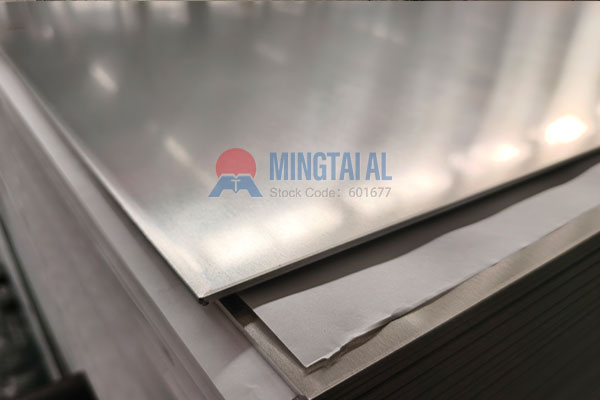
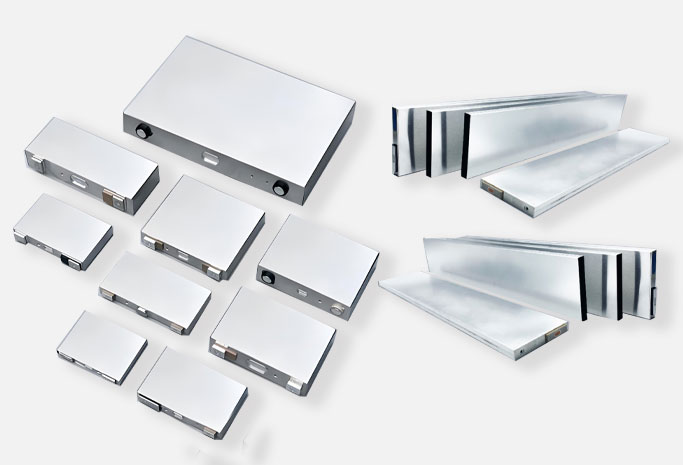
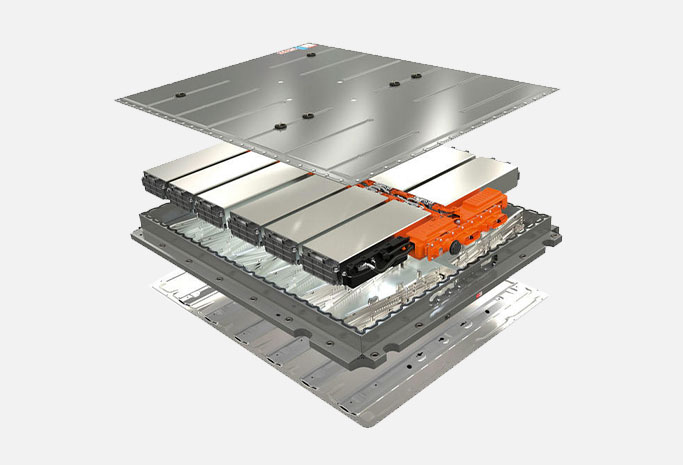
003 aluminum sheet for battery case is the preferred material for manufacturing prismatic power battery enclosures, thanks to its outstanding deep drawability and significant lightweight benefits. Among various aluminum alloys, 3003 strikes an ideal balance—softer than 5xxx, 6xxx, 2xxx, and 7xxx series (which are too hard for deep drawing), yet stronger than 1xxx and 8xxx series (which lack the necessary structural integrity for high‑capacity cells). This makes 3003 the natural choice for demanding deep‑draw applications.
Why 3003 Aluminum for Battery Enclosures?
3003 is an Al‑Mn alloy (manganese content typically 1.0‑1.5%) that offers several key advantages:
- Lightweight – Density of ~2.73 g/cm³, about one‑third that of steel. An aluminum case can reduce weight by more than 60% compared to steel, directly extending electric vehicle range.
- Excellent deep‑draw formability – High elongation and suitable work‑hardening characteristics enable complex multi‑stage drawing.
- Good corrosion resistance – Resists atmospheric moisture, organic acids, and many industrial environments.
- Weldability – Compatible with TIG, resistance, and laser welding processes.
The combination of these properties makes 3003 a reliable workhorse for prismatic battery cases, where both dimensional precision and mechanical integrity are critical.
Critical Process Parameters for Deep Drawing
Successful deep drawing depends on precise control of several variables. The table below summarises the key parameters and their typical ranges:
|
Parameter |
Typical Range |
Why It Matters |
|
Blank holder force |
30‑120 kN (depending on case size) |
Too low → wrinkling; too high → cracking |
|
First‑draw reduction ratio |
≤ 2.0 (generally) |
Exceeding this increases failure risk |
|
Wall thickness reduction |
10‑20% (controlled) |
Excessive thinning compromises strength |
|
Dimensional tolerance |
±0.05 mm (critical areas ±0.01 mm) |
Ensures proper assembly and sealing |
|
Surface roughness (sealing face) |
Ra ≤ 0.8 μm |
Directly affects leak‑tightness |
A notable benefit of 3003 is that, apart from the lid, the battery case can often be formed in a single deep‑draw operation—eliminating the need for bottom welding, simplifying production, and improving consistency.
O‑Temper vs. H14 – Which One to Choose?
This is one of the most frequent questions. The mechanical properties differ significantly between tempers:
|
Temper |
Tensile Strength (MPa) |
Yield Strength (MPa) |
Elongation |
Best Suited For |
|
O (annealed) |
95‑135 |
≥35 |
≥25% |
Deep, complex draws (prismatic cases) |
|
H14 (half‑hard) |
140‑180 |
≥115 |
≥9% |
Shallow draws or parts needing extra stiffness |
Selection guide:
- For high‑draw‑ratio, multi‑stage forming of square battery housings, O‑temper is the clear first choice because it maximises ductility and reduces cracking risk.
- For simpler shapes or when the final case requires higher rigidity, H14 offers a good trade‑off between strength and formability.
Research also shows that the maximum limiting drawing ratio (LDR) for 3003 is achieved with a partial anneal (retaining some work hardening)—meaning that the optimal condition is not simply “as soft as possible”, but a carefully controlled temper.
Common Defects and How to Prevent Them
For deep, square battery cases, corner cracking and flange wrinkling are the two most frequent issues, and they often conflict with each other. The table below outlines typical defects, their root causes, and practical countermeasures:
|
Defect |
Root Cause |
Prevention |
|
Corner cracking |
Excessive tensile stress at corners |
Optimise punch radius, improve lubrication, use progressive forming |
|
Flange wrinkling |
Insufficient blank holder force |
Increase blank holder force gradually |
|
Bottom cracking |
Uneven material flow |
Simulate and adjust forming sequence |
|
Uneven sidewall thickness |
Improper die clearance or feed rates |
Fine‑tune clearance and forming path |
|
Surface scratches |
Contaminated dies or poor lubrication |
Install automatic die cleaning, select suitable lubricants |
Achieving a defect‑free part often requires simulation‑based optimisation to resolve the trade‑off between cracking and wrinkling—especially for high‑aspect‑ratio rectangular cases.
Key Quality Indicators for Battery‑Grade 3003 Sheets
When evaluating 3003 sheets for battery case production, focus on these five quality metrics:
- Microstructural uniformity – Fine, homogeneous grains are essential. Coarse or uneven grain structures are a common reason for poor deep‑draw performance in generic 3003 products.
- Earing ratio – Low earing indicates low anisotropy, resulting in more uniform drawn edges and higher yield.
- Consistent mechanical properties – Batch‑to‑batch stability in tensile strength, yield strength, and elongation is non‑negotiable for reliable production.
- Surface quality – No scratches, dents, or oxidation discoloration that could affect subsequent forming or welding.
- Thickness tolerance – Tight gauge control ensures uniform wall thickness after drawing.
Typical thicknesses for battery case applications range from 0.5 to 3.0 mm, with width and length customised per order.
Putting It All Together
Choosing the right 3003 sheet and controlling the deep‑draw process directly impact case quality, yield, and battery reliability. Focus on three areas:
- Temper – O for complex draws, H14 for lighter draws or added stiffness.
- Process – Optimise holder force, draw ratio, lubrication, and die design.
- Material – Ensure uniform grain structure and stable batch‑to‑batch properties.
The 3003 sheet for battery cases is not a commodity; it requires dedicated process control. With proper material and process, manufacturers achieve defect‑free cases for lighter, safer battery systems.
Mingtai Aluminum offers 3003 sheets engineered for deep drawing, with proven consistency and reliable delivery. Reach out to discuss your needs.
FAQ
Q1: O‑temper or H14 for deep‑drawing battery cases?
A: O‑temper is preferred for complex deep draws; H14 works for shallower draws or when extra strength is needed.
Q2: What are the most common defects in 3003 deep drawing?
A: Corner cracking and flange wrinkling are the top two, and they often require a balanced approach to control.
Q3: How much weight can an aluminum case save over steel?
A: An aluminum 3003 case can be over 60% lighter than a comparable steel case.
Q4: What is the recommended first‑draw reduction ratio for 3003?
A: Generally keep it at 2.0 or lower to avoid failure.
Q5: Why do some 3003 sheets perform poorly in deep drawing?
A: Poor performance usually stems from coarse or non‑uniform grain structure—choose material with dedicated battery‑grade processing.