Aluminum Sheet for Beverage Can Ends
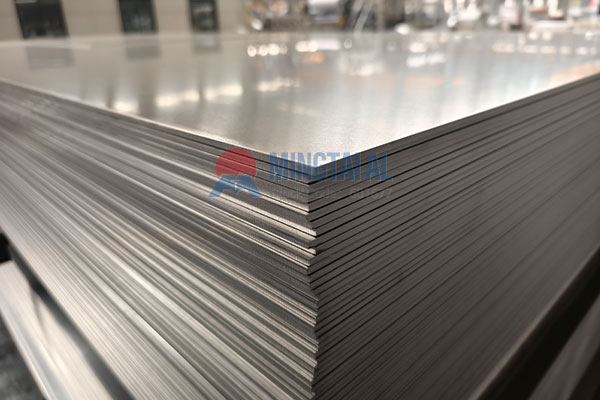
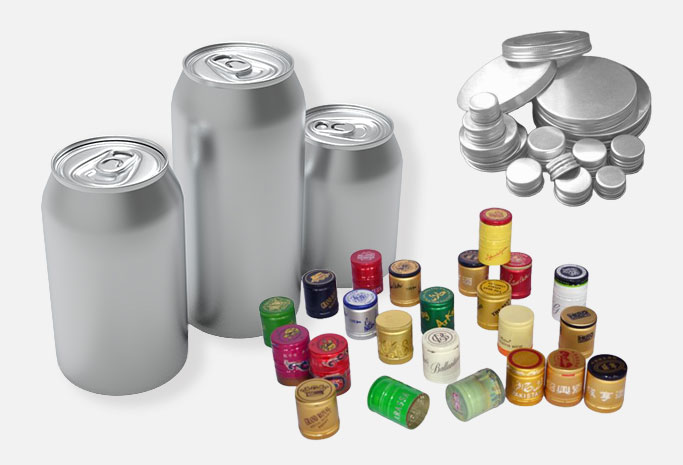
Aluminum Sheet for Beverage Can Ends goes through a precision manufacturing process—stamping, drawing, and curling—each step testing the material’s limits. Any fluctuation in properties can cause cracking, earing, or dimensional deviations, directly hurting production yield. AA5182 aluminum-magnesium alloy is the preferred choice for can ends and tabs worldwide. But the “5182” designation alone isn’t enough; what truly determines line efficiency and product quality is the stability and controllability of formability.
Why 5182?
5182 belongs to the Al-Mg series, with a higher magnesium content that delivers excellent strength while retaining good formability. Compared to 5052, it offers higher strength; versus 5082, it strikes a better balance between strength and formability. This combination makes it the dominant material for can ends and tabs.
Three Core Indicators of Formability
Evaluating formability for this application comes down to three aspects:
1. Balance between strength and elongation
Insufficient strength leads to deformation under load; inadequate elongation causes cracking during stamping. The ideal material must achieve a precise equilibrium between these two properties. Different can-end designs (varying rivet height, scoring depth, or diameter) demand different strength-elongation ratios. The right choice depends on your specific tooling and stamping process.
2. Earing performance
Earing refers to the wavy edges that appear after stamping, directly affecting sealing and appearance. It originates from anisotropy—uneven flow behavior in different directions. Casting methods (continuous vs. direct-chill) produce different crystallographic textures, which in turn influence earing severity. A high-quality sheet should keep earing within an acceptable range.
3. Thickness tolerance
Can-end stock is typically only a fraction of a millimeter thick. At such thin gauges, thickness accuracy is just as critical as mechanical properties. Variations alter material flow during forming, impact final strength, and create inconsistency across the same batch—leading to more line adjustments and higher scrap rates.
Common Forming Defects in Production
Cracking
- Most severe failure mode.
- Occurs when local strain exceeds the material’s ultimate elongation.
- Plastic reserve is most heavily consumed during pre‑stretching and reverse stretching.
- Common causes:
- Unstable elongation
- Uneven grain structure
- Stress concentrations from thickness deviations
Lüders Bands
- Irregular surface markings appearing during early stretching.
- Unacceptable for appearance‑sensitive products like can ends.
- Can be effectively eliminated through optimized processing.
Strength Drop After Baking
- Can ends often undergo lacquer curing at elevated temperatures.
- 5182 tends to lose some yield strength after baking.
- Therefore, as‑shipped strength alone is insufficient.
- Post‑bake performance is critical—especially for carbonated beverage can ends that must withstand internal pressure.
How to Choose Quality 5182 Can‑End Sheet?
Before selecting a supplier, clarify your own requirements:
- Intended use—carbonated or non‑carbonated beverages (strength demands differ)
- Stamping parameters—tool type, press speed, lubrication method
- Baking conditions—whether curing is involved and at what temperature
During incoming inspection, pay close attention to:
- Actual mechanical property data for each lot (tensile, yield, elongation)
- Thickness tolerance compliance
- Surface quality—free from scratches, corrosion, oil stains, and roll marks
For long‑term partnerships, however, the most critical factor is batch‑to‑batch consistency. The biggest headache on a production line is rarely “this lot is substandard”—it’s “this lot behaves differently from the last one.” Lines are tuned to specific material characteristics; variations mean retooling, higher scrap, and even total rejection. A supplier’s process control capability often tells you more than a single lot’s pass report.
What Really Counts
5182 is the mainstream choice, but success in production depends on consistent formability.
The key factors are:
- The right balance between strength and elongation
- Effective control of earing
- Tight thickness management
- Unwavering batch‑to‑batch consistency
When these are in place, you get smarter material selection and more reliable production outcomes.
Ultimately, the real value of Aluminum Sheet for Beverage Can Ends lies in its predictable forming behavior—not just the grade. That is what distinguishes a dependable supply from a constant source of trouble.
Henan Mingtai Al offers reliable 5182 aluminum sheet for beverage can ends with consistent formability and tight thickness control. Contact us to discuss your specific requirements.
FAQ
Q: What is the most critical formability indicator for 5182 can‑end sheet?
A: The combined performance of strength‑elongation balance, earing control, and thickness tolerance.
Q: Why does 5182 lose strength after baking?
A: This is an inherent characteristic of the alloy; evaluate post‑bake strength rather than just the as‑shipped value.