aluminum plate for mold tooling
In mold manufacturing and precision machining, material selection directly determines the final product's accuracy and service life. Many processing headaches—warping, distortion, dimensional instability—often trace back not to equipment or technique, but to residual stress trapped inside the aluminum plate. Low internal stress aluminum plate for mold tooling is engineered specifically to solve this core problem.
What Is "Low Internal Stress" and Why Is It Critical for Mold Making?
Residual stress builds up in aluminum plates during rolling, quenching, and heat treatment. When CNC machining removes significant material, these stresses redistribute, causing the plate to bend, twist, or deform. A plate with poor internal stress control might suddenly warp halfway through machining—turning an entire batch into scrap.
Low internal stress plates undergo pre‑stretching treatment (T651 temper) to effectively release residual stress. Plates processed this way maintain dimensional stability even during high‑speed machining and extensive material removal. The result: fewer rejects, shorter cycle times, and lower overall costs.
Which Alloy Should You Choose for Mold Tooling?
Different alloys serve different purposes. Picking the right one makes all the difference.
6061‑T651 — The Versatile Workhorse
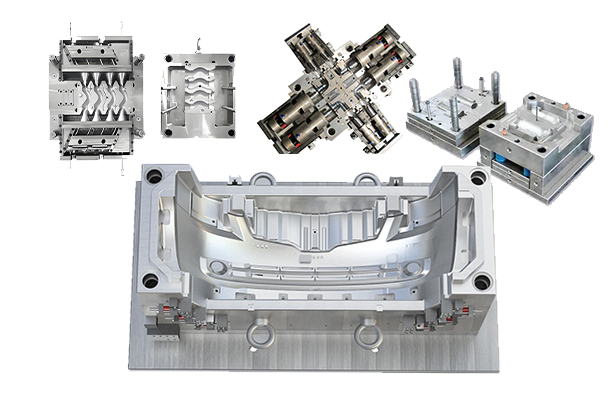
This is the most widely used alloy in mold manufacturing. It offers a strong combination of mechanical strength, excellent machinability, weldability, and corrosion resistance. Suitable for most injection molds, vacuum‑forming molds, jigs, and fixtures. Its cost‑effectiveness makes it the go‑to choice for general‑purpose applications.
5083‑H111/H32 — For Demanding Conditions
When the operating environment is tougher—requiring higher strength, superior corrosion resistance, and better weldability—5083 steps up. Stronger than 6061, it works well for heavy‑duty jigs, transport equipment, and specialty mold applications.
7075‑T651 — The High‑Strength Option
One of the strongest aluminum alloys available, 7075 offers hardness and wear resistance approaching that of many steels. Ideal for molds subject to high injection pressures, long production runs, or abrasive plastics. Shoemolds and high‑intensity tooling often specify this grade.
A quick rule of thumb:
- Go with 6061‑T651 for general use
- Choose 5083 when corrosion resistance and welding are top priorities
- Pick 7075 for high‑load, long‑life applications
Key Quality Metrics to Check When Sourcing Mold Aluminum Plate
Choosing the right alloy is only the beginning. The following indicators directly determine machining success:
Flatness Tolerance — A core specification for mold plate. Regular plates may show deviations of several millimeters per meter, while high‑quality mold plates achieve within 0.5mm/m or even tighter.
Pre‑Stretching Treatment (T651 Temper) — Always verify whether the plate has been pre‑stretched. This treatment is essential for long‑term dimensional stability and distortion prevention.
Internal Quality — The plate must be free from porosity, slag inclusions, and other internal defects. For thicker plates, ultrasonic inspection is recommended.
Thickness Tolerance — Precision molds require tight thickness tolerances, typically on the positive side.
Hardness — Hardness values should meet the applicable standard for the chosen alloy.
Why Are Manufacturers Moving from Steel to Aluminum Molds?
The advantages go beyond lighter weight:
- Machining efficiency — Aluminum cuts much faster than steel; mold fabrication time can be reduced to roughly one‑tenth
- Thermal conductivity — Aluminum conducts heat about five times better than tool steel, shortening cooling cycles in injection molding
- Weight reduction — At one‑third the density of steel, aluminum reduces equipment wear and extends machine life
- Dimensional stability — Low residual stress ensures consistent performance throughout the mold's service life
These benefits make aluminum plate an ideal choice for prototype molds, short‑run production, and even certain high‑volume applications.
Three Common Misconceptions — Clarified
"All 6061 aluminum plates are the same."
6061‑T4 (without stretching) works for simple structures with minimal material removal. But 6061‑T651, with its pre‑stretching and stress relief, is the correct choice for precision mold tooling.
"Cast aluminum plate is always better than rolled plate."
Cast plates (like MIC‑6) offer excellent flatness and very low internal stress, but lower strength. Pre‑stretched rolled 6061‑T651 often provides a better overall balance of strength, machinability, and cost. Each has its place—it depends on the application.
"My supplier will handle surface treatment for me."
Not all aluminum plate suppliers offer surface treatment or secondary processing. Mingtai Aluminum focuses on delivering high‑quality base material for mold tooling. We do not engage in surface treatment or reprocessing of aluminum sheet/plate—ensuring you receive a clean, reliable raw material and the freedom to choose your own finishing solutions.
A Final Consideration for Your Mold Tooling Project
Selecting the right low‑internal‑stress aluminum plate is about more than just buying material—it is laying the foundation for the accuracy and efficiency of your entire mold project. Every detail matters, from alloy grade and heat treatment to flatness and internal quality.
As a professional aluminum plate manufacturer, Mingtai Aluminum supplies 6061‑T651, 5083, 7075, and other series of aluminum plate for mold tooling applications, with customizable thickness options to support your project success.
FAQ
Q: What is low internal stress aluminum plate and why does it matter for mold tooling?
A: It is aluminum plate that has been pre‑stretched to release residual stress, preventing warping and deformation during CNC machining.
Q: Which aluminum alloy is best for general‑purpose mold tooling?
A: 6061‑T651 is the most popular choice, offering a strong balance of strength, machinability, and cost‑effectiveness.
Q: What key quality metrics should I check when sourcing mold aluminum plate?
A: Focus on flatness tolerance (≤0.5mm/m is ideal), T651 temper, internal quality, thickness tolerance, and hardness.
Q: Does Mingtai Aluminum offer surface treatment or secondary processing?
A: Mingtai Aluminum provides high‑quality base plates and does not perform surface treatment or reprocessing, giving you full flexibility for your own finishing.