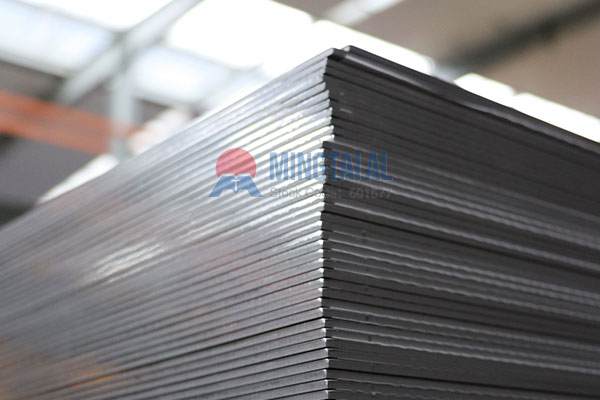
anodizing grade aluminum sheet
Anodizing doesn’t hide flaws — it makes them obvious.
When you specify anodizing grade aluminum sheet, you expect a clean, uniform finish after oxidation. But if the final surface shows streaks, colour mismatches, or dark spots, the anodizing line is often blamed unfairly. In most cases, the real issue was already in the metal before it ever reached the tank.
Here’s why. Rolling processes include a planishing step that gives the sheet a smooth, “perfect” look to the naked eye. However, the chemical pre‑treatment used before anodizing — such as etching — strips away that surface layer. Any subsurface irregularities — uneven grain, tiny precipitates, micro‑scratches, or non‑metallic inclusions — then become fully visible. Since the anodic oxide film is transparent, it doesn’t mask these defects; it magnifies them. If you apply colour, they stand out even more.
So the critical question isn’t “can we fix this in anodizing?” It’s: are we inspecting the right surface characteristics before we commit to a material?
What makes a sheet truly suitable for anodizing?
Not every aluminium coil qualifies. To be fit for anodizing, the substrate must meet strict criteria in four areas:
- Surface uniformity – The entire sheet must deliver consistent gloss, grain, and colour tone. No localised halos, orange‑peel texture, or patchy brightness. This depends on precision rolling and high‑quality mill rolls.
- Minimal surface defects – Scratches, dents, roll marks, or oil stains are unacceptable. A single light scratch can break the continuity of the oxide layer; a faint roll mark can ruin the appearance of a large panel.
- Mill finish selection – The as‑rolled surface determines the final aesthetic. A bright substrate works best for mirror‑like finishes; a matte base suits satin or brushed effects. You must specify your target appearance early.
- Alloy choice – This is the most overlooked but decisive factor. Different alloys react very differently during anodizing:
- 5005 is widely recognised as an excellent choice — it forms a transparent, uniform oxide layer with stable colour uptake.
- 1xxx series (e.g., 1100) gives brilliant brightness but demands tighter process control.
- 3xxx series (e.g., 3003) produces a slightly grey film, acceptable for non‑decorative uses.
- *Casting alloys with high silicon content should be avoided entirely — they yield dull, dark films.*
Which standards can you rely on?
Visual checks alone are not enough. Internationally accepted standards give you and your supplier a common language for acceptance:
- ISO 7599:2018 – specifies test methods and property requirements for decorative and protective anodic coatings, and lists aluminium grades suitable for anodizing.
- ASTM B209 – covers dimensions, tolerances, and mill finish specifications for aluminium sheet and plate.
- BS EN 485-1 – defines delivery conditions, mechanical properties, and permissible surface imperfections.
Beyond citing these standards, always agree on limiting samples — physical reference pieces signed off by both parties that define the maximum acceptable defect level. This prevents later disputes.
Four common mistakes — and how to avoid them
Mistake 1: Assuming your supplier knows the end use.
Commercial‑grade material has much looser surface requirements. If you don’t state your intention, you may receive stock that looks fine in the warehouse but fails after anodizing.
Fix: Write *“intended for anodizing”* clearly on your purchase order and inquiry.
Mistake 2: Focusing only on price.
Pushing too hard on cost often leads to receiving downgraded or second‑quality coils. The money saved on material is trivial compared to the cost of scrapping an entire batch of anodised parts.
Mistake 3: Not marking visible surfaces on drawings.
If only one side of the sheet will be exposed, your drawing must clearly indicate which faces require anodizing and which can tolerate more defects. Without this, the supplier may either over‑specify (raising cost) or under‑specify (compromising the appearance).
Mistake 4: Skipping pre‑delivery anodizing trials.
This is the single most effective quality check — and the one most often missed.
Fix: Ask your supplier to anodise sample pieces from the actual production batch *before* shipping the full order. A small test piece tells you more than a stack of certificates.
Checklist for your next order
Incorporate these actions into your procurement process to minimise risk:
- State “intended for anodizing” in writing on every order.
- Agree on and retain physical limiting samples.
- Mark all anodizing‑required surfaces on engineering drawings.
- Request pre‑delivery anodising samples from the batch.
- Review the batch test reports — check chemical composition, mechanical properties, and surface roughness.
These steps take only a few minutes to specify, but they can save weeks of rework and rejections.
FAQ
Q: What’s the real difference between anodizing‑grade and commercial‑grade sheet?
A: Anodizing‑grade sheet is produced with much tighter control over surface defects and microstructure, because even tiny flaws invisible on the raw material become visible after anodizing.
Q: Which alloy should I choose — 5005 or 1100?
A: Choose 5005 when colour consistency and uniformity are critical; choose 1100 only if you need maximum brightness and can handle tighter process control.
Q: What’s the one thing I should always ask a supplier before ordering?
A: Ask for pre‑delivery anodizing samples from the exact batch — visual inspection of the anodised sample is more reliable than any specification sheet.
When you order anodizing grade aluminum sheet, make surface inspection part of your specification — not an afterthought on the receiving dock.
*Henan Mingtai Aluminum focuses on producing high‑quality aluminium sheet and coil for demanding applications. For technical support on material selection, feel free to reach out to our team.*