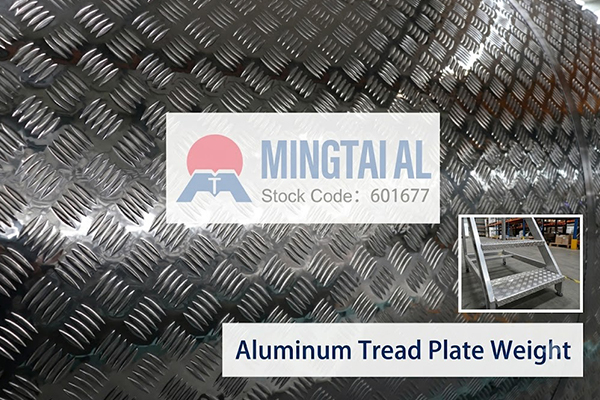
aluminum tread plate weight
When calculating aluminum tread plate weight, engineers and designers typically focus on three core questions: which thickness fits the project, the total weight of a full sheet, and the most reliable calculation method. The answers affect not only freight costs but also structural performance—so getting them right matters from the start.
Why Does Weight Deserve Careful Attention?
From a structural standpoint, increasing thickness adds weight but significantly improves bending rigidity. In applications like truck floors, equipment platforms, and marine walkways, the plate must withstand foot traffic, cargo loads, or even vehicle rolling. Underestimating weight often means underestimating deflection and safety margins.
From a logistics perspective, accurate per‑sheet weight directly drives freight estimates. For export orders, the total palletised weight influences sea freight charges and customs declarations. Aluminum tread plate is roughly two‑thirds lighter than steel, but thickness variations still produce notable differences—choosing the wrong gauge can easily blow a shipping budget.
Two Formulas You Will Actually Use
Quick estimation (most common):
> Weight per square metre (kg) = 2.96 × thickness (mm)
The factor 2.96 already accounts for the raised pattern. For example, a 3 mm thick plate weighs about 8.9 kg per square metre.
Precise calculation for a full sheet:
> Sheet weight (kg) = Length (m) × Width (m) × Thickness (mm) × 2.71 + pattern allowance
Here 2.71 is the density of aluminium (g/cm³). The pattern allowance is typically around 0.6 kg per square metre, but exact values vary by tread type.
Important note: The thickness marked on aluminium tread plate usually refers to the base thickness (without the raised pattern). The pattern height is generally 0.8‑1.5 mm. Always calculate weight based on base thickness, not the total measured height.
Common Thicknesses and Their Weight per Square Metre
|
Thickness (mm) |
Approx. weight (kg/m²) |
|
2.0 |
5.9 |
|
2.5 |
7.4 |
|
3.0 |
8.9 |
|
4.0 |
11.8 |
|
5.0 |
14.8 |
|
6.0 |
17.8 |
Values are estimates; actual weights depend slightly on pattern style and alloy grade.
Choosing the Right Thickness for Your Application
Thickness selection goes beyond weight—it is about matching performance to real‑world use.
- 2.0‑3.0 mm – Indoor walkways, decorative cladding, light‑duty tool boxes, and equipment enclosures. Lightweight and easy to form, suitable for low‑load areas.
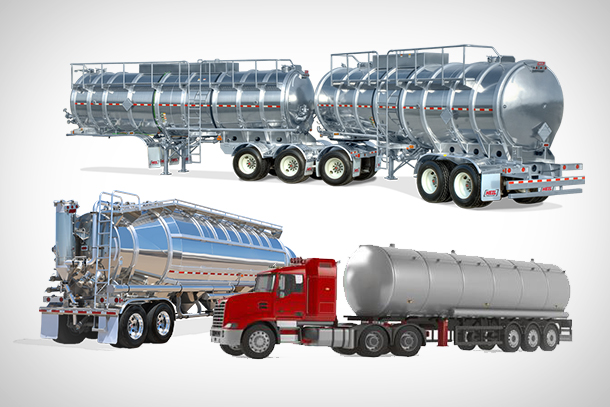
- 3.0‑5.0 mm – Truck bed flooring, trailer decks, industrial platforms, stair treads, and warehouse ramps. This is the most popular range, balancing strength and weight. For cold‑storage rooms and anti‑slip van floors, 3.0 mm is a common starting point.
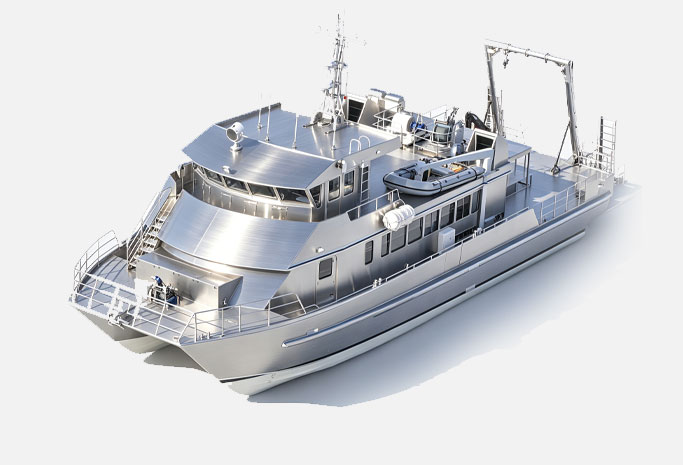
- 5.0 mm and above – Heavy equipment bases, ship decks, high‑traffic industrial floors, and surfaces that must withstand forklifts or heavy machinery.
Alloy choice also matters. Common tread plate alloys include 1060, 3003, 5052, and 6061. 1060 works for indoor general use; 3003 offers higher strength and is popular for truck bodies; 5052 provides excellent corrosion resistance, ideal for marine and coastal platforms; 6061 delivers the highest strength for heavy‑duty industrial applications.
Three Common Calculation Mistakes
- Using total thickness instead of base thickness. Pattern heights differ by more than 1 mm between styles. Using total thickness overestimates weight—always verify which thickness your supplier specifies.
- Ignoring density differences among alloys. Pure aluminium is about 2.71 g/cm³, while alloyed grades are closer to 2.68 g/cm³. The variation is small, but for large volumes it can accumulate and affect freight figures.
- Treating tread plate as flat plate. The raised pattern adds 2‑5 % to the total weight. The quick formula (2.96 × thickness) already includes this allowance—do not add it again.
Practical Tips for Your Project
- For structural design, rely on base thickness and the unit weight provided by your supplier.
- For shipping calculations, request the exact per‑sheet weight from the mill.
- Different manufacturers and tread patterns may produce slight deviations, even for the same nominal thickness. Always confirm actual data before ordering.
Accurate aluminum tread plate weight data is not complicated—it just requires clarity on thickness definitions, alloy selection, and the right formula. With reliable numbers, you can ensure structural integrity and control logistics costs effectively. Whether you are finalising a design or preparing a shipment, these calculation principles give you confidence throughout the process.
For consistent quality and precise weight specifications, Henan Mingtai Al offers a full range of thicknesses and alloys to suit your application needs.
FAQ
Q: What is the quick formula for estimating tread plate weight?
A: Weight per square metre (kg) = 2.96 × thickness (mm), which includes the pattern allowance.
Q: Does the tread pattern affect the weight?
A: Yes, different patterns add about 2‑5 % compared to flat plate, with a typical allowance of 0.6 kg/m².
Q: How do I choose the right thickness for my use?
A: Use 2‑3 mm for light indoor work, 3‑5 mm for truck floors and platforms, and 5 mm+ for heavy equipment and marine decks.
Q: Is the density the same for all aluminium alloys?
A: No—pure aluminium is ~2.71 g/cm³, while alloys are ~2.68 g/cm³; the difference is minor but worth noting for large orders.