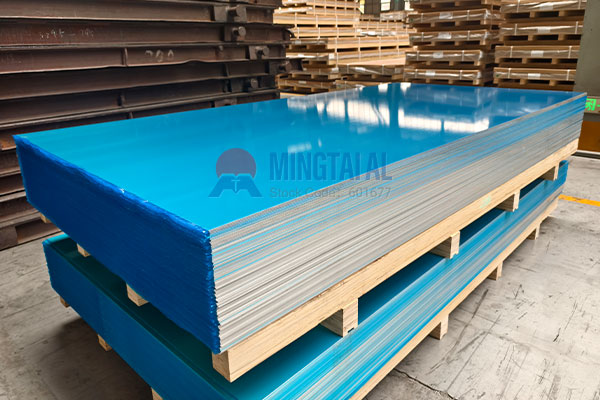
aluminum sheet for refrigerated truck
Every refrigerated trailer faces a harsh reality: constant temperature swings, road vibration, and corrosive moisture. The lining material – your choice of aluminum sheet for refrigerated truck – determines how well that reality is handled. Get it wrong, and you pay for it in repairs, fuel waste, and shortened body life. Get it right, and you gain years of reliable service. This guide focuses on four practical factors that separate a smart buy from an expensive mistake.
Alloy Choices: 5052-H32, 5754-H32, or 6061-T6?
Many assume that higher strength is always better. But for thin sheets (1–3 mm) used in panel linings, formability and corrosion resistance often matter more than brute tensile strength. Here is how the three common alloys actually perform in service:
- 5052-H32
- Excellent bendability and stamping performance – no cracking even on tight radius bends
- Very good resistance to salt spray and humid environments
- Stable supply and the best cost‑performance balance for most standard refrigerated trailers
- 5754-H32
- Higher magnesium content gives better impact and fatigue resistance
- Superior weldability – post‑weld strength retention is noticeably better than 6061
- Preferred for coastal routes, high‑humidity regions, or heavy‑duty冷链 operations
- 6061-T6
- High strength on paper, but thin sheets often crack during bending
- Welding reduces its strength by roughly 40%, and thermal cycling can cause “oil‑canning” (wavy distortion)
- Better suited for structural frames, not for inner or outer skin panels
> Bottom line for alloy: Choose 5052-H32 for general use; pick 5754-H32 when you need extra toughness and weldability. Avoid 6061-T6 for thin linings.
Determining the Right Thickness – 1.5 mm to 3.0 mm
Thickness selection depends on the vehicle size, cargo weight, and road conditions. The typical range for panel linings is 1.5 mm – 3.0 mm, and each thickness serves a specific purpose:
- 1.5 – 2.0 mm – Ideal for light‑duty city delivery vans and side panels where weight saving is the top priority.
- 2.0 – 2.5 mm – The most popular choice, balancing strength, formability, and cost – works for the majority of standard refrigerated boxes.
- 2.5 – 3.0 mm – Used for heavy‑duty trailers, floor panels, or areas requiring extra impact resistance.
Going too thin risks denting and deformation; too thick adds unnecessary weight and cost. Remember, the aluminum sheet acts as a protective structural skin – insulation comes from the polyurethane foam or other core materials bonded to it.
Why Aluminum Works for Refrigerated Bodies
Compared with steel or fiberglass, aluminum brings three clear advantages to refrigerated trailers:
- Weight reduction – Density is about one‑third that of steel. An all‑aluminum skin can cut body weight by a substantial margin, which directly translates into more payload and lower fuel consumption.
- Corrosion resistance – The natural oxide layer on aluminum stands up well to moisture, salt, and temperature swings. The 5xxx‑series alloys (like 5052 and 5754) are particularly known for their reliability in wet, cold environments.
- Better bonding for insulation – The oxide surface allows structural adhesives used with polyurethane foam to form a strong, durable bond. This helps maintain a tight seal and reduces cold‑air leakage over years of service.
Wide Sheets Mean Fewer Joints and Better Sealing
Every joint and welded seam is a potential weak point – not only for thermal leakage but also for corrosion initiation, because welding destroys the protective oxide layer. Standard coils are often limited to widths under 1500 mm, which forces multiple seams across the panel height.
Wide‑width aluminum sheets (for example, up to 2500 mm or more) allow you to cover the full height of a side panel with a single piece – no splicing, no extra welds. The benefits are immediate:
- Improved flatness and visual appearance
- Lower risk of moisture ingress through seam corrosion
- Less welding and grinding work, saving fabrication time and cost
When sourcing, always ask about maximum available width and whether custom dimensions are supported.
Key Points to Confirm Before Ordering
To avoid mismatched specifications, make sure you check these items with your supplier:
- Application position – side lining, front wall, roof, or floor? Each may require different thickness or surface pattern.
- Alloy and temper – confirm 5052‑H32 or 5754‑H32, not a substitute with similar name but different properties.
- Dimensions – thickness, width, length, and whether tread plate (checkered) surface is needed.
- Delivery capacity – for batch production, ensure the supplier has consistent stock and short lead times.
- Custom cutting – confirm if they can provide cut‑to‑length or custom sizes to reduce your own cutting waste.
This guide covers only the raw material selection; surface treatments or secondary processing (like painting or laminating) are not discussed here, as they depend on your specific production line.
For a dependable source of aluminum sheet for refrigerated truck bodies, Mingtai Aluminum supplies a full range of 5052, 5754, and other 5‑series alloys with flexible dimensions and stable mill capacity to support your production schedule.
FAQ
Q: Which alloy is best for most refrigerated truck linings?
A: 5052‑H32 offers the best overall balance of formability, corrosion resistance, and cost for typical applications.
Q: What thickness should I choose for a standard side panel?
A: 2.0 – 2.5 mm is the sweet spot for most medium‑duty refrigerated trailers.
Q: Why bother with wide sheets instead of standard widths?
A: Wide sheets eliminate seams and welds, which improves sealing, reduces corrosion risks, and speeds up fabrication.