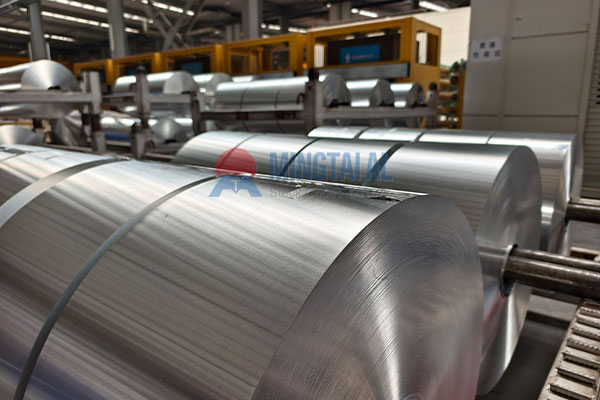
aluminum foil for capacitor
The performance stability of aluminum electrolytic capacitors is largely determined by one core raw material: aluminum foil for capacitor. Inside a capacitor, the foil serves as the key conductive and energy‑storing element. Its quality directly affects capacitance, voltage tolerance, leakage current, and service life. This is why high‑purity aluminum foil has become a critical focus in capacitor manufacturing.
Why High Purity Matters
A stable and uniform oxide layer (alumina) must form on the foil surface to act as the dielectric. If the aluminum contains too many impurities—especially copper, iron, silicon, or manganese—these elements disrupt the oxide layer’s uniformity during anodizing, leading to higher leakage current and lower breakdown voltage.
In practice, purity of 99.6% or above is considered the entry point for capacitor‑grade foil. Higher purities are reserved for more demanding uses:
- ≥99.6% (e.g., 1060/1070) – suitable for general capacitor production
- ≥99.85% (e.g., 1085) – preferred for electrolytic capacitors requiring higher reliability
- ≥99.90% to 99.99% (e.g., 1N90, CH99) – used in high‑voltage, high‑frequency, and premium applications
Purity differences also affect downstream processes—an etching recipe that works well for 99.85% foil may not be effective at 99.80%. Consistency in purity is as important as the purity level itself.
Thickness Selection – Matching the Right Gauge to the Capacitor Type
Capacitor foils are classified by their role:
- Cathode foil – thickness from 0.015 mm to 0.06 mm, used for the negative electrode
- Low‑voltage anode foil – 0.06 mm to 0.1 mm
- High‑voltage anode foil – 0.065 mm to 0.1 mm, requiring high‑purity aluminum to ensure voltage endurance
Thickness tolerance directly impacts capacitance consistency. The tighter the gauge control, the better the batch‑to‑batch uniformity of the finished capacitors. For raw foil supply, thicknesses starting from 20 μm (0.02 mm) already cover cathode foil and part of the low‑voltage anode segment.
Key Performance Metrics to Consider
When evaluating high‑purity capacitor foil, several technical indicators deserve close attention:
- Electrical conductivity – typically reaches 61.5% IACS or higher. Better conductivity means lower equivalent series resistance (ESR) and reduced temperature rise.
- Mechanical properties – vary with temper:
- Hard temper (H18) for anode foils – tensile strength around 180–260 MPa
- Soft temper (O) for cathode foils – tensile strength in the range of 60–200 MPa
- Surface quality and pinhole control – oil residues, scratches, or other defects impair subsequent processing. Pinholes are especially risky—if densely distributed, they can lead to premature breakdown in service. Industry standards set strict limits on pinhole counts.
- Batch‑to‑batch consistency – from thickness tolerance to chemical composition, every variation ultimately shows up in the finished capacitor’s yield and reliability.
Common Application Fields
High‑purity capacitor foils are used across a broad spectrum of industries:
- Consumer electronics – mobile phones, computers, home appliance power supplies, LED drivers
- Automotive electronics – ECU units, on‑board chargers, battery management systems (BMS), with requirements for automotive‑grade qualification and long‑term durability
- Renewable energy and storage – PV inverters, wind turbine converters, energy storage systems, charging stations – all demand large capacitance and extended service life (≥5,000 hours)
- Telecommunications and data centers – 5G base station power supplies, server power modules – where 24/7 uninterrupted operation is non‑negotiable
With the expansion of 5G networks, electric vehicles, and renewable energy systems, the demand for high‑purity capacitor foil continues to grow steadily.
Core Considerations
Selecting the right material is not just about meeting a purity number. It requires a balanced assessment of purity grade, thickness precision, surface integrity, mechanical strength, and supply consistency. High purity provides the foundation for a robust oxide layer, which in turn determines the capacitor’s voltage rating and operational lifespan. Thickness, on the other hand, must be matched to the specific capacitor design—whether cathode or anode, low‑voltage or high‑voltage. Ultimately, when sourcing aluminum foil for capacitor production, the focus should be on these interrelated factors rather than on any single specification in isolation.
For reliable supply of high purity aluminum foil for capacitor applications, Mingtai Aluminum offers a comprehensive range of thickness options from 20μm upward with consistent quality and stable mechanical properties.
FAQ
Q: What minimum purity is required for capacitor foil?
A: Typically 99.6% or higher; high‑voltage and high‑reliability applications require 99.85% to 99.99%.
Q: How does foil thickness affect capacitor performance?
A: Thinner foils (20–60μm) suit cathodes and low‑voltage anodes, while thicker ones (65–100μm) are needed for high‑voltage anodes.
Q: Why is high purity so critical?
A: Impurities disturb oxide layer formation, increasing leakage current and reducing breakdown voltage and lifespan.
Q: What thickness range is available from your supply?
A: We supply capacitor foil from 20μm upward, covering cathode and selected low‑voltage anode applications.
Q: Where are high‑purity capacitor foils mainly used?
A: In consumer electronics, automotive electronics, renewable energy systems, 5G infrastructure, and data centers.