5005 aluminum sheet anodizing
Anodized aluminum panels are prized for their metallic finish, weather resistance, and decorative appeal in building facades, interiors, and transportation. Yet, colour mismatch after anodizing remains one of the most frequent concerns on project sites. Many assume the anodizing bath is the main culprit, but in reality, the first and most critical step for colour consistency starts with the aluminium substrate itself — and that is where 5005 aluminum sheet anodizing begins to make a real difference.
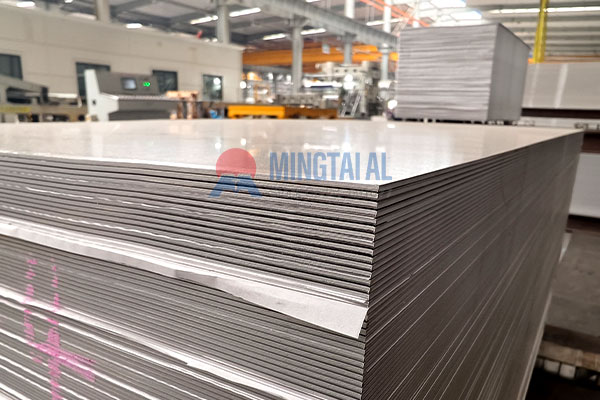
Why 5005 Is the Preferred Alloy for Anodized Flat Sheets
5005 is an Al-Mg (5xxx series) alloy that cannot be strengthened by heat treatment. It contains roughly 0.5–1.1% magnesium, with silicon and iron kept to low levels.
For anodizing applications, 5005 is widely recognised as the best choice for flat sheets and stamped parts. Here is why:
- Higher purity means fewer interfering elements during anodizing
- The oxide film is more transparent, enhancing the metallic lustre
- Less tendency for colour variation and streaking compared with many other alloys
> A common misconception: some projects mix 5005 sheets with 6063 extrusions. But 5005 is optimised for flat products, while 6063 suits profiles. Their compositions and processing differ, so anodised colours will not match perfectly — expect natural differences.
What Actually Causes Colour Variation in Anodizing?
Anodizing converts the aluminium surface into an oxide layer. However, aluminium alloys contain magnesium, silicon, iron, manganese, copper, and other elements — these do not react like aluminium and become trapped in the oxide film, affecting the final colour and clarity.
Each element influences the outcome differently:
- Silicon (Si) – adds a greyish tint
- Manganese (Mn) – produces a brownish tone
- Iron (Fe) – reduces gloss and darkens the surface
- Copper (Cu) – increases brightness and reflectivity
Studies indicate that even within the 5005A grade, higher iron and silicon content noticeably affects anodised gloss and shade. More importantly, batch‑to‑batch chemical variations are inevitable — within the standard specification. This means that two batches of the same 5005 alloy, from the same supplier, can still yield visible colour differences after anodizing.
Practical Steps to Control Colour Consistency from the Start
Colour management cannot rely solely on the anodizing line — the substrate quality is the decisive starting point.
1. Choose Anodizing Quality (AQ)‑grade sheets
AQ‑grade aluminium is specifically designed for anodizing, with tighter composition limits and lower impurity levels. For projects with strict aesthetic requirements, AQ‑grade 5005 is strongly recommended.
2. Stick to one alloy, one designation
Avoid mixing different alloys within the same project. 5005 sheets should only be paired with 5005 sheets — even other 5xxx or 6xxx grades will anodise differently.
3. Use a single production lot for the entire project
This is the single most effective measure for colour uniformity. Sheets from the same lot come from the same ingot and rolling process, ensuring the highest compositional and microstructural consistency. Plan your quantity upfront to avoid splitting orders across multiple lots.
4. Prepare range samples before production
Because some variation is unavoidable, industry practice uses “range samples” — light and dark limits of the target colour. These should be made from the actual lot you will use, not from generic swatches, so that all stakeholders have realistic expectations.
Key Points to Check When Selecting 5005 Anodizing Sheet
Before placing an order, pay special attention to these aspects:
- Alloy verification – confirm 5005 or 5005A; prefer AQ grade for visible surfaces
- Lot uniformity – ensure the whole quantity comes from the same melt lot
- Mill test reports – review the chemical analysis, especially Si and Fe levels
- Supplier track record – choose a supplier experienced in anodizing‑grade sheet
- Sample approval – request anodized range samples from the actual production lot before full runs
Consistency Starts with the Alloy — Not Just the Bath
Achieving uniform colour in anodized aluminium is a combined result of material quality, process control, and project management. But everything rests on the base alloy. The choice of grade, the control of batch variations, and the stability of chemical composition must be managed at the purchasing stage — not left to the anodizing workshop.
5005 has earned its reputation as the go‑to alloy for flat anodized sheets because it offers a balanced composition that responds predictably to anodizing. Translating that advantage into real‑world colour consistency comes down to one principle: start with the right alloy, the right lot, and the right partner. And that is why 5005 aluminum sheet anodizing deserves your attention before any tank is filled.
FAQ
Q: Both 5005 and 6063 can be anodized — why is 5005 better for sheets?
A: 5005 is the industry standard for flat sheets and stamped parts, while 6063 is designed for extrusions; their anodized colours naturally differ.
Q: Why must the same project use a single lot of 5005?
A: Different lots have minor variations in Si and Fe content, which become visible colour differences after anodizing.
Q: Can anodized colour be perfectly identical every time?
A: No — some range is inevitable; range samples help set realistic expectations.
Q: What makes AQ‑grade 5005 special?
A: It has tighter chemical limits and fewer impurities, specifically for high‑quality anodizing finishes.
Q: Which element should I watch most closely in 5005 for anodizing?
A: Iron and silicon — higher levels directly reduce gloss and darken the anodised surface.
*Mingtai Aluminum supplies high‑quality 5005 sheet with stable chemistry and consistent lot‑to‑lot performance — a reliable foundation for your anodizing projects. Contact us for more details.*