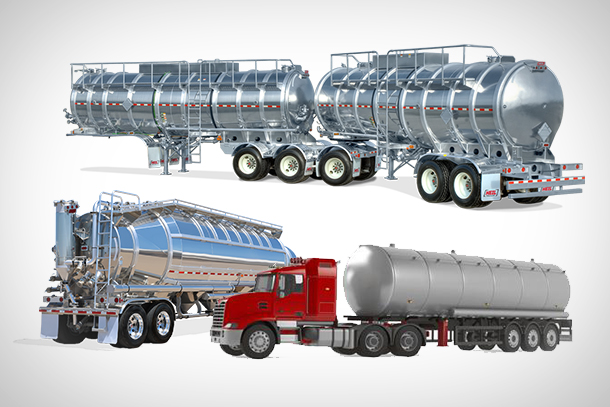
aluminum sheet for fuel tanker
Fuel tankers carry flammable and explosive media, so tank safety takes priority over lightweighting. The reason aluminum sheet for fuel tanker construction attracts attention is not only weight reduction, but also a safety logic built around static dissipation, collision energy absorption, and fire pressure release. Understanding this logic helps select the right alloy, temper, and standard.
Three Mechanisms Behind Aluminum's Explosion-Proof Safety
Static dissipation. Aluminum's conductivity helps quickly disperse static charges generated during driving and loading or unloading, reducing the risk of local accumulation reaching discharge energy. For gasoline, diesel, and similar media, this reduces spark hazards at the source.
Collision energy absorption. Aluminum alloys have good plasticity and fatigue performance. During impact, the tank tends to absorb energy through deformation rather than sudden tearing, helping maintain structural integrity.
Fire pressure release. At high temperatures, aluminum softens, melts, and releases internal pressure, reducing the risk of catastrophic rupture from pressure buildup. This is an important safety feature distinguishing aluminum tanks from steel tanks.
Common Alloys and Part Selection
|
Alloy |
Characteristics |
Common Parts |
|
5083 |
Balanced strength, weldability, corrosion resistance |
Shell, heads |
|
5454 |
Good stress corrosion resistance and high-temperature stability |
Specific media and service conditions |
|
5182 |
Formability and welded joint performance |
Dangerous goods tanker components |
|
5754 |
Medium strength, good formability |
Heads, baffles, etc. |
Alloy grade is only the starting point; supply temper, mechanical properties, and welding process must match design specifications. We supply aluminum plate as raw material and do not provide surface treatment or further processing; those steps are typically completed by the tank manufacturer according to its process.
Thickness, Standards, and Compliance
Fuel tankers are dangerous goods transport equipment, so thickness and compliance cannot be decided by experience alone. Confirm in this order:
1. Identify applicable dangerous goods transport regulations in the target market.
2. Check material standards such as ASTM B209, EN 14286, etc.
3. Determine thickness based on tank design pressure, media characteristics, and structural location.
4. Require mill test certificates and heat number traceability for batch verification.
Thickness selection should balance safety margin and payload: too thin affects impact and corrosion resistance; too thick increases dead weight and reduces transport efficiency.
Selection Checklist
- Application part: Shell, heads, and baffles have different requirements; one specification should not replace another.
- Supply temper: H111, H112, O temper, etc., must match forming and welding routes.
- Surface quality: Check scratches, roll marks, edge cracks, oil stains, lamination, and flatness.
- Width matching: Reasonable width can reduce weld seams and improve sealing reliability.
- Quality documents: Confirm mill certificates, traceability information, and third-party inspection requirements in advance.
FAQ
Q: Which aluminum alloy is most commonly used for fuel tankers?
A: 5083 is a common choice; 5454, 5182, and 5754 are also used depending on part and service conditions.
Q: How is aluminum plate thickness for fuel tankers determined?
A: It should be jointly determined by target market regulations, design pressure, and media characteristics, according to design specifications and applicable standards.
Q: Why is aluminum plate beneficial for explosion-proof safety?
A: It helps with static dissipation, collision energy absorption, and releases pressure by softening and melting in a fire.
Q: Do you provide surface treatment or further processing?
A: No, our supply focuses on aluminum plate as raw material; surface treatment and further processing are completed by the manufacturer.
Ordering and Supply Notes
Henan Mingtai Al. focuses on supplying raw aluminum plate for tanker applications, including 5083, 5454, 5182, and 5754 alloys. For aluminum sheet for fuel tanker projects, we can support supply solutions that meet standards such as ASTM B209 and EN 14286.