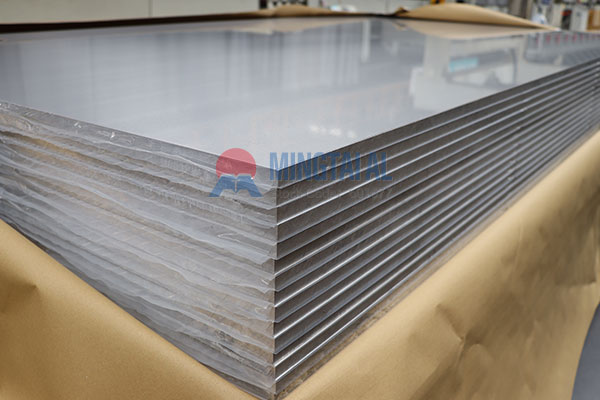
aluminum sheet for busbar
Selecting the right aluminum sheet for busbar often raises common questions: Which grade works best—1050, 1060, 1350, 6101, or 6061? Why do prices vary so much? And if the busbar runs hot after installation, is the material at fault or something else? All these questions point to one core metric: conductivity.
What Does Conductivity Mean – in Plain Words
%IACS is the universal standard for measuring conductive ability. Think of it as “how well this metal conducts electricity compared to pure copper.” The higher the number, the better the performance.
Different aluminum grades show clear differences in conductivity:
- Pure aluminum series (1050, 1060, 1350) – excellent conductivity
- 6101 alloy – a balanced choice that combines conductivity with good mechanical strength
- 6061 alloy – stronger, but its conductivity is only moderate
Grade Comparison at a Glance
|
Grade |
Conductivity Profile |
Typical Use for Busbars |
|
1050 / 1060 |
High conductivity |
Good for applications where conductivity is the top priority and mechanical loads are low |
|
1350 |
Electrical‑grade high conductivity |
Designed specifically for electrical conduction – suitable for busbars |
|
6101 |
Balanced conductivity and strength |
The most widely used grade for busbars – referenced in ASTM B317 |
|
6061 |
High strength, average conductivity |
Generally not recommended as the primary conductive material for busbars |
A simple rule of thumb: *For pure aluminum, look for high conductivity; for the 6xxx series, choose the right grade – and for busbars, that means 6101.*
Which Standards Can You Rely On?
When in doubt, refer to established specifications. These are the most relevant ones:
- ASTM B317 / B317M – the primary international standard for 6101 aluminum alloys used in electrical conductors, covering resistivity and conductivity testing
- EN 14121 – the European standard specifying mechanical and conductivity requirements for wrought aluminum sheet, strip, and plate used in electrical applications, including busbars
- GB/T 3880 – the general Chinese standard for aluminum and aluminum alloy sheet/plate, which now includes conductivity requirements
- GB/T 5585.2 – the Chinese standard dedicated to aluminum and aluminum alloy busbars for electrical purposes
Three Critical Details to Watch When Ordering
1. Specify both the alloy and the temper in your contract.
Saying “6101” is not enough – you must include the temper, e.g., 6101‑T6. The same alloy with different tempers can have noticeably different conductivity and hardness. Do not accept any “substitute” grade without written approval.
2. Request actual test reports for each batch – not just “typical” values.
The “typical” values on a supplier’s brochure are for reference only; they do not guarantee what you will receive. Insist on measured conductivity values (at 20°C) for every batch and agree on acceptance criteria upfront.
3. Clarify dimensional tolerances.
Busbar applications require tight thickness tolerances and flatness. Loose tolerances can reduce the contact area in laminated busbars, increasing contact resistance and temperature rise. EN 14121 covers products from 0.20 mm to 150 mm thick, so confirm the specific tolerance range with your supplier.
What If the Finished Busbar Overheats?
Sometimes the material checks out, but the final assembly still runs hot. Here are a few areas to investigate before blaming the aluminum sheet:
- Contact resistance at joints – terminal preparation, bolt torque, and surface fit all affect actual conduction; often the root cause is not the material itself
- Undersized cross‑section – even with good conductivity, insufficient area leads to excessive impedance
- Inconsistent test conditions – different standards use different ambient temperatures and test methods, which can produce varying results
If none of these are the issue, trace back to the material batch – and keep your test reports for every lot to support that traceability.
Quick Checklist for Your Next Order
- Start with 6101‑T6 for the best balance of conductivity and strength
- Consider pure aluminum grades (1050 / 1060 / 1350) only when conductivity is the sole priority
- Be cautious with 6061 – it is not a first choice unless your design has been fully validated
- Always write the full alloy + temper in your purchase agreement, and demand batch‑specific test reports
- If your finished busbar fails a heat test, check connections and design first, then review the material
FAQ
Q: Should I choose 6101 or 1060 for my busbar?
A: Choose 6101 if you need strength, and 1060 if you need maximum conductivity – for most busbar applications, 6101 is the safer bet.
Q: How can I tell if a quoted conductivity value is measured or just a typical value?
A: Ask for the actual test report for that batch – brochure data and verbal promises are not enough.
Q: What happens if I only specify the alloy without the temper?
A: The material you receive may have different conductivity and hardness than expected, because the same alloy varies widely with temper.
Q: Is 6061 really unsuitable for busbars?
A: Not entirely, but its conductivity is lower, so you would need a larger cross‑section to carry the same current – 6101 is strongly preferred.
Q: If my busbar runs hot, does that definitely mean the aluminum sheet is substandard?
A: Not necessarily – joint resistance, undersized design, and installation torque are equally common causes; check those first.
When selecting aluminum sheet for busbar, the right grade, clear specifications, and documented test results are your best safeguards. Mingtai Aluminum supplies 6101‑T6, 1050, 1060, and 1350 sheet options, with batch‑specific conductivity reports available upon request.