aluminum plate for semiconductor
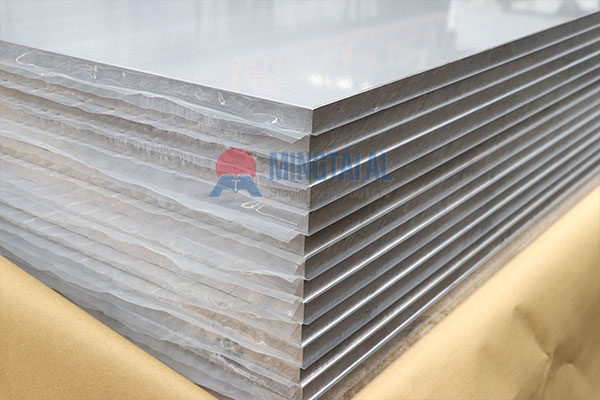
As semiconductor manufacturing moves toward nanoscale processes, the precision required for equipment components has become extreme. Aluminum plate for semiconductor applications is a critical base material for structural parts, fixtures, and chamber components—its quality directly determines the feasibility of precision machining and the final yield rate.
Why is aluminum alloy so widely used in semiconductor equipment? The answer lies in several key properties:
- Thermal management – excellent conductivity for heat spreaders and cooling plates
- Light weight with strength – ideal for robotic arms and moving frames
- Non‑magnetic – prevents RF plasma field distortion
- Machinability – enables complex CNC geometries
Selecting the right aluminum plate is far from a routine purchase. Thickness tolerance, flatness, and residual stress are the parameters that truly determine success in downstream machining.
Key Specification Metrics – What Really Matters
Semiconductor demands are far tighter than industrial standards. Three metrics stand out:
▸ Thickness tolerance
When multiple parts are stacked, even slight variations accumulate into assembly errors. For semiconductor‑grade 5052 plate in 4–6 mm thickness, tolerance can be held to ±0.04 mm—compared with ±0.35 mm under JIS, a difference of nearly an order of magnitude.
▸ Flatness
A deviation of just a few microns can cause misalignment during wafer handling, directly impacting yield. Semiconductor‑grade plates typically require ≤0.2 mm/m, with premium grades reaching ≤0.1 mm/m².
▸ Residual stress
This is the most hidden and dangerous variable. High internal stress, when released during material removal, causes warping or twisting—leading to misalignment or scrap. Advanced heat treatment and pre‑stretching significantly reduce this stress.
Choosing the Right Alloy – A Quick Reference
The most common choices are 5xxx, 6xxx, and (for high‑strength) 7xxx series. Here is a concise breakdown:
- 5052 – Non‑heat‑treatable. Best for fixtures, clamps, and carriers. Offers low residual stress, excellent corrosion resistance, and good machinability. Thickness tolerance can reach one‑tenth of JIS standards. Ideal for complex parts with heavy material removal.
- 6061 – Heat‑treatable Al‑Mg‑Si. T6/T651 temper gives balanced strength, toughness, and machinability. Widely used for chambers, frames, substrates, and cooling plates. Low‑zinc modified grades are common in PVD/CVD equipment.
- 6082 – Higher‑strength 6xxx alloy with moderate hardness and easy cutting. Suited for structural frames and precision mechanical components.
- 7075 – Aerospace‑grade, very high strength. Reserved for high‑load structures like vacuum chambers and motion stages (typically outside clean areas).
For a side‑by‑side comparison:
|
Alloy |
Type |
Key Strengths |
Typical Uses |
|
5052 |
5xxx (non‑HT) |
Low stress, flatness, corrosion resistance |
Fixtures, carriers, wafer handling parts |
|
6061 |
6xxx (HT) |
Balanced properties, machinability |
Chambers, frames, cooling plates |
|
6082 |
6xxx (HT) |
Higher strength than 6061 |
Structural frames, mechanical parts |
|
7075 |
7xxx (HT) |
Very high strength |
High‑load structures, vacuum chambers |
Three Common Machining Challenges – and How to Address Them
Even with top‑tier CNC equipment, poor base material quality will ruin the final part. The three most frequent issues are:
- Deformation after roughing
When a standard plate loses a lot of material (deep pockets, thin walls, many holes), internal stress releases and distorts the part. The fix: choose a low‑stress plate and use a two‑step strategy—rough‑machine first, allow stress to relieve, then finish to final dimensions.
- Thin‑wall instability
Thin sections (common in chambers and frames) deflect under cutting forces, and multiple setups introduce cumulative errors. The stability here depends directly on the base material’s residual stress level and grain uniformity.
- High‑density drilling and intricate features
Take a CVD showerhead electrode—it may require tens of thousands of precision holes with strict concentricity. Such extreme operations demand exceptional microstructural uniformity and consistent cutting behaviour from the plate.
Where Precision‑Machined Aluminum Plates Are Used
After machining, aluminum plates serve many roles in semiconductor tools. Here are the main ones:
- Vacuum chambers – 5‑axis CNC milling creates complex shapes. Sealing surfaces must guarantee vacuum integrity. 5xxx alloys (5052/5083) are common for chamber structures and vacuum components.
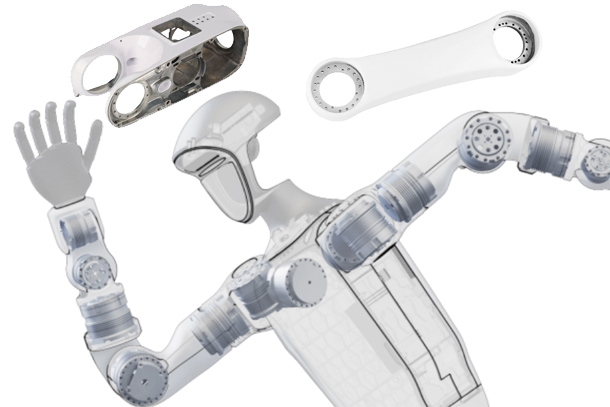
- Wafer handling and transfer parts – End effectors, robot arms, and carriers. They need light weight, low particle generation, and precise positioning. 5052 is preferred for its machinability and low outgassing.
- Precision fixtures and jigs – Used in lithography, inspection, and bonding for wafer alignment. Flatness and dimensional stability are the top priorities.
- Heat spreaders and cooling plates – Machined aluminum plates maintain temperature stability during processing. 6061, with higher thermal conductivity (~167 W/m·K), is often chosen for heat dissipation.
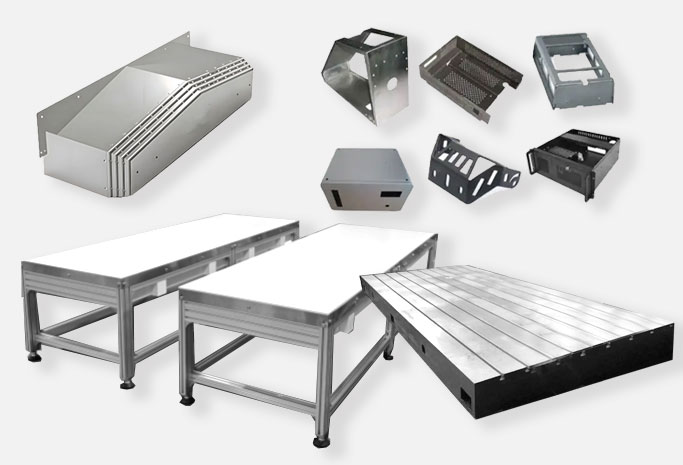
- Equipment frames and structural supports – Main frames and supports for etching, deposition, and other tools.
The initial quality of the plate dictates the success of every downstream step. Thickness tolerance, flatness, and residual stress are not just numbers on a datasheet—they decide whether a plate becomes a reliable part in a semiconductor tool. When every micron counts, choosing the right aluminum plate for semiconductor applications is a decision that directly impacts yield, tool uptime, and overall efficiency.
FAQ
Q: Which alloy is most common for semiconductor precision machining?
A: 5052 for low‑stress fixtures, 6061‑T6 for balanced structural parts, and 7075 for high‑load applications.
Q: What flatness is required for semiconductor‑grade plate?
A: Typically ≤0.2 mm/m, with premium grades reaching ≤0.1 mm/m².
Q: Why is residual stress so critical?
A: High residual stress causes warping when material is removed during CNC machining, leading to scrap and rework.
Q: How to choose between 5052 and 6061?
A: Use 5052 for fixtures with extensive material removal; use 6061 for structural parts needing higher strength and thermal conductivity.
Mingtai Aluminum offers high‑precision plates in 5052, 6061, 6082, and other alloys, with thickness tolerances and flatness engineered for semiconductor precision machining. Learn more at our website.