aluminum coil for shutter
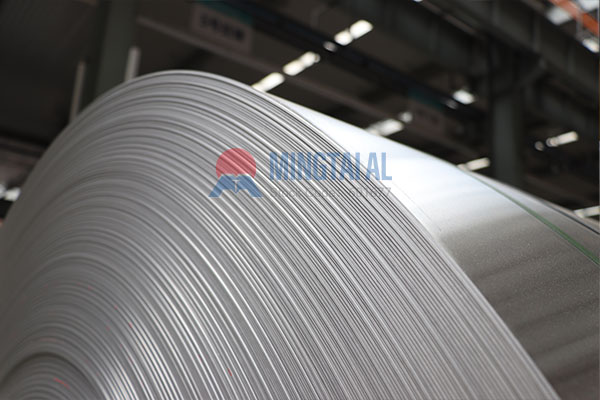
For roller shutter manufacturing, the choice of aluminum coil for shutter is critical. Traditional galvanized steel has drawbacks in weather resistance and corrosion resistance. Aluminum coil offers clear advantages: its density is about one‑third that of steel, so the same weight yields roughly three times the length. Lighter shutter panels reduce motor and track loads, extending equipment life. Aluminum also naturally resists corrosion, which is especially valuable in coastal or high‑humidity environments.
Choosing the Right Alloy
Common aluminum alloys for shutters include the 1000, 3000, 5000, and 8000 series.
- 1000 series (1050, 1060, 1100) – high purity, good formability and corrosion resistance; suitable for standard applications where high strength is not required.
- 3000 series (3003, 3004, 3005, 3105) – the most widely used group for shutter coils. 3003 is popular in the Middle East and Southeast Asia, while 3005 and 3105 are more common in Europe. Often called “rust‑proof” aluminum, these alloys offer a good balance of strength, formability, and corrosion resistance.
- 5000 series (5052) – higher strength, ideal for shutters that demand extra hardness and durability.
- 8000 series (8011) – used in specific cases.
For most standard roller shutter applications, 3003 or 3105 give the best cost‑performance ratio. If higher strength is needed, 5052 is a better option. For cost‑sensitive projects, 1050 or 1100 can meet basic requirements.
PE vs. PVDF Coating – Which One to Choose
Coating type directly affects the service life and appearance of shutter coils.
- PE (polyester) coating – bright colours, good formability, and lower cost. The front coating thickness is usually at least 18 microns, with the back about 8–10 microns. Suitable for moderate weather exposure.
- PVDF (fluorocarbon) coating – excellent weatherability, outstanding UV and chemical resistance. The front coating thickness is typically at least 25 microns. Ideal for outdoor, coastal, or high‑UV environments.
> We supply high‑quality aluminum coil substrates and do not perform surface coating or further processing for shutters.
For indoor or moderate conditions, PE is sufficient and more economical. For outdoor or harsh environments, PVDF ensures long‑term stability.
Specification Reference
Thickness for shutter coils usually ranges from 0.2 mm to 1.2 mm:
- Shutter slats – commonly 0.25–0.4 mm
- Shutter boxes – commonly 0.6–0.8 mm
Standard width is 1240 mm, with custom widths up to 1700 mm available. Manufacturers often slit the coil to the required width for final products. Standard coil outer diameter is about 1200 mm, with inner diameters of 405 mm or 505 mm optional. Coil weight is typically between 0.5 and 5.0 tonnes per coil, adjustable upon request.
What to keep in mind when sourcing
Defining the application environment is the first step – indoor or outdoor? Coastal or inland? This determines the alloy and coating choice. Quality of the base material is fundamental; check whether the supplier provides full material test certificates with traceability to the ingot batch.
Coating performance metrics matter too – adhesion, T‑bend, impact resistance, and salt‑spray resistance all affect real‑world durability. Common standards include GB/T 3880, ASTM B209, and JIS H4000. Different shutter makers may have unique requirements for width, colour, or coating thickness, so a supplier that offers flexible customisation is often preferable.
When sourcing aluminum coil for shutter, always verify the supplier’s quality system and production experience – not just the price sheet.
FAQ
Q: Which aluminum alloy is best for roller shutters?
A: 3003 and 3105 are the most common; 3005/3105 are preferred in Europe, while 3003 is widely used in the Middle East and Southeast Asia.
Q: What is the difference between PE and PVDF coatings?
A: PE is lower‑cost and more colourful for indoor use; PVDF offers superior weatherability for outdoor and coastal applications.
Q: What thickness is typical for shutter coils?
A: Slats use 0.25–0.4 mm, boxes use 0.6–0.8 mm, with the overall range from 0.2 to 1.2 mm.
Q: Why choose aluminum over steel for shutters?
A: Aluminum is about one‑third the density of steel, gives three times the length for the same weight, and never rusts – lowering maintenance costs.
Q: What should I check when ordering shutter coils?
A: Define the use environment first, then verify base material quality, coating performance, and the supplier’s quality assurance system.
*Mingtai Aluminum – committed to providing high‑quality aluminum coil substrates for shutter manufacturers worldwide.*