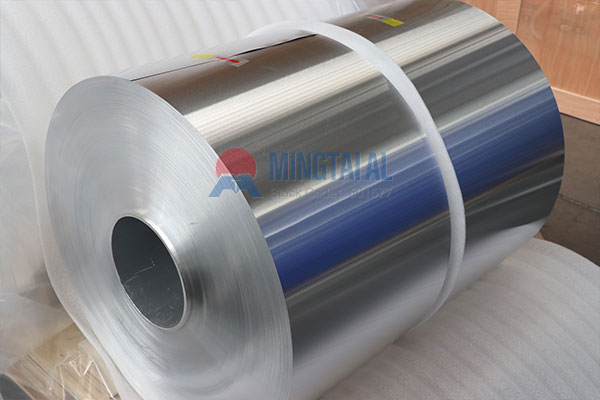
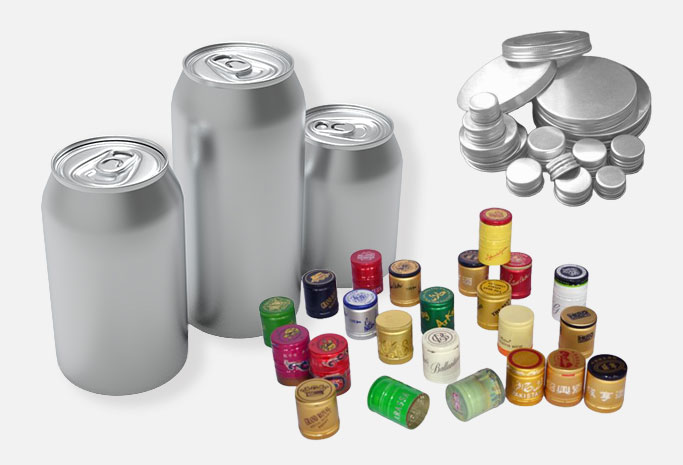
aluminum foil for wine cap
Aluminum foil for wine cap is rapidly replacing traditional cork and tinplate in the global wine packaging market. The advantages are clear – full light barrier, moisture and oxygen resistance, and a weight only one‑tenth that of steel. Yet when it comes to high‑speed stamping lines, one hard metric determines success or failure: deep drawing performance.
What is deep drawing, and why are wine caps so demanding?
Deep drawing uses a die to pull a flat aluminum sheet into a three‑dimensional shape. Wine caps – especially long caps and tamper‑evident closures – represent an extreme version of this process.
Unlike beverage caps, wine caps require draw depths of 60‑80 mm with complex contours. That degree of severe deformation challenges the foil in two key ways:
- It must stretch without cracking.
- It must hold its shape on automated high‑speed lines.
When deep drawing falls short, cracks, wrinkles, and dimensional errors appear immediately – and entire batches end up scrapped.
Three metrics that directly drive production yield
Evaluating material? Focus on these quantifiable indicators – they determine how many good caps come off the line:
- Low earing rate (≤ 3%)
Earing means the wavy edges that form after stamping. Lower rates mean less scrap and cleaner rims:
- High earing → excess trim waste and jagged edges.
- Low earing (≤ 3%) → better material utilization and consistent sealing.
For premium wine closures, top‑tier suppliers stabilize earing below 2%.
- Elongation and crack resistance
Greater draw depth demands higher elongation. Without enough elongation, the thinnest points tear first. Through precise alloy design, quality base material prevents micro‑cracks – even at extreme draw heights.
- Post‑baking strength retention
Wine caps go through high‑temperature curing after printing. Ordinary foil softens and deforms. Premium foil retains enough rigidity after baking to keep a tight fit with the bottle neck.
Which alloy and gauge should you choose?
Not all wines need the same cap. Alloy selection follows the application. Here are the mainstream options:
- 8011 alloy (the primary choice) – Higher iron and silicon content give 8011 superior deep drawing performance over pure aluminum. The H16 temper is the go‑to for hot‑rolled tamper‑evident caps, delivering tensile strength of 150‑165 MPa and elongation above 2%.
- 3105 alloy (for complex shapes) – An Al‑Mn series alloy with excellent formability and corrosion resistance. For more intricate cap designs, 3105 offers greater flexibility during deep drawing and resists wrinkling better.
- Typical thickness range – Wine cap foil falls between 0.15 mm and 0.27 mm. Long wine caps run at 0.225 mm; tamper‑evident closures commonly use 0.20‑0.23 mm.
Surface quality – the baseline for print appearance
The cap is the brand's first visual impression. Surface flaws are not an option. Before printing and coating, base material cleanliness and flatness are non‑negotiable.
Look for these two things when evaluating surface quality:
- Degreasing cleanliness – Residual oil must be completely gone. Otherwise, ink won't adhere and printing peels off.
- Flatness – No roll marks, scratches, dark lines, or excessive pinholes.
(*Note: We supply high‑quality mill‑finished aluminum foil base stock and do not perform subsequent coating or printing. Every coil leaves with a clean surface and excellent flatness.*)
What to verify before production starts
Selecting the right aluminum foil for wine cap is never about a single number. It's the sum of low earing rate, high elongation, post‑baking strength, and clean surface condition. Before you fire up the dies, confirm the alloy grade (8011 or 3105), check the thickness tolerance, and review the earing test reports. That upfront verification saves far more trouble than adjusting tooling parameters mid‑run.
*For reliable aluminum foil for wine caps with consistent deep drawing performance, Henan Mingtai Aluminum offers high‑quality 8011 base materials trusted by bottle cap manufacturers worldwide.*
FAQ
Q: What is the standard thickness for wine long cap foil?
A: Around 0.225 mm is the most common, while tamper‑evident closures typically run 0.20‑0.23 mm.
Q: Why is 8011 preferred over 1235 for deep drawing caps?
A: 8011 has higher iron and silicon, which give better stiffness and lower earing rates under intense drawing.
Q: What does "earing rate" mean on the production floor?
A: It's the wavy edge left after stamping – below 3% means less scrap and smoother rims.
Q: Can this foil go straight to printing and coating after delivery?
A: Yes – as long as the base material is clean, degreased, and flat, it's ready for printing without extra pretreatment.