Aluminum for Automotive Radiators
Aluminum for Automotive Radiators plays a central role in vehicle thermal management. A radiator helps carry heat away from engine coolant, keeping the powertrain within a stable operating range. As vehicles become lighter and more efficient, aluminum has largely replaced copper in radiator construction. Its low weight, strong heat transfer, and suitability for high-volume production make it a practical choice for heat exchangers.
Today’s mainstream materials include 3003 aluminum sheet and strip, the improved 3003mod, and brazing clad aluminum sheet. These are core functional materials for passenger-car radiators, condensers, and related heat exchange components.
3003 Aluminum: The Established Base Material
3003 is an Al-Mn anti-rust aluminum alloy. It offers good stamping formability, corrosion resistance, and thermal conductivity at a balanced cost. It can be stamped, bent, and formed, which is why it was widely used in early radiator parts and remains relevant today.
Key characteristics include:
- Good formability for stamping and bending
- Reliable corrosion resistance
- Stable thermal conductivity
- Cost-effective performance for standard radiator components
3003mod: Improved for Higher-Temperature Service
3003mod builds on 3003 by adjusting trace elements such as copper, manganese, iron, and silicon and by controlling the dispersed phase structure. The goal is not to sacrifice formability but to improve high-temperature creep resistance.
After brazing, 3003mod delivers noticeably higher strength than standard 3003 and better sag resistance. This makes it suitable for thinner sheets and current radiator core designs.
3xxx + 4xxx Brazing Clad Aluminum
Brazing clad aluminum combines a 3xxx core with a 4xxx Al-Si brazing layer. The core may be 3003 or 3003mod, while 4343 or 4045 is often used as the cladding. Through metallurgical bonding, the layers work as one sheet.
After stamping, the part can enter the brazing furnace without extra filler metal. The cladding melts and flows to seal joints, which supports automated production of automotive components.
How Brazing Clad Aluminum Is Made
Brazing clad aluminum bonds different aluminum layers into one sheet. The core provides strength. The cladding provides the brazing surface.
Production Flow
1. Melt and cast the alloys.
2. Mill the ingot surfaces.
3. Assemble core and cladding plates.
4. Heat the assembled pack.
5. Hot-roll bond the layers.
6. Cold roll to final gauge.
7. Heat treat for required properties.
8. Finish and inspect.
Each step matters. It affects bond quality, forming performance, and brazing stability.
Layer by Layer
|
Layer |
Common Alloy |
Main Job |
|
Core |
3003 / 3003mod |
Strength, thermal stability, corrosion resistance |
|
Cladding |
4343 / 4045 |
Brazing flow and joint sealing |
Alloy composition and impurity levels are controlled from the start. This helps reduce weld defects and keeps brazing consistent.
Performance Advantages for Radiator Manufacturing
Compared with a single 3xxx sheet, 3xxx + 4xxx brazing clad aluminum offers a better balance of strength, joining, formability, and durability. Here is what that means in real production.
Stable Brazing
- The cladding melts before the core.
- Only the surface brazing alloy melts.
- Molten Al-Si flows into joint gaps.
- It forms a dense, uniform seal after cooling.
No extra filler metal is needed. This simplifies assembly and supports automated production.
Alloys That Work Together
- Core: supports the structure and resists creep, vibration, and coolant corrosion.
- Cladding: handles brazing and sealing.
- Together: support thin-wall radiator design and weight reduction versus copper radiators.
Easy to Form
- Available in O, H14, and other tempers.
- Suitable for flat tubes, headers, fins, and complex parts.
- The metallurgical bond resists delamination during brazing and service.
Durable in Real Conditions
- Controlled alloy ratios reduce galvanic corrosion between layers.
- Withstands coolant, salt spray, moisture, and temperature cycling.
- Custom double-layer, triple-layer, and cladding ratios are available.
Matching Material to Radiator Design
For Aluminum for Automotive Radiators, start with the operating conditions and product target. Then match the core and cladding.
Quick Selection Guide
|
If the radiator needs... |
Core |
Cladding |
Why |
|
Standard duty and cost control |
3003 |
4343 |
Good formability, corrosion resistance, and value |
|
Light weight, high load, long life |
3003mod |
4343 or 4045 |
Better creep and sag resistance after brazing |
|
Larger gaps or complex joints |
3003 / 3003mod |
4045 |
Better brazing flow |
|
Strong corrosion resistance |
3003 / 3003mod |
4343 |
Good corrosion performance in common parts |
Where It Fits
3xxx + 4xxx brazing clad aluminum is no longer limited to traditional engine radiators. It is also used in:
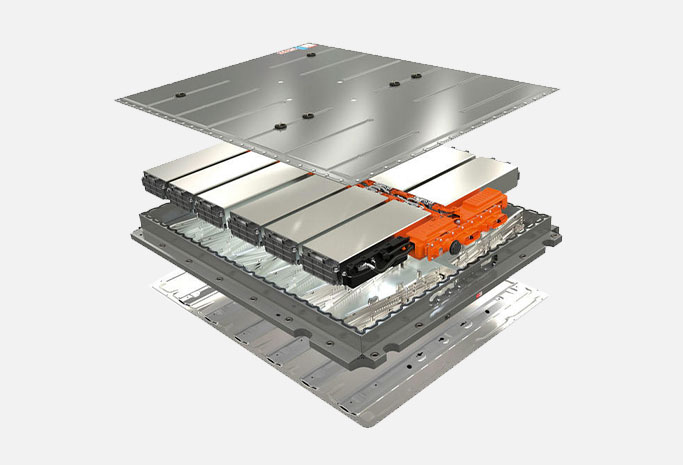
- Water-cooled plates
- Condensers
- Intercoolers
- Other heat exchange components
As Aluminum for Automotive Radiators moves toward lighter, higher-quality designs, this material remains a mainstream choice for automotive heat exchangers.
Henan Mingtai supplies 3003, 3003mod, and brazing clad aluminum sheets for automotive heat exchangers. If you are developing a radiator program, our team can help match the material to your forming and brazing needs.
FAQ
Q: What is 3003 aluminum used for in radiators?
A: It is used for radiator components that need good formability, corrosion resistance, and thermal conductivity.
Q: Why choose 3003mod over standard 3003?
A: 3003mod offers better high-temperature creep resistance and post-braze strength for thinner, lighter cores.
Q: What is brazing clad aluminum?
A: It is a metallurgically bonded sheet with a 3xxx core and a 4xxx brazing layer.
Q: Can the cladding structure be customized?
A: Yes, double-layer, triple-layer, and different cladding ratios can be produced.
Q: Is clad aluminum used in EV thermal management?
A: Yes, it is also used in water-cooled plates, condensers, intercoolers, and other heat exchange parts.