aluminum foil for pouch
The Invisible Guardian Behind Stand‑Up Pouches
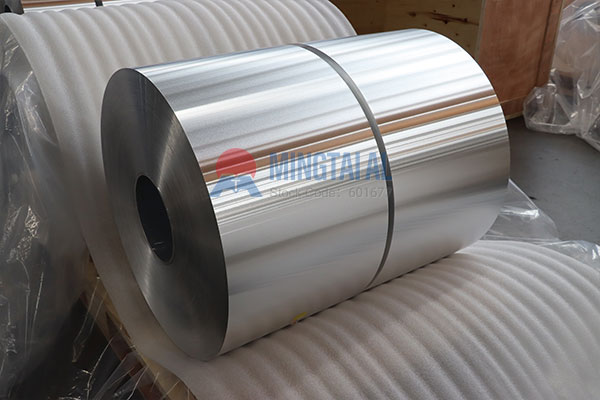
When evaluating the barrier performance of stand‑up pouches, the critical component is the aluminum foil for pouch structures. A typical foil‑based stand‑up pouch uses a three‑layer lamination: PET on the outside (for printability and puncture resistance), aluminum foil in the middle (the true barrier), and PE on the inside (for heat sealing). Aluminum foil stands out as the gold standard because it simultaneously blocks oxygen, water vapor, light, and odours—four major factors that cause product deterioration.
Two Core Metrics: WVTR and OTR
Barrier performance is quantified by two key transmission rates:
- Water Vapor Transmission Rate (WVTR) – measures how much water vapour can pass through the material, typically tested at 38°C / 90% RH.
- Oxygen Transmission Rate (OTR) – measures oxygen permeation, typically tested at 23°C / 0% RH.
These two numbers directly determine shelf life. For stand‑up pouches with a genuine aluminium layer, OTR and WVTR can be kept remarkably low. Industry data indicate that foil‑laminated pouches can achieve OTR below 0.5 cc/m²/day, whereas ordinary PET/PE pouches without foil typically run in the range of 80–120 cc/m²/day—a difference of two orders of magnitude.
Thickness and Pinholes: The Two Sides of Barrier Integrity
Thicker aluminium foil generally means fewer pinholes and a more continuous metal shield. Pinholes—microscopic defects—are the real enemy of barrier performance. Even if the nominal thickness meets specifications, excessive pinholes can create pathways for moisture and oxygen, accelerating spoilage. Studies have shown that pinhole density decreases as foil thickness increases.
For this reason, Mingtai Aluminum produces foil with a thickness starting from 20 microns—a range that offers more reliable protection, especially for high‑end food, pharmaceutical, and pet‑food applications that demand extended shelf life.
Pure Aluminium Foil vs. Metallized Film: A World of Difference
These two materials are often confused, but their performance is not even close.
Pure aluminium foil is produced by rolling solid aluminium into a continuous metal sheet with a dense atomic structure. Metallized film is a plastic substrate coated with a microscopically thin layer of aluminium via vacuum deposition—it is a coating, not a standalone foil.
The performance gap is substantial:
|
Material Type |
OTR (cc/m²/day) |
WVTR (g/m²/day) |
|
Foil laminate (7–9 µm foil) |
<0.5 |
<0.5 |
|
Metallized PET film |
0.5–3.0 |
0.3–1.5 |
*(Data based on standard ASTM test methods)*
For products requiring long‑term freshness, this difference is critical.
Which Products Truly Need Aluminium Foil?
Not every stand‑up pouch requires a foil barrier. However, the following applications strongly benefit from—or even demand—aluminium foil:
- Coffee beans and ground coffee – oils oxidise easily, and aromas escape quickly.
- Nuts and seeds – high fat content makes them prone to rancidity from moisture and oxygen.
- Infant formula and nutritional supplements – require extreme protection against moisture and oxygen.
- Sauces and fatty products – need both oxygen and light barriers.
- Pharmaceuticals and nutraceuticals – absolute protection from light, humidity, and air.
- Pet food – to preserve crunchiness and flavour.
For short‑shelf‑life or low‑sensitivity items (e.g., some candies or biscuits), more cost‑effective packaging alternatives may suffice.
Practical Recommendations: Moving from Intuition to Evidence
When selecting aluminium foil for flexible packaging, focus on these four points
1. Verify the material type – request a material certificate to confirm it is pure aluminium foil, not metallized film.
2. Request test reports – ask for pinhole inspection data and measured WVTR/OTR values.
3. Check the actual thickness – ensure the foil layer is at least 20 microns for robust performance.
4. Confirm regulatory compliance – for food contact, require relevant safety certifications (e.g., FDA).
FAQ
Q1: What are the most important barrier indicators for stand‑up pouches?
A: The two key metrics are Water Vapor Transmission Rate (WVTR) and Oxygen Transmission Rate (OTR).
Q2: Does thicker aluminium foil always mean better barrier performance?
A: Generally yes, but pinhole density is equally critical—excessive pinholes can severely undermine the barrier.
Q3: What is the practical difference between pure aluminium foil and metallized film?
A: Pure foil is a continuous metal layer, while metallized film is a coated plastic; their barrier performance can differ by several times.
Q4: What types of stand‑up pouches are best suited for 20‑micron+ aluminium foil?
A: Applications that require extended shelf life, such as premium foods, pharmaceuticals, and pet food.
Q5: What documentation should be requested when sourcing aluminium foil?
A: Pinhole test reports, WVTR/OTR data, material certificates, and food‑contact safety approvals.
*Mingtai Aluminum offers a wide range of aluminium foil products for flexible packaging, with thicknesses starting from 20 microns—reach out to discuss your specific barrier requirements.*