aluminum foil for cable shielding
To prevent signal loss in cables, aluminum foil for cable shielding serves as a reliable barrier against electromagnetic interference (EMI) and radio frequency interference (RFI). Motors, fluorescent lamps, and power lines are common low‑frequency sources, while radio signals, 5G base stations, and radar generate high‑frequency disturbances. Once an external electromagnetic field contacts the cable conductor, it induces unwanted currents and increases crosstalk. Shielding essentially builds a "metal wall" along the signal path — blocking interference from entering and preventing signal leakage.
How Aluminum Foil Works
Aluminum foil relies on three physical mechanisms: reflection, absorption, and skin effect.
- Reflection – The high electrical conductivity of aluminum reflects electromagnetic waves away from the foil surface.
- Absorption – When waves hit the foil, they induce eddy currents that convert electromagnetic energy into heat, dissipating it.
- Skin effect – Higher‑frequency signals (e.g., 5G) tend to travel on the surface of the conductor. A sufficiently thick foil effectively shields these high‑frequency components.
For best performance, the shielding layer is usually combined with a drain wire (such as tinned copper) to guide induced currents safely to ground.
Key Factors That Determine Shielding Performance
1. Thickness
Thickness directly affects shielding continuity and mechanical reliability.
- Communication cables (5G, RF): typically 0.05–0.10 mm
- Power cables: typically 0.10–0.20 mm
- High‑voltage power cables: may require 0.25–0.30 mm
Foil thinner than 0.02 mm (20 microns) lacks sufficient mechanical strength. During wrapping or longitudinal application, it tends to develop pinholes and cracks, creating "shielding gaps" that let interference pass through. For this reason, we do not produce foil below 0.02 mm, nor do we offer surface treatment or reprocessing services — our focus is on supplying high‑quality raw foil for your production.
2. Alloy Grade
Different alloys serve different cable types:
- 1235 – High purity (≥99.35% Al), excellent conductivity and flexibility. Ideal for 5G, RF, and high‑frequency data cables.
- 8011 – Higher strength and better lamination stability. Suited for water‑blocking tapes and special power cables.
- 1060 – Balanced performance and cost‑effective. A good choice for general power cables and standard composite tapes.
3. Coverage and Overlap Rate
To ensure no gaps exist, the foil lap joint should have an overlap of at least 25%. A continuous conductive shield achieved by longitudinal wrapping is essential for efficient attenuation.
Aluminum Foil vs. Other Shielding Materials
While not the only shielding option, aluminum foil offers a compelling combination of advantages:
|
Aspect |
Aluminum Foil |
Copper (Braid or Foil) |
|
High‑frequency shielding |
Excellent (no gaps) |
Good (braid has gaps) |
|
Weight |
Light (2.7 g/cm³) |
Heavy (8.96 g/cm³) – about 70% heavier |
|
Cost |
Lower, stable |
Higher |
|
Flexibility |
Soft, compatible with high‑speed wrapping |
Stiffer |
|
Corrosion resistance |
Self‑forming oxide film, no extra coating |
Often requires plating |
In practice, braided shielding handles low‑frequency interference better, while aluminum foil excels at high‑frequency RFI. Many designs combine both for a dual‑shield solution.
Typical Application Scenarios
- 5G communication cables – Use 1235 high‑purity foil, 0.05–0.10 mm, longitudinally wrapped around the core.
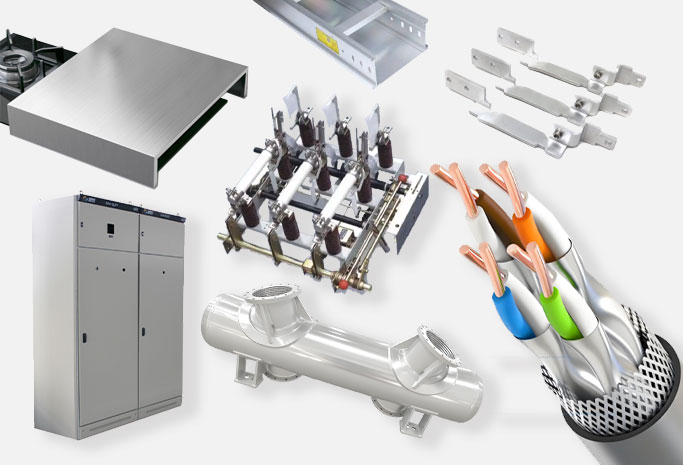
- Computer network cables – Foil shielding reduces external noise to maintain stable data transmission.
- Power cables – 0.10–0.25 mm foil provides both shielding and mechanical protection.
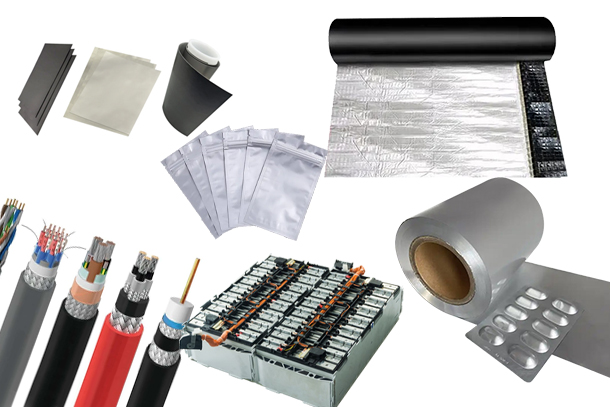
- Water‑blocking composite tapes (for direct‑burial or submarine cables) – The dense foil layer completely prevents moisture ingress.
How to Choose the Right Foil – Four Simple Rules
1. Select alloy by application – 1235 for communications, 1060 or 8011 for power, and 8011 for water‑blocking composites.
2. Choose thickness by cable type – 0.05–0.10 mm for communication; 0.10–0.20 mm for power; heavier gauges for high‑voltage.
3. Pick the temper based on process – O‑temper (soft) for high‑speed wrapping; O or H‑temper (half‑hard) for lamination.
4. Order the right width – Precision slitting reduces splicing waste and matches your required overlap.
A well‑chosen shielding layer is the gatekeeper of signal integrity. Every detail — from thickness and alloy to overlap and temper — affects the final outcome. Too thin and interference leaks through; wrong alloy and processing suffers; insufficient overlap and gaps appear. Understanding these factors helps you select the proper aluminum foil for cable shielding — ensuring reliable signal transmission and long‑term performance.
Henan Mingtai Al specializes in 1235 and 8011 cable shielding foil from 0.05 mm upward — no surface treatment, no reprocessing, just dependable raw material for your cable production.
FAQ
Q: Does aluminum foil shielding work without grounding?
A: It still provides some shielding, but without proper grounding, induced currents cannot be drained and may create secondary interference.
Q: Which is better – aluminum foil or copper braid shielding?
A: Aluminum foil is superior for high‑frequency RFI, while copper braid is more effective for low‑frequency EMI; many cables use both.
Q: Is thicker foil always better?
A: Not necessarily – over‑thick foil can crack during bending; choose the thickness that matches your cable's mechanical and electrical requirements.
Q: What's the difference between 1235 and 8011 alloys?
A: 1235 offers higher conductivity for communication cables; 8011 provides greater strength and stability for power cables and water‑blocking tapes.