5052 aluminum plate welding
For 5052 aluminum plate welding, the alloy’s magnesium content (2.2%–2.8%) and trace chromium give it excellent formability and corrosion resistance. It cannot be strengthened by heat treatment, but cold working increases its strength significantly. Among all aluminum alloys, 5052 stands out because it adapts well to multiple welding processes – whether you are working with thin sheets or heavy plates.
Why 5052 Welds So Well
The magnesium in 5052 aluminum provides a wide processing window. Key benefits include:
- Compatible with TIG, MIG, resistance, laser, and friction stir welding – no special equipment is required.
- Weld joints retain reliable strength, suitable for pressure vessels and structural frames.
- Corrosion resistance remains stable after welding, even in marine or chemical environments.
Selecting the Right Welding Process
The best method depends on thickness and production needs.
TIG (GTAW) – Ideal for thin sheets and applications where weld appearance matters. Use AC mode – the cathodic cleaning action removes the tenacious oxide film automatically, giving smooth, clean beads.
MIG (GMAW) – Faster and more productive, perfect for medium to heavy plates and repetitive work. It is the go‑to choice for structural fabrication.
Resistance welding (spot / seam) – Suitable for thin lap joints. The heat‑affected zone is small, and distortion is minimal, making it popular for electronic housings.
Laser and friction stir welding – Laser offers a very narrow heat‑affected zone; friction stir produces fine‑grained joints with excellent mechanical properties. These are often used in high‑end sectors like aerospace.
Quick tip: For thin materials, start with TIG or resistance welding. For thicker plates or high‑volume runs, MIG is usually the most economical. If distortion is a critical concern, evaluate laser or friction stir options.
Preparation Steps – Don’t Skip These
Weld quality is largely determined before the arc strikes. Pay close attention to:
Surface cleaning – The oxide layer (Al₂O₃) prevents proper fusion, and any moisture trapped in it releases hydrogen into the weld pool, causing porosity. Remove all oil and oxide by chemical or mechanical methods. (Note: we supply only bare base material and do not offer surface treatment or secondary operations like cutting or bending – those are handled by you or your processor.)
Preheating – Aluminum conducts heat rapidly. Moderate preheating reduces distortion and crack risk. For butt joints, ensure the heated zone extends sufficiently on both sides – a general rule is several times the plate thickness.
Fixturing – Use rigid clamps to control thermal movement during welding. Good fixturing keeps parts in place and minimises warping.
Common Defects and How to Avoid Them
Three issues appear most often in practice. Here is what causes them and what to do:
Porosity
- Cause: hydrogen absorbed from surface contaminants or moisture in the oxide film.
- Fix: clean thoroughly, use high‑purity shielding gas, and keep gas flow steady.
Cracking (especially during TIG)
- Cause: solidification cracks due to improper filler or excessive heat input.
- Fix: choose matching filler (ER5356), control heat input, and consider post‑heating to slow cooling.
Distortion
- Cause: high thermal expansion of aluminum.
- Fix: plan your welding sequence – weld symmetrically, use intermittent passes, and apply forced cooling or clamping.
Where Welded 5052 Is Used
This alloy is specified when both strength and corrosion resistance are required. Typical applications include:
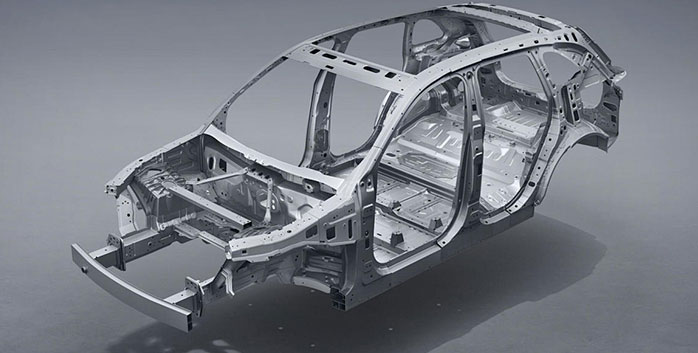
- Automotive fuel tanks, battery enclosures, and chassis reinforcements
- Ship hulls, decks, and offshore structures
- Aircraft fuel tanks and hydraulic lines
- Chemical storage tanks and pressure vessels
- Electronic enclosures and inverter cabinets
In all these cases, welding is a core manufacturing step, and 5052 has proven reliable over decades.
Base Material Quality – The Foundation of Good Welding
No matter how skilled the operator or how advanced the equipment, poor base metal will ruin the weld. If the plate has internal porosity, composition variations, or surface defects, those flaws will show up as weak joints, excessive porosity, or outright rejection.
So, the first step toward successful 5052 aluminum plate welding is selecting a supplier with tight process control and consistent chemistry. A reliable plate gives you a stable starting point – and that makes every downstream step easier.
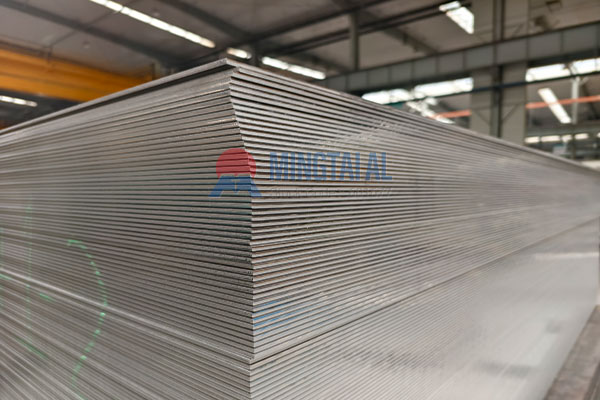
Henan Mingtai Al. brings nearly 30 years of aluminium processing experience and is one of the few domestic producers that can supply 5052 plates up to 2650 mm wide and 600 mm thick – a solid foundation for your welding projects.
FAQ
Q: Which filler wire is best for welding 5052 aluminum?
A: ER5356 (AlMg5) is the most common choice – it matches the alloy’s magnesium content and gives good corrosion resistance.
Q: Is preheating necessary before welding 5052?
A: Preheating is recommended, especially for thicker plates, to reduce distortion and crack risk.
Q: How can I prevent porosity in my welds?
A: Clean the surface thoroughly, remove all oil and oxide, and use clean, dry shielding gas at a steady flow rate.
Q: Can 5052 be used in seawater environments after welding?
A: Yes – with matching filler (ER5356), the welded joint retains excellent seawater resistance.
Q: Do you provide cutting, bending, or surface finishing services?
A: No – we focus only on high‑quality base plates; all secondary processing is done by you or your fabricator.