Which Aluminum Coil for Radiator Should You Order?
When sourcing aluminum coil for radiator manufacturing, you likely have a list of practical questions: What alloy do I need? What thickness is standard? How much should I order? Who can deliver consistent quality? This guide answers those questions directly—no fluff, no unnecessary technical deep‑dives. Just the information you need to make a confident purchasing decision.
What Is This Material?
It is a rolled aluminum product used as the base material for manufacturing radiators, heat exchangers, condensers, and evaporators. Typical applications include:
- Automotive radiators and intercoolers
- HVAC systems (heating, ventilation, and air conditioning)
- Industrial cooling equipment
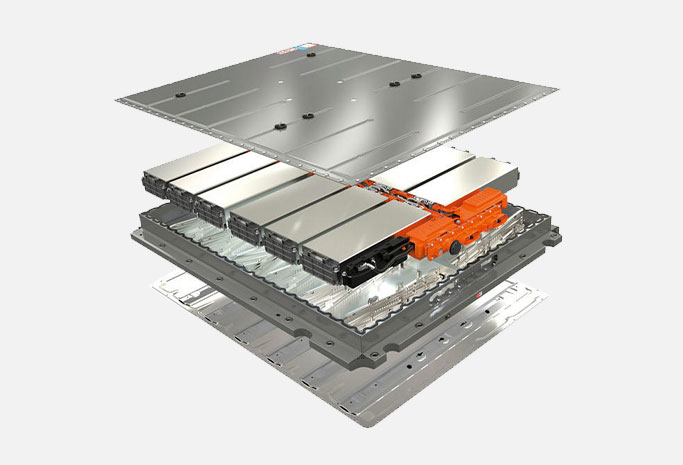
- Electric and hybrid vehicle thermal management systems
The material is normally supplied in large rolls, then slit, stamped, or formed by the manufacturer into specific components like fins, tubes, or headers.
Common Alloys for Radiator Applications
Different parts of a radiator require different alloys. Here is a quick breakdown:
| Component | Common Alloys | Key Characteristics |
| Fins | 3003, 3005 | Good formability, corrosion resistance, thermal conductivity |
| Tubes | 3003, 3005 | Higher strength, weldability |
| Clad (brazing) uses | 4343/3003/4343, 4045/3003/4045 | Built‑in brazing layer for furnace welding |
3003 is the most widely used alloy. It offers moderate strength, excellent workability, and good corrosion resistance at a cost‑effective price point.
3005 provides higher strength and is often chosen for applications that require extra durability.
If your manufacturing process involves brazing (a common method for joining radiator components), you may need clad material—a product with a thin layer of brazing alloy (like 4343 or 4045) on one or both sides.
Standard Thickness and Width Ranges
Specifications vary by application, but here are typical starting points:
| Application | Typical Thickness | Typical Width |
| Radiator fins | 0.05 – 0.35 mm | 20 – 600 mm |
| Radiator tubes | 0.30 – 0.80 mm | Custom slit |
| Headers / side plates | 0.80 – 2.0 mm | Custom slit |
Width can be customised through slitting—many suppliers offer widths from as narrow as 10 mm up to 1500 mm or more.
Inner diameters commonly range from 152 mm, 200 mm, 300 mm, to 500 mm. Be sure to specify your required inner diameter and maximum outer diameter when ordering.
Key Terms You Should Know
If you are new to sourcing this material, these terms will come up in almost every conversation:
- Alloy – The specific grade (e.g., 3003, 3005). Determines strength, corrosion resistance, and formability.
- Temper – The hardness or softness. Common tempers include O (fully annealed, soft), H14 (strain‑hardened, semi‑hard), and H18 (fully hard). Fins typically use H14 or H18; deep‑drawn parts may require O temper.
- Mill Finish – The as‑rolled surface without any coating or treatment. Most radiator material is supplied in mill finish.
- Clad / Non‑clad – Clad has a brazing alloy layer; non‑clad does not.
- Camber – The lateral deviation of the coil edge from a straight line. Tight camber control is important for high‑speed stamping.
- MTC (Mill Test Certificate) – A document certifying the chemical composition and mechanical properties of the specific batch.
What to Include in Your RFQ (Request for Quotation)
A complete RFQ helps suppliers give you an accurate quote quickly—and reduces back‑and‑forth emails. Include these five items:
- Alloy and temper (e.g., 3003‑H14). If unsure, describe your application and let the supplier recommend.
- Thickness, width, and tolerances (e.g., 0.20 mm ± 0.005 mm × 200 mm ± 1 mm).
- Coil weight – weight per coil and total tonnage.
- Inner diameter and max outer diameter.
- Destination port for shipping cost calculation.
You may also want to ask about:
- Minimum Order Quantity (MOQ)
- Sample availability and policy
- Lead time
- Payment terms
- Packaging standards
MOQ, Samples, and Lead Time – What to Expect
Every supplier has different policies, but here is a general benchmark:
| Item | Typical Range |
| MOQ | 1–5 tons per specification |
| Sample | Available upon request (sample fee often refundable with bulk order) |
| Lead time (in stock) | 7–15 working days |
| Lead time (production) | 25–45 days |
Always confirm these details before ordering. If you are testing a new supplier, starting with a smaller trial order is a smart way to verify quality before committing to large volumes.
How to Evaluate a Supplier
Price is important, but it is not the only factor. Look for these signs of a reliable partner:
- Quality certifications – ISO 9001 is the baseline; for automotive applications, IATF 16949 is a strong indicator of capability.
- Production capacity – Large‑scale suppliers are more likely to maintain stable quality and meet delivery schedules.
- Export experience – Experienced exporters understand international shipping, documentation, and customs, saving you time and reducing risks.
- Willingness to provide samples – A confident manufacturer will be happy to send samples for testing.
- Clear communication – A good supplier responds promptly and clearly to technical questions—not just price inquiries.
Moving Forward
Now that you have the essential information, sourcing the right material becomes straightforward. Know your alloy and dimensions, prepare a complete RFQ, and evaluate suppliers beyond the price tag. With the right approach, you can build a reliable supply chain that supports your production for the long term. Choosing the right aluminum coil for radiator is the first step toward a stable, efficient manufacturing line.
Henan Mingtai Al has been manufacturing this material for over two decades, supplying 3003, 3005, and clad series to radiator producers worldwide with consistent quality and on‑time delivery.
FAQ
Q: What is the most common alloy for radiator fins?
A: 3003 is the most widely used due to its good formability, corrosion resistance, and cost‑effectiveness.
Q: What thickness is typical for radiator fins?
A: Fins usually use a thickness of 0.05 to 0.35 mm.
Q: How does 3005 differ from 3003?
A: 3005 offers higher strength and is often preferred for more demanding parts like tubes.
Q: What details should I include when requesting a quote?
A: Provide alloy, temper, thickness and width with tolerances, coil weight, inner diameter, and destination port.
Q: What is a typical MOQ?
A: MOQ usually ranges from 1 to 5 tons per specification, depending on the supplier.
Q: Can I get a sample before placing a bulk order?
A: Yes, most suppliers offer samples—often with a fee that is refundable upon a bulk order.