Aluminum foil for blister packaging
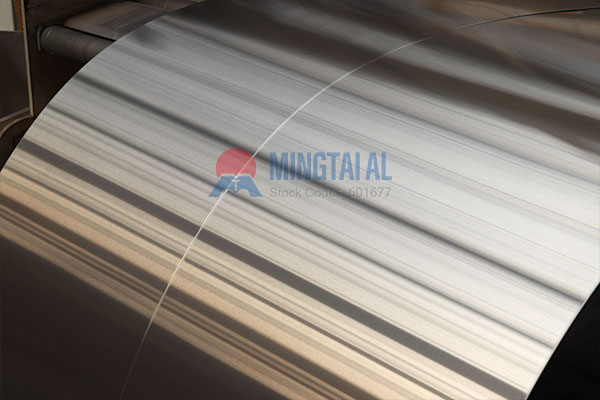
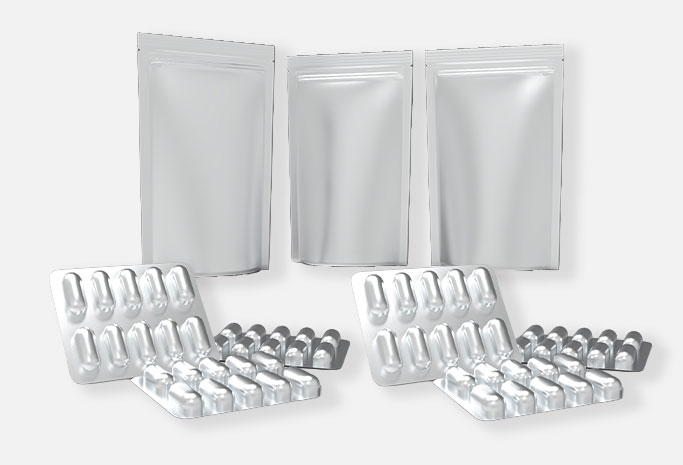
In pharmaceutical solid-dose packaging, Alu-Alu cold-form blister packs are a leading choice when drugs need strong protection from moisture, oxygen, and light. The structure depends on Aluminum Foil for Blister Packaging—especially 8021-O alloy—to create deep cavities and maintain a high barrier. This foil is not simply a cover; it is the functional core that allows the pack to be formed, filled, and sealed reliably.
Why 8021-O Stands Apart from Standard PTP Foil
Standard PTP blister packs often use 8011 aluminum foil. It works well for shallow, heat-formed PVC blisters, but it has limits when the cavity must be deep or irregular.
8021-O medical foil is different. It is made from an aluminum-iron-silicon alloy with tightly controlled iron and silicon content and low impurity levels. This chemistry supports a clean, corrosion-resistant material with a fine grain structure. In practical terms, it gives the foil better toughness and puncture resistance while remaining soft enough to draw.
The “O” temper means fully annealed. The foil is softened through controlled annealing to remove rolling stress and improve plasticity. That soft, uniform condition is what allows cold-form blister foil to stretch into a deep pocket without cracking.
How Aluminum Foil for Blister Packaging Works in an Alu-Alu Structure
An Alu-Alu cold-form blister film is a three-layer laminate. Each layer has a clear job:
1. Outer OPA nylon layer – Provides abrasion resistance and a printable surface for product names, batch details, and anti-counterfeit marks.
2. Middle 8021-O aluminum foil layer – Acts as the forming layer and the main barrier. It is cold-pressed into the cavity and blocks moisture, oxygen, and ultraviolet light.
3. Inner PVC heat-seal layer – Bonds to the backing foil when heat-sealed, creating a closed, separate compartment for each dose.
The key difference from standard PVC blister packs is the forming method. Alu-Alu cold-form packs are shaped at room temperature by mechanical pressure. No heat is needed to soften the forming film. This makes the format suitable for heat-sensitive active ingredients that may be affected by thermal forming.
Because both sides of the finished pack use an aluminum-based barrier, protection is much stronger than a conventional PVC blister with only one aluminum lid. For products that degrade quickly in humid or bright conditions, that extra barrier can be decisive.
Performance Advantages of 8021-O Medical Foil
Deep-Draw Formability
8021-O foil deforms evenly during cold pressing. The bottom and corners of the pocket are less likely to develop cracks, pinholes, or wrinkles. This allows deeper and more complex cavities for large capsules, softgels, and unusual tablet shapes. Better forming also supports smoother high-speed production and less waste.
High Barrier Protection
Aluminum itself blocks light. When 8021-O foil is laminated into an OPA/AL/PVC structure, the finished film provides an almost complete barrier against water vapor, oxygen, and UV light. This helps protect drugs that are hygroscopic, hydrolysis-prone, or light-sensitive, and it supports longer shelf-life targets in demanding climates.
Pharmaceutical-Grade Cleanliness
Medical foil must be clean and consistent. 8021-O foil is produced and slit in controlled environments, with surface cleaning and inspection steps designed for pharmaceutical contact packaging. A clean, oil-free surface supports stable lamination and reduces the risk of contamination, ink migration, or delamination.
Lamination and Heat-Seal Compatibility
The foil surface is uniform and has stable wetting tension, so it bonds well with OPA nylon and PVC adhesive layers. After lamination, the heat-seal window is workable and the seal strength is consistent. This helps prevent weak seals, leaks, and open channels that could expose the product.
Puncture Resistance
Blister packs face vibration and compression during transport. 8021-O foil offers good toughness, helping the formed cavity resist puncture from sharp tablet edges or capsule shells.
Selection Points for Cold-Form Blister Foil
When choosing foil for an Alu-Alu project, focus on the full packaging system rather than one single property.
|
Consideration |
What to review |
Why it matters |
|
Alloy and temper |
8021-O |
Soft, deep-drawable, and barrier-focused |
|
Thickness |
Matched to cavity depth and machine setup |
Deeper cavities usually need more forming support |
|
Cup height |
Verified by cup test |
Helps predict crack resistance |
|
Elongation |
Suitable for cold drawing |
Supports uniform deformation |
|
Surface quality |
Clean, oil-free, consistent |
Improves lamination and sealing |
|
Width |
Custom slitting to equipment |
Reduces setup waste and handling issues |
Where 8021-O Foil Is Commonly Used
- Moisture-sensitive drugs such as certain antibiotics and controlled-release formulations
- Light-sensitive products including selected vitamins and cardiovascular medicines
- Softgel capsules that require deep, rounded cavities
- Export formulations for hot and humid regions where standard PVC blisters may not provide enough protection
- High-value prescription and biologic products with strict stability requirements
Quality Checks That Support Reliable Packaging
For pharmaceutical blister foil, consistency matters as much as performance. Useful checks include thickness uniformity, tensile strength, elongation, cup test, pinhole inspection, surface degreasing, wetting tension, heavy metal content, and extractables or leachables testing. These controls help packaging teams run stable production and meet regulatory expectations.
FAQ
What is Aluminum Foil for Blister Packaging used for?
It forms the cavity and provides the main barrier in a blister pack.
Why choose 8021-O instead of 8011?
8021-O offers better deep-drawing and barrier performance for Alu-Alu cold-form packs.
Is Alu-Alu suitable for moisture-sensitive drugs?
Yes, its all-aluminum barrier greatly reduces moisture and oxygen ingress.
Does cold forming require heat?
No, it forms at room temperature, which suits heat-sensitive drugs.
Can foil thickness and width be customized?
Yes, they can be tailored to the forming equipment and cavity design.
A Reliable Path to Better Drug Protection
8021-O foil brings together deep-draw formability, high barrier protection, and pharmaceutical-grade cleanliness. For Alu-Alu cold-form projects, it is a practical way to protect sensitive medicines through storage and transport. Henan Mingtai Aluminum supplies 8021-O medical aluminum foil with stable quality and customization support. Contact us to discuss your blister packaging requirements.