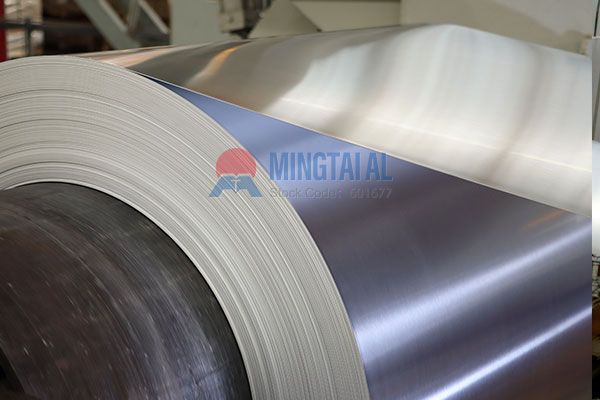
aluminum coil for oil tank
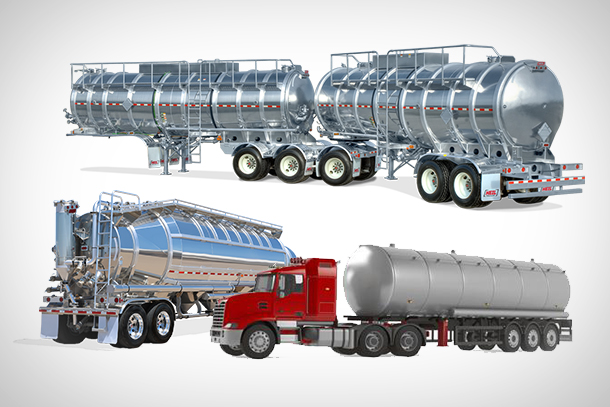
Selecting the right aluminum coil for oil tank bodies is a critical decision—it must deliver structural integrity for safety while reducing deadweight to improve fuel efficiency and payload. 5086 aluminum alloy has proven to be a mature solution that strikes this balance.
What Is 5086 Aluminum?
5086 belongs to the 5xxx series (Al-Mg) of non‑heat‑treatable alloys, with magnesium content between 3.5% and 4.5%. Its strength comes from strain hardening (cold working), not from heat treatment—which means welding does not significantly weaken its mechanical properties. This is a key advantage for tank fabrication. 5086 offers higher strength than 5052 and excellent corrosion resistance. In the H116/H321 temper, typical tensile strength is at least 275 MPa, yield strength ≥195 MPa, and elongation ≥10%.
Safety Compliance: What Market Approvals Does 5086 Meet?
Material selection for tanker bodies largely depends on the regulatory framework of your target market. One major advantage of 5086 is that it is explicitly listed in the safety codes of several key regions.
- North America – For over‑the‑road tankers, the U.S. Department of Transportation (DOT) requires DOT 406 cargo tank bodies to use H32 or H34 tempers. Choosing 5086‑H32 coil directly aligns with this requirement. For marine or shipboard fuel tanks, the U.S. Coast Guard (USCG) also lists ASTM B209 Alloy 5086 as an approved material, with specific minimum wall thickness and design safety factor requirements.
- Europe – EN 14286 is the dedicated standard for weldable rolled aluminium products used in the transport and storage of dangerous goods (petrol and other liquid hydrocarbons). It covers technical delivery conditions, mechanical properties, and dimensional tolerances—and 5086 falls within its scope.
- Other markets – 5086 coil is commonly supplied to ASTM B209, EN 573, EN 485, and JIS standards. For marine applications, it can be certified by classification societies such as ABS, CCS, or BV. No matter where your market is, 5086 provides a traceable compliance path.
Common Tempers for Tanker Bodies
The most widely used tempers for oil tanker bodies are H116, H321, and H32.
- H116 and H321 are specially controlled tempers designed for marine and transportation service, offering improved resistance to exfoliation corrosion and stress‑corrosion cracking.
- H32 is also a well‑accepted choice, providing a good balance of strength and formability.
5086 vs. 5083: How to Choose?
Both alloys are high‑magnesium 5xxx series products with very similar properties. 5083 has slightly higher mechanical strength due to its marginally higher manganese content. However, for tanker body applications, one key difference matters: 5086 exhibits better resistance to stress‑corrosion cracking in the weld zone than 5083. Tank bodies endure cyclic loading and corrosive media over their lifetime, and the weld area is often the most vulnerable point. This difference can have a real impact on long‑term safety. Both alloys are viable—the final choice should be based on specific operating conditions, design requirements, and cost considerations.
Lightweighting: Commercial Value Beyond Safety
Aluminum has a density of about 2.66–2.71 g/cm³—roughly one‑third that of steel. Replacing a steel tank with an aluminium one can reduce the total vehicle weight by 1‑2 tons. This directly translates to higher payload capacity and lower fuel consumption. In an industry where gross weight limits are strictly enforced, this advantage converts into tangible operating savings.
Specifications at a Glance
Typical dimensions for 5086 aluminum coil:
- Thickness: 0.20 – 8.00 mm
- Width: 100 – 2650 mm
- Inner diameter: Ø505 mm or customised
Thickness tolerances generally follow ASTM B209 (±10%). Final selection should be integrated with tank design, regulatory requirements, and manufacturing processes.
FAQ
Q1: Which international standards apply to 5086 aluminum coil?
A: ASTM B209, EN 573, EN 485, GB/T, and JIS; marine grades can also get ABS, CCS, or BV classification.
Q2: What is the minimum wall thickness for a 5086 oil tanker body?
A: China’s national standard requires at least 5 mm; the USCG mandates 0.250 inch (approx. 6.35 mm) for 5086 fuel tanks.
Q3: Which is better for tanker bodies—5086 or 5083?
A: 5086 offers better stress‑corrosion cracking resistance in welds, while 5083 is slightly stronger—choose based on your specific service conditions.
Q4: What tempers are most common for 5086 tanker coils?
A: H116, H321, and H32 are the most frequently specified.
Q5: Is there a temperature limit for 5086 aluminium?
A: Avoid prolonged exposure to temperatures around 60‑100°C (140‑212°F), as this may degrade its performance.
Mingtai Aluminum supplies 5086 coil for oil tank applications, fully compliant with ASTM B209, EN 14286, and other relevant standards—available with full certifications and custom dimensions. Feel free to contact us for detailed specifications.