3105 vs 3003 aluminum sheet
When comparing 3105 vs 3003 aluminum sheet, the two alloys are often mentioned together—both belong to the 3000 series (aluminum‑manganese), both are non‑heat‑treatable, and both offer excellent corrosion resistance and weldability. Yet they differ in strength, formability, and preferred applications. This article breaks down the key differences from four angles: composition, mechanical properties, processing characteristics, and real‑world uses—so you can make a confident material choice.
Composition: Where the Difference Starts
The nominal compositions are close, but small element variations drive performance.
- 3003: Manganese (Mn) 1.0%–1.5%, with a small amount of copper (Cu) 0.05%–0.20%. Manganese is the primary strengthening element.
- 3105: Manganese 0.3%–0.8%, plus magnesium (Mg) 0.2%–0.8%.
Key takeaway: 3003 has higher manganese, while 3105 gains extra strength from magnesium. Neither alloy can be strengthened by heat treatment—only by cold working.
Mechanical Properties: 3105 Slightly Stronger, 3003 More Ductile
Looking across common tempers, the property ranges are:
|
Property |
3003 |
3105 |
|
Tensile Strength |
110–240 MPa |
120–240 MPa |
|
Yield Strength |
40–210 MPa |
46–220 MPa |
|
Brinell Hardness |
28–65 |
29–67 |
|
Elongation |
1.1%–28% |
1.1%–20% |
|
Density |
2.8 g/cm³ |
2.8 g/cm³ |
Observations:
- 3105 shows slightly higher tensile, yield, and fatigue strength.
- 3003 offers a higher elongation ceiling (28% vs. 20%), meaning better performance in severe deformation processes.
- Thermal properties (melting point, thermal conductivity) are very similar.
Formability and Weldability
Formability
3003 is the more mature choice for deep drawing and stretching—processes that demand high plasticity. 3105 also forms well, but it is more often specified for continuous roll‑forming operations, such as profiled sheets, prepainted coils, and roll‑formed building products.
Weldability
Both alloys have excellent weldability with all common methods. MIG and TIG are recommended. 3105 has an edge in marine or highly corrosive environments due to its slightly better corrosion resistance.
> *(We focus on supplying aluminum sheets and do not offer surface treatment or secondary processing services.)*
Typical Applications: Each Finds Its Niche
Common uses for 3003:
- Food and chemical equipment, storage tanks, pressure vessels
- Kitchen utensils and cookware
- Truck fuel tanks, garage doors, decorative trim
- General sheet metal work
Common uses for 3105:
- Building siding, roofing, rainwater systems
- Manufactured housing
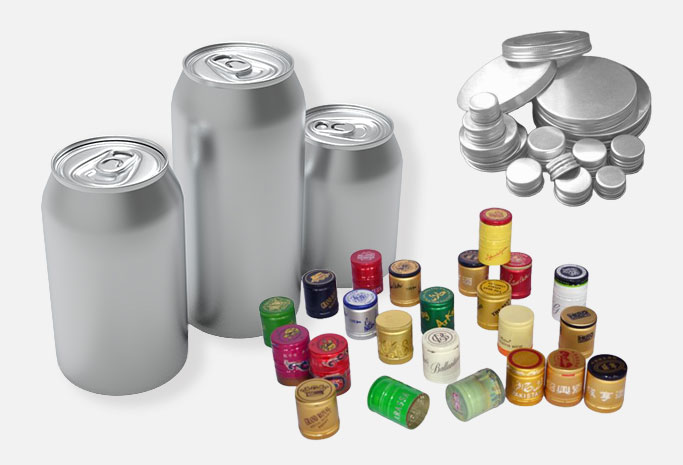
- Bottle caps, closures, and stamped parts
- Appliance housings, signboards, and decorative panels
How to Choose?
|
Consideration |
Prefer 3003 |
Prefer 3105 |
|
Strength needed |
Moderate |
Slightly higher |
|
Forming process |
Deep drawing, stretching |
Roll‑forming, continuous bending |
|
Application field |
Chemical, food equipment, general parts |
Building envelopes, roofing, caps, appliances |
|
Corrosion environment |
Normal atmosphere |
Marine or aggressive conditions |
In short: Both alloys offer good corrosion resistance and weldability for medium‑strength requirements. The difference is that 3003 is the all‑around workhorse, while 3105 excels in specific niches—especially building products and formed closures.
Making the Right Choice for Your Project
The choice between these two alloys ultimately comes down to your forming method and service environment. If your part involves complex deep drawing, 3003 is the safer bet. If you need slightly higher strength and your process uses roll‑forming or stamping, 3105 may give you better performance at a similar cost. Always consider the specific temper (O, H14, H16, H18, H24, etc.) because mechanical properties vary significantly within each alloy. And when you revisit the question of 3105 vs 3003 aluminum sheet, remember that the best answer is the one that matches your production line and end‑use conditions—not just a generic preference.
FAQ
Q1: Which is stronger, 3105 or 3003?
A: 3105 has slightly higher tensile and yield strength, typically within 10%.
Q2: Can 3105 replace 3003 directly?
A: In many general applications yes, but for deep drawing stick with 3003; for building exteriors or higher strength, choose 3105.
Q3: Are both alloys weldable?
A: Yes, both weld excellently; MIG and TIG are recommended.
Q4: Is 3105 more expensive than 3003?
A: Prices fluctuate, but 3105 is usually a bit higher—check current market quotes.
Mingtai Aluminum supplies a full range of 3003 and 3105 sheets in various tempers and thicknesses. Contact us for technical support and competitive quotations tailored to your project.