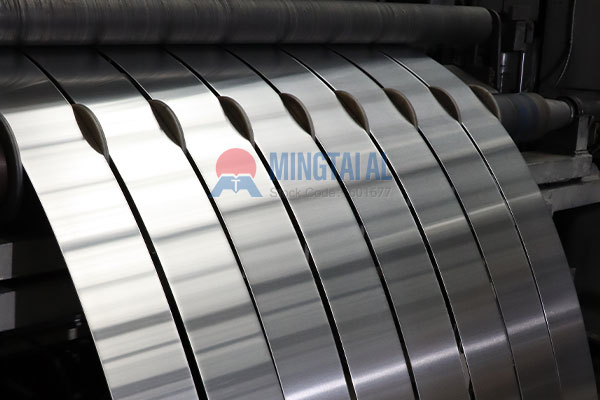
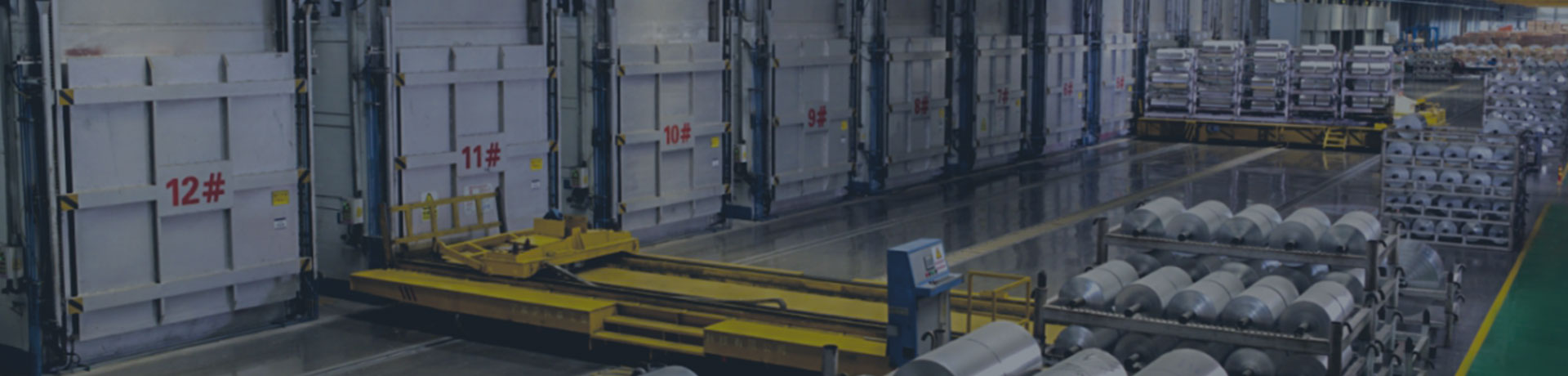
aluminum strip for spacer
When it comes to insulated glass units, the spacer bar may be small, but it plays a critical role. The material used—aluminum strip for spacer—directly impacts thermal performance and service life. Among all options, 3003 aluminum alloy has become the global standard. Why? Let’s break it down.
Alloy Composition: The Manganese Advantage
3003 is an Al-Mn alloy, with manganese content typically between 1.0% and 1.5%. This single addition transforms the metal’s performance.
Compared to pure aluminum (1060 or 1100), 3003 offers roughly 20% higher strength. In practice, that means:
- Less deformation during bending
- Better load‑bearing capacity over time
- No risk of sagging inside the glass unit
Yet it doesn’t become brittle or hard to work—keeping formability intact.
Corrosion Resistance: Built for the Outdoors
Spacer bars live in a harsh environment: temperature swings, humidity, and constant exposure to air. If the metal corrodes, the seal fails—leading to gas leakage and foggy glass.
3003 aluminum stands up to atmospheric corrosion exceptionally well. It stays stable in moist conditions, resists oxidation, and—most importantly—does not react with the desiccant inside the cavity. That keeps the molecular sieve active and the unit dry for years.
Formability and Weldability: Smooth Processing
Manufacturing spacer bars involves roll‑forming and high‑frequency welding. 3003 performs reliably in both stages:
- Bending – can be continuously bent into any angle without cracking at corners
- Welding – compatible with high‑frequency, TIG, and MIG processes; high‑frequency welding does not alter the molecular structure, so the desiccant remains fully functional
- Dimensional stability – maintains flatness, straightness, and consistent shape throughout the coil
These properties translate directly to higher production yields and fewer rejects.
What to Look for When Sourcing 3003 Strip
Not all 3003 coils are equal. Even with the same alloy designation, quality can vary significantly. Here are the key checkpoints:
- Surface condition – should be bright, smooth, and free of excessive oil or scratches. Heavy oil residue can compromise adhesion and seal integrity.
- Thickness tolerance – typical wall thickness for spacers is 0.3–0.35 mm, with a permissible deviation of ±0.025 mm. Even small variations affect sealing.
- Straightness – poor straightness leads to misalignment during continuous bending, causing frame distortion.
- Alloy verification – genuine 3003 must have manganese in the 1.0%–1.5% range. Always request a mill test certificate or third‑party analysis.
What Sets 3003 Apart
In short, 3003 aluminum strip for spacer delivers the best balance of strength, corrosion resistance, formability, and cost. It outperforms pure aluminum where it matters, yet avoids the over‑engineering and higher price of 5xxx series alloys. It meets every technical requirement of a spacer bar—without excess, without compromise.
For reliable 3003 aluminum strip supply that meets the stringent demands of insulated glass spacer production, Mingtai Aluminum offers consistent quality and dimensional precision you can count on.
FAQ
Q: Why is 3003 aluminum preferred over pure aluminum for spacer bars?
A: It provides about 20% higher strength while keeping excellent bendability—the ideal trade‑off for this application.
Q: Can 3003 be used for both bendable and rigid spacer bars?
A: Yes, its bending performance is outstanding, making it suitable for all common spacer styles.
Q: What quality issues should I check when buying 3003 strip?
A: Look for surface cleanliness, tight thickness tolerances, straightness, and verified manganese content.