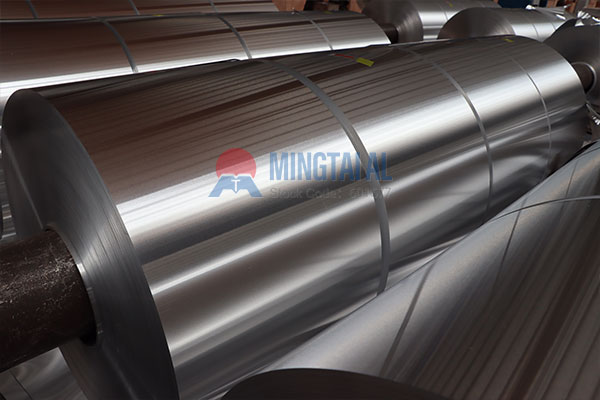
8079 o aluminum foil
For pharmaceutical packaging, 8079 o aluminum foil has become a preferred choice for many manufacturers. But what makes it stand out? This article focuses on the real questions—alloy selection, the meaning of the O temper, barrier performance, and suitable applications.
What Distinguishes 8079 from 8011 and 1235?
This is a key question in material selection. 8079 belongs to the 8000‑series Al‑Fe‑Si alloys, with silicon controlled at 0.05–0.30% and iron at 0.7–1.3%. This precise ratio forms dense intermetallic compounds during rolling, directly affecting the foil’s microstructure integrity.
Compared with 8011 and 1235, 8079 shows clear advantages in three areas:
- Pinhole control – significantly lower pinhole frequency. Even a single through‑pinhole can allow oxygen and moisture to penetrate, compromising drug efficacy.
- Barrier performance – offers comprehensive protection against oxygen, moisture, and UV light.
- Formability at thin gauges – retains good formability even in very thin specifications, suitable for precision applications like mini‑dose blisters.
In short, 8079 sets a higher standard across pinhole control, barrier, and formability—not just a marginal improvement.
Why Does the O Temper Matter?
The “O” stands for fully annealed (soft) temper, achieved through high‑temperature soaking to eliminate work hardening and residual stress. For pharmaceutical packaging, the O temper delivers concrete benefits:
- Crack‑free forming – excellent elongation allows deep‑drawn blister cavities without cracking or wrinkling.
- High‑speed line compatibility – no spring‑back, smooth feeding on high‑speed packaging machines, and stable forming.
- Reliable sealing – better adhesion with adhesives and heat‑seal coatings, ensuring strong seal integrity.
The O temper is not just about softness—it ensures crack‑free deep drawing, reliable sealing, and smooth operation on high‑speed lines.
Barrier Performance – Key Metrics at a Glance
The barrier capability of 8079‑O foil can be evaluated across four key areas:
1. Oxygen barrier – The foil itself is an excellent oxygen shield. Its dense metallic structure keeps oxygen transmission rates extremely low, preventing oxidative degradation.
2. Moisture barrier – Moisture is a leading cause of drug failure. This foil also offers extremely low water vapor transmission, effectively protecting against humid environments.
3. UV barrier – Aluminum naturally provides complete light‑blocking properties, 100% shielding UV and visible light—critical for photosensitive drugs.
4. Pinhole control – Pinholes are the only weakness in barrier integrity. The 8079 alloy forms a more uniform grain structure during rolling, significantly reducing pinhole formation and ensuring a continuous barrier layer.
These four metrics together determine whether the foil can reliably protect the drug—a failure in any one area can affect final stability.
Which Pharmaceutical Applications Suit 8079 O?
The most common applications include:
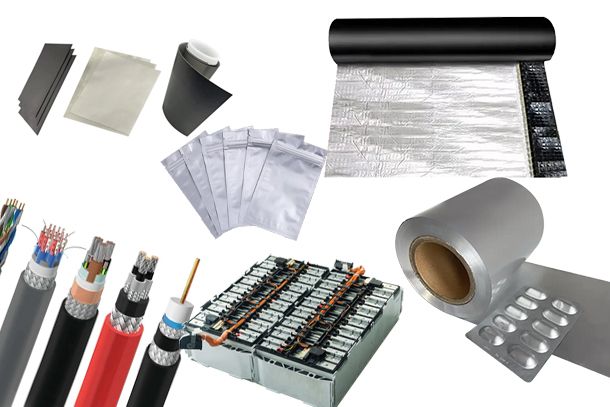
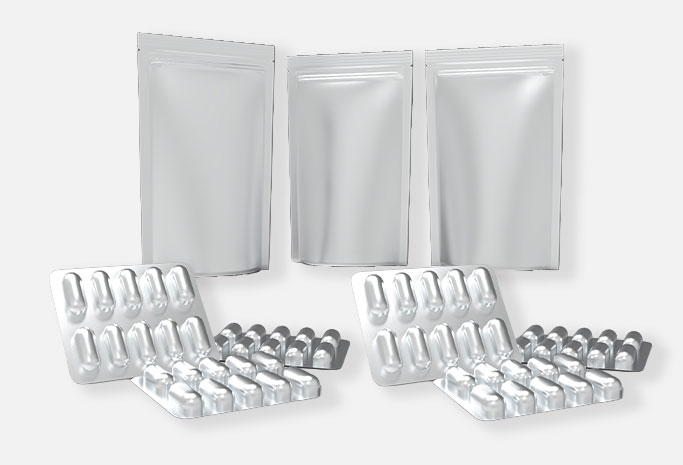
- PTP blister packaging (Press‑Through Packaging) – used as the lid material, combined with PVC or PVDC to seal tablets and capsules, isolating external contaminants.
- Cold‑formed blister (Alu‑Alu) – typically in thicknesses of 0.025–0.08mm. Its high barrier and excellent cold formability make it ideal for highly sensitive drugs such as biologics, injectables, and products requiring extreme moisture protection.
- Tropical blister packaging – designed for hot and humid markets, the moisture and oxygen resistance of this foil ensures drug stability even in harsh environments.
From standard tablets to high‑sensitivity biologics, 8079 O covers the full spectrum from “standard protection” to “maximum protection.”
Specifications and Processing Compatibility
Thickness and width can be customized according to production requirements. In practice, the foil is often laminated with PVC, PVDC, or nylon, or coated to meet heat‑seal requirements.
With a smooth, clean surface and uniform texture, 8079‑O foil offers strong adhesion with various adhesives and coatings, making it highly compatible with downstream lamination and coating processes.
*(Note: This article describes the base foil as a raw material; surface treatment or further converting services are not covered.)*
Regulatory Compliance – Which Standards Are Met?
High‑quality 8079 foil typically complies with several international standards:
- FDA 21 CFR – US food contact standard
- EU 10/2011 – EU food contact regulation
- USP <661> and EP 3.1.11 – pharmacopoeia standards
- ISO 9001 – quality management system certification
It is non‑toxic and odorless, meeting both food‑grade and pharmaceutical‑grade safety requirements. This foil is not a vague promise of compliance—it meets auditable FDA, EU, USP, and ISO standards.
From alloy chemistry to annealing, from pinhole control to barrier metrics, every performance aspect of 8079 o aluminum foil addresses one central question: how to offer the most dependable protection for sensitive drugs. For those evaluating pharmaceutical packaging materials, understanding these technical reasons and performance data is far more valuable than simply scanning a data sheet.
Henan Mingtai Aluminum supplies a comprehensive range of this alloy in various thicknesses and widths to fit diverse packaging needs. Reach out for more details.
FAQ
Q: What is the main advantage of 8079‑O over 8011 for pharmaceutical use?
A: It provides lower pinhole rates and superior barrier properties, making it preferable for highly sensitive drugs.
Q: What thickness is typical for blister packaging?
A: Usually between 0.020mm and 0.080mm, with 0.025mm common for PTP.
Q: Does 8079‑O foil meet FDA requirements?
A: Yes, it complies with FDA 21 CFR, EU 10/2011, and USP standards.
Q: Why is O temper preferred over hard temper?
A: O temper offers better elongation and formability for deep‑drawn blisters without cracking, suitable for high‑speed lines.