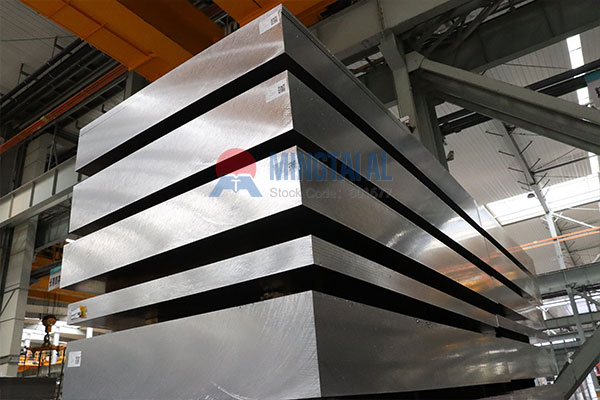
6082 t651 aluminum plate
A common problem in machining shops is warping or distortion after extensive milling of a thick aluminium plate. Hours of precision work go out of tolerance, and the entire batch turns into scrap. The issue is not the machine or the programming – it originates inside the material itself, specifically the internal residual stress locked in the 6082 t651 aluminum plate.
What Does T651 Actually Do?
6082 is an Al‑Mg‑Si alloy that can be strengthened by heat treatment. The T651 temper designation means the plate goes through three steps: solution heat treatment, stretching to relieve stress, and artificial ageing.
The key difference is this:
- T6 only heat‑treats to peak strength.
- T651 adds a stretching operation after solution treatment.
This stretching applies a controlled deformation that actively releases internal stresses accumulated during casting, hot rolling, and quenching. The result is a plate with very low residual stress, which maintains excellent flatness even after large‑area milling.
Why Thick Plates Benefit Most from Stress Relief
Thick plates carry far greater internal residual stress than thin ones.
Why? During casting and hot rolling, thicker sections cool unevenly – different zones experience different thermal histories, so they build up more internal forces.
More importantly, thick plates require removing much larger volumes of material in subsequent machining. When hundreds of kilograms are milled away, the trapped stresses are suddenly released, and the plate warps.
This is precisely why T651 is most valuable for heavy plates: it eliminates the bulk of residual stress beforehand, so the material stays stable under heavy cuts.
Key Performance Advantages
In the T6/T651 condition, 6082 achieves a high tensile strength level and shows clear overall improvement over 6061. Among 6xxx alloys, 6082 ranks on the higher side for strength.
Other essential properties include:
1. Good machinability – stable cutting, drilling, and milling behaviour.
2. Reliable weldability – compatible with TIG and MIG processes.
3. Stable corrosion resistance – the manganese content enhances durability.
4. Excellent dimensional stability – T651 flatness is superior to T6.
Primary Application Fields
Any scenario that involves heavy loads, dynamic forces, or high‑precision machining is a natural fit for this stress‑relieved thick plate. Typical examples are:
- Bridges and large structures – highway trusses, long‑span roof trusses, crane beams in heavy factories.
- Lifting and logistics equipment – crane booms, tower crane components, heavy‑duty racking columns.
- Transportation – truck chassis cross‑members, high‑speed train underframes, battery trays for electric vehicles.
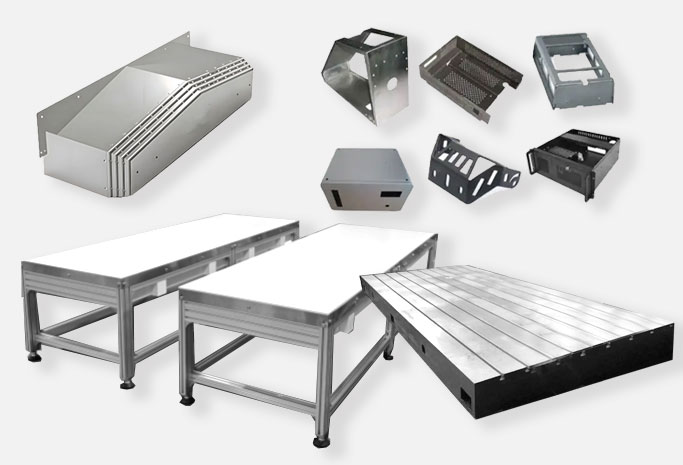
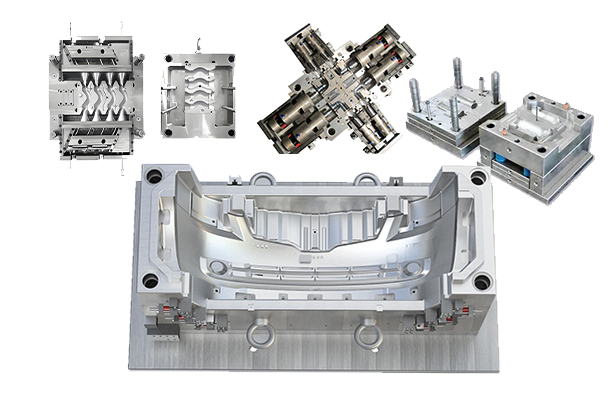
- Heavy machinery – large machine tool beds, equipment bases, transmission brackets.
- Pressure vessels and marine engineering – chemical storage tanks, offshore platform structural parts.
What these uses have in common is a critical requirement: dimensional stability must be exceptionally high. Even slight distortion after machining can cause assembly problems; instability during service poses safety risks. T651 stress relief is designed precisely to meet these demands.
Note on Processing Capabilities
We focus on supplying aluminium plate and do not offer surface treatment or further processing services – those steps are handled by our customers according to their own requirements.
Henan Mingtai Aluminum offers 6082 t651 aluminum plate in a wide range of thicknesses and widths, backed by ISO 9001, IATF 16949 and AS9100D certifications. Contact us to discuss your specific specifications.
FAQ
Q: What is the real difference between T651 and T6?
A: T6 gives peak strength through heat treatment, while T651 adds a stretching step to reduce residual stress, making it less prone to distortion during machining.
Q: Why do thick plates need T651 more than thin ones?
A: Thick plates have higher internal stresses and lose more material during machining, so stress relief is essential to prevent warping after heavy milling.
Q: Is 6082 T651 suitable for welding?
A: Yes, it works well with TIG and MIG welding, and weld strength can reach a large portion of the base material.
Q: How does 6082 compare with 6061?
A: 6082 offers higher strength within the 6xxx series and shows a clear overall improvement over 6061 in mechanical properties.