5754 Five-Bar Aluminum Tread Plate
Wind turbine tower stairs are rarely dry. Temperature changes inside the tower pull moisture from the air, condensation settles on step surfaces, and maintenance crews climb in conditions that punish ordinary flooring. This is where 5754 Five-Bar Aluminum Tread Plate earns its place: the raised five-bar pattern breaks up water films, while the 5754 aluminum-magnesium base resists the corrosion that shortens the life of lesser alloys. It is not a decorative finish. It is a working safety surface for a demanding indoor-outdoor environment.
What the Five-Bar Pattern Does
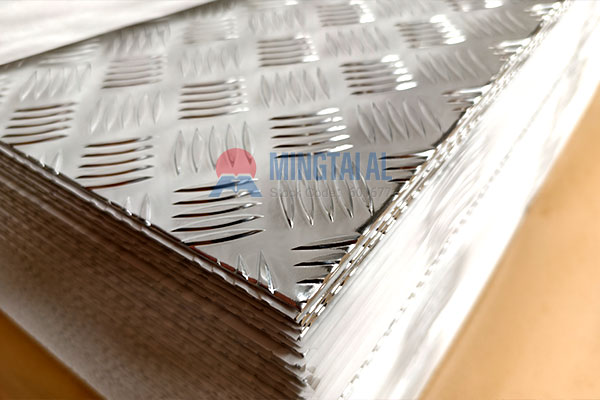
Tread plate starts as flat aluminum sheet. Patterned rolls then press a raised profile into one face, while the reverse side stays smooth. That single mechanical step turns a flat panel into a surface with traction.
The five-bar pattern is one of the most widely used slip-resistant profiles in industrial settings. Repeated raised bars give boot soles something to bite against and interrupt the film of water, oil, or dust that would otherwise turn a step into a slide.
Aluminum tread plate is commonly grouped into three alloy families:
- 1xxx series (1100, 1060): soft, inexpensive, easy to form; best for light indoor duty.
- 3xxx series (3003, 3105): moderate strength and some corrosion resistance; a practical middle ground for truck beds and general walkways.
- 5xxx series (5052, 5754, 5083): higher strength, excellent corrosion resistance, and good weldability; the choice for wet, salty, or load-bearing service.
Big Five-Bar or Small Five-Bar?
Not all five-bar patterns behave the same. The two common variants differ mainly in bar height and spacing.
|
Feature |
Big five-bar |
Small five-bar |
|
Bar height |
Taller |
Lower |
|
Spacing |
Wider |
Tighter |
|
Grip |
Stronger in wet or oily conditions |
Moderate |
|
Surface |
More textured |
Flatter and easier to clean |
|
Typical use |
Tower stairs, heavy-duty platforms |
Indoor walkways, light-duty panels, decorative work |
For wind turbine tower stairs, the big five-bar profile is usually the better fit. The taller bars give crews a clearer mechanical grip when condensation is present, without depending on the surface staying dry.
Why 5754 H114 Works on Tower Stairs
Condensation is constant. Inside a tower shell, moisture has little chance to escape. A tread pattern that only works on dry floors is not enough. The raised bars on 5754 five-bar sheet keep a useful grip even when the surface is damp.
Corrosion resistance matters. 5754 is an aluminum-magnesium alloy with enough magnesium to raise strength and improve resistance to seawater and polluted atmospheres. Compared with 5052, 5754 offers better resistance to saltwater and crevice corrosion, which helps in enclosed, damp spaces where moisture lingers in joints and lap areas.
H114 keeps fabrication practical. H114 is a tread-plate temper that balances formability and strength. Fabricators can shear, punch, and bend the sheet into stair treads, landings, and platform panels without cracking. The material also welds well, so stringers, nosing bars, and support brackets can be joined in the shop or on site.
Aluminum keeps the structure lighter. Steel treads are strong, but they add weight. Aluminum tread plate is much lighter than steel for the same volume, which reduces dead load and makes lifting, positioning, and installation easier during tower construction.
Where It Is Used
The same mix of grip, corrosion resistance, and weldability carries into other service environments:
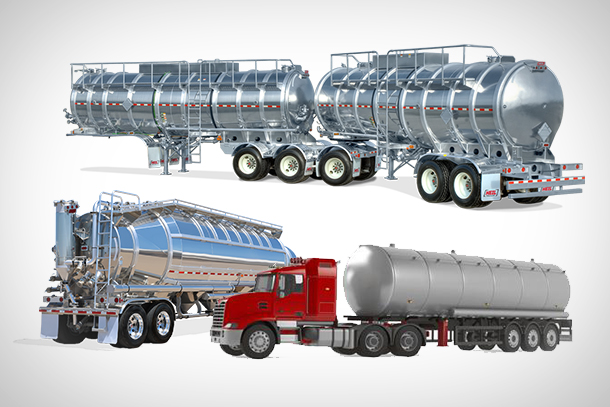
- Truck and trailer beds exposed to road spray and cargo abrasion
- Marine walkways, vessel interior stairs, and dock platforms
- Cold storage floors, ramps, and refrigerated work areas
- Industrial maintenance platforms, catwalks, and inspection landings
- Coastal equipment platforms where salt spray is a daily condition
In each case, the selection logic is simple: use 3xxx tread plate where cost and moderate corrosion resistance are enough; use 5052 for general marine exposure; choose 5754 where condensation, salt, or crevice moisture is persistent and long-term maintenance access is difficult.
Specifying the Plate
A clear specification prevents most delivery problems. Before ordering, confirm the pattern variant, the base metal thickness, the pattern height, the temper, and the edge condition. Trade thickness usually refers to the base sheet, not the raised bar height, so both values should be stated for structural steps.
Also check pattern quality. Good tread plate has continuous, unbroken bars, consistent pattern depth, minimal surface oil, and no roll marks or oxide patches that could affect bending or appearance.
FAQ
Q: What is the difference between big five-bar and small five-bar tread plate?
A: Big five-bar has taller, wider-spaced bars for stronger grip in wet or heavy-traffic areas, while small five-bar is flatter and finer for lighter indoor use.
Q: Why choose 5754 over 5052 for a wind tower stair?
A: 5754 has higher magnesium content, which gives it better resistance to saltwater and crevice corrosion in damp tower interiors.
Q: Can 5754 five-bar tread plate be welded?
A: Yes, 5754 welds well by gas, arc, and resistance methods and retains useful strength in stair and platform fabrication.
Q: Does aluminum tread plate rust?
A: Aluminum does not rust like steel, but wet or salty conditions can produce white oxide spots, so 5xxx alloys are preferred in harsh service.
Q: What does H114 temper mean for tread plate?
A: H114 is a tread-plate temper that balances formability and strength, allowing bending and cutting without cracking.
Q: Is the listed thickness the base metal or the raised pattern?
A: Trade thickness normally refers to the base sheet, not the raised bar height, so both should be confirmed when specifying.
Q: What surface defects should be checked on delivery?
A: Check for continuous bars, consistent pattern depth, low surface oil, and no roll marks or oxide patches.
For consistent pattern quality and reliable supply of 5754 Five-Bar Aluminum Tread Plate, Henan Mingtai Aluminum Industry works with fabricators and project teams from specification through shipment. They can confirm alloy, temper, pattern, and base thickness before production.