aluminum tread plate 5 bars
Introduction: Understanding the 5‑Bar Pattern
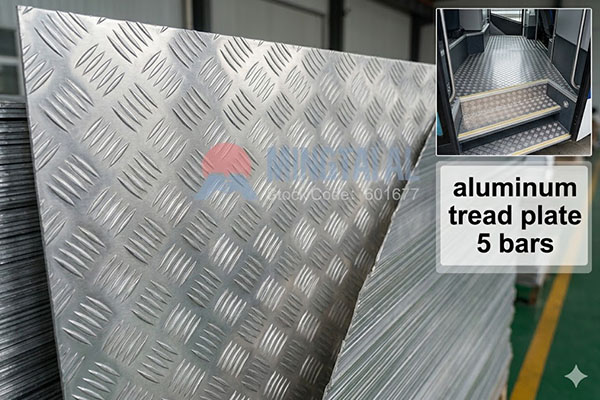
The aluminum tread plate 5 bars is an aluminium sheet with five parallel raised ridges on its surface. These ridges are set at a slight angle, looking like willow leaves – hence names like “willow leaf pattern” or “five‑rib tread plate”. It is also called checker plate or tread plate. The main benefits: anti‑slip, lightweight, and rust‑proof. That is why it is used for truck floors, industrial walkways, ship decks, and stair treads.
It is widely used for truck floors, industrial walkways, ship decks, and building stair treads. Why? Because it is much lighter than steel, never rusts, and provides reliable grip even when wet.
Why Does the 5‑Bar Pattern Prevent Slipping?
The five tilted ribs create multiple surfaces that resist foot or tyre movement, increasing friction. Gaps between the ribs let water, mud, and oil drain away quickly – an advantage over full diamond plates. Other patterns include single‑rib, three‑rib, large five‑rib (42 mm long) and small five‑rib (34 mm long). The small five‑rib is most popular, balancing slip resistance, easy cleaning, and manufacturing cost.
Which Alloy to Choose? Different Grades for Different Jobs
An aluminum tread plate is about two‑thirds lighter than a steel tread plate, and it resists corrosion naturally – aluminium forms a protective oxide layer, so no painting or coating is needed. Steel requires galvanising or special coatings to prevent rust.
Different aluminium alloys have different strengths:
- 1060 / 1100 (pure aluminium) – good formability, low cost. Suitable for decorative panels, light‑duty enclosures, and tool cabinet skins.
- 3003 (aluminium‑manganese) – balanced properties, good corrosion resistance. Often used for general industrial flooring and truck beds.
- 5052 (aluminium‑magnesium) – higher strength and excellent seawater resistance. Ideal for boat decks, cold storage rooms, and humid environments.
- 5754 (higher strength Al‑Mg) – stronger than 5052. Widely used for lorry floors, outdoor walkways, and heavy‑duty industrial flooring.
- 6061 (Al‑Mg‑Si) – heat‑treatable for the highest strength. Chosen when load‑bearing requirements are strict.
When selecting, first think about the working environment: for wet or marine conditions, choose 5052 or 5754; for general indoor industrial use, 3003 is fine; for pure decoration, 1060 is enough.
How to Choose the Right Thickness
Thicknesses for this type of plate range from 0.8 mm to 12 mm. Common sizes are 1.5 mm, 2.0 mm, 3.0 mm, 4.5 mm, and 6.0 mm.
|
Thickness |
Recommended Use |
|
1.5 – 2.0 mm |
Wall guards, equipment enclosures, cabinet panels |
|
3.0 – 4.5 mm |
Truck beds, factory floors, stair treads |
|
6.0 mm and above |
Dock platforms, structural flooring, heavy‑load walkways |
For lorry floors, 3 mm to 4.5 mm gives the best value. Industrial platforms usually need 4.5 mm to 6 mm.
Standard Sizes and Approximate Weights
Common sheet sizes:
- Small: 2000 mm × 1000 mm
- Medium: 2500 mm × 1250 mm
- Large: 3000 mm × 1500 mm
Width can go up to 1850 mm, and length can be customised to 16,000 mm or more.
Approximate weight per sheet:
- 3 mm thick: 2000×1000 → ~17 kg; 2500×1250 → ~26.7 kg
- 4.5 mm thick: 2000×1000 → ~25 kg; 2500×1250 → ~39.4 kg
- 6 mm thick: 2000×1000 → ~33 kg; 2500×1250 → ~52 kg
Weight is nearly linear with thickness, so you can easily estimate transport and installation difficulty.
Cutting and Installation Tips
Use a circular saw with a carbide‑tipped blade, a jigsaw, or an angle grinder to cut the plate. For drilling, use cobalt or high‑speed steel (HSS) bits.
After cutting, always smooth the edges with a metal file or deburring tool to avoid sharp edges.
Three common fixing methods: screws/bolts, structural adhesive, or rivets. Before installation, check that the supporting structure is solid, and leave a small gap for thermal expansion – aluminium expands more than steel, so this step matters.
Very Simple Maintenance
Regular cleaning is easy: use warm soapy water and a soft cloth to remove dirt and grease. Never use abrasive cleaners or steel wool – they will scratch the surface.
The natural oxide layer on aluminium is enough to prevent rust, so no extra coating is needed in normal environments. In highly corrosive places (e.g. chemical plants), an additional protective layer may help.
One thing to remember: although the plate is strong, sharp heavy objects can still scratch it. Avoid dragging hard, sharp items across the surface.
Main Applications at a Glance
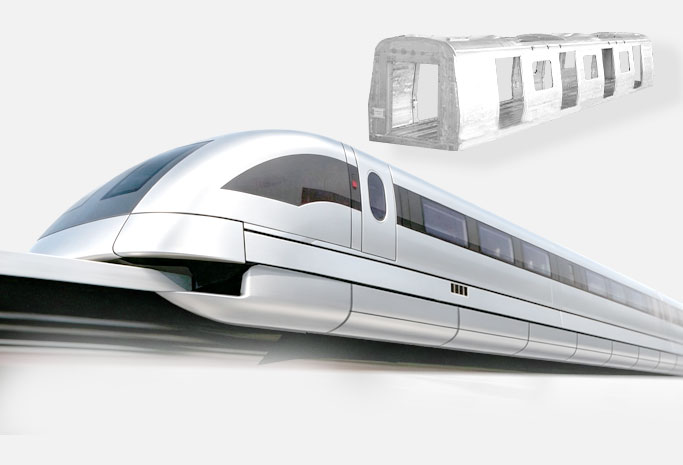
- Transport – truck beds, trailer floors, lorry floors, refrigerated vans, fire engine steps
- Industry & warehousing – factory floors, loading docks, warehouse walkways, equipment covers
- Buildings & public spaces – stair treads, wheelchair ramps, lift floors, anti‑slip flooring in hospitals and shopping centres
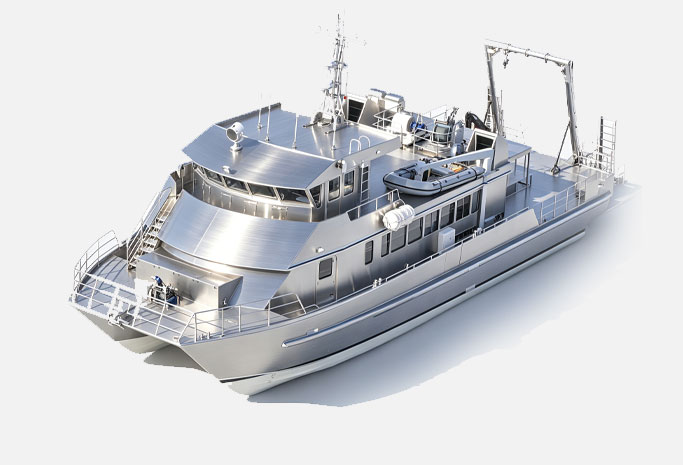
- Marine – ship decks, speedboat floors, offshore platforms (especially in salt water)
- Decorative & home – wall cladding, tool cabinet panels, furniture parts (e.g. fridge shelves, table bases)
When you are ready to source an aluminum tread plate 5 bars for your project, remember that alloy, thickness, and pattern all affect performance and cost.
Mingtai Aluminum supplies a full range of 5 bar aluminum tread plates in various alloys, thicknesses, and custom sizes. For project inquiries or bulk orders, reach out to the Mingtai team.
FAQ
Q1: Is a 5‑bar aluminum tread plate the same as a diamond plate?
A: They are similar, but the 5‑bar has parallel ribs and the diamond plate has a raised diamond pattern.
Q2: Will this plate rust?
A: No. Aluminium forms a natural oxide layer that prevents rust.
Q3: Can it be used outdoors?
A: Yes. Its weather and corrosion resistance make it ideal for outdoor walkways, ramps, and docks.
Q4: Which is better – aluminium or steel tread plate?
A: Aluminium is lighter, rust‑proof, and easier to work; steel is heavier and stronger but needs rust protection.
Q5: What is the most common thickness?
A: 3 mm and 4.5 mm are the most popular – a good balance of strength, weight, and cost.
Q6: Is it suitable for wet environments?
A: Yes. The raised ribs help drain water, and aluminium does not corrode, so it works very well in wet areas.
Q7: Does it need regular maintenance?
A: Almost none. A simple wipe with clean water or soapy water is enough.
Q8: Can it be welded?
A: Yes. Aluminium tread plate has good weldability for making various structures and components.