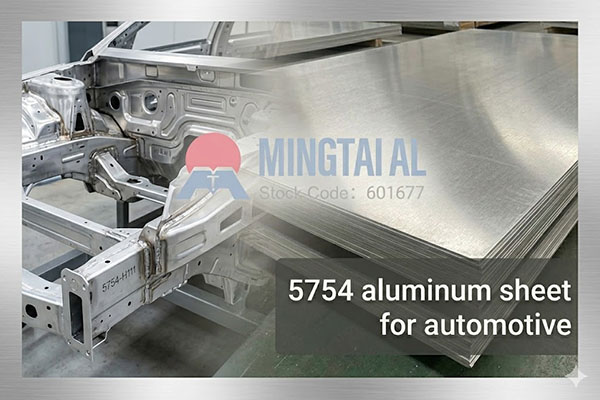
5754 aluminum sheet for automotive
Lightweighting is no longer a future trend—it is a production reality. Automakers and tier suppliers are under constant pressure to cut vehicle weight for better fuel economy, longer EV range, and lower emissions. Among the many aluminum options, 5754 aluminum sheet for automotive stands out not because it is the strongest or the most formable, but because it offers the most balanced combination of properties for real‑world manufacturing. This article walks through why it works, where it is used, and what to check when buying it.
Key Advantages for Automotive Applications
When engineers evaluate a material for production, they look at how it behaves on the assembly line and in service. 5754 delivers on four critical fronts:
- Weight reduction – With a density of about 2.7 g/cm³, 5754 replaces steel on a near‑volume basis, cutting part weight by roughly 20–30%. Every kilogram saved improves efficiency, especially for battery‑electric vehicles
- Corrosion resistance – This alloy belongs to the "rust‑proof" 5xxx series. It handles road salt, moisture, and mud without requiring extra coatings—a major benefit for underbody and exposed panels.
- Forming stability – In the annealed (O) temper, 5754 offers high elongation for deep drawing and complex bends. More importantly, it has lower springback than heat‑treatable alloys because it carries no T‑temper internal stress. That means stamped parts hold their dimensions more consistently, reducing rework.
- Weldability – 5754 welds reliably with MIG or TIG processes. Crack sensitivity is low, and joint strength is sufficient for sealed components like fuel tanks and battery enclosures.
These advantages are not theoretical—they are verified daily on automotive production lines around the world.
Automotive Components That Use 5754
The application range of 5754 covers body, chassis, and new‑energy systems:
Body panels
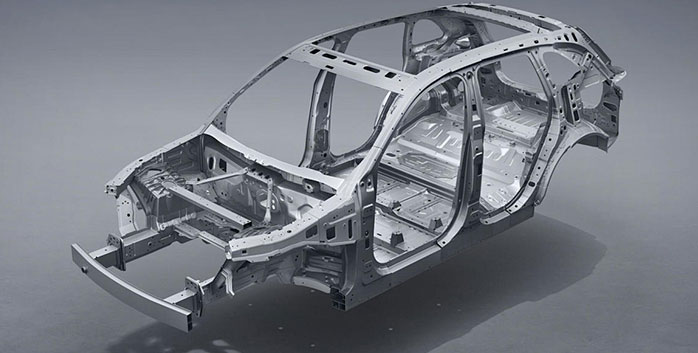
Inner door panels, hoods, and fenders benefit from its formability and corrosion resistance. It is a common choice for outer and inner skin applications where deep drawing is required.
Structural and functional parts
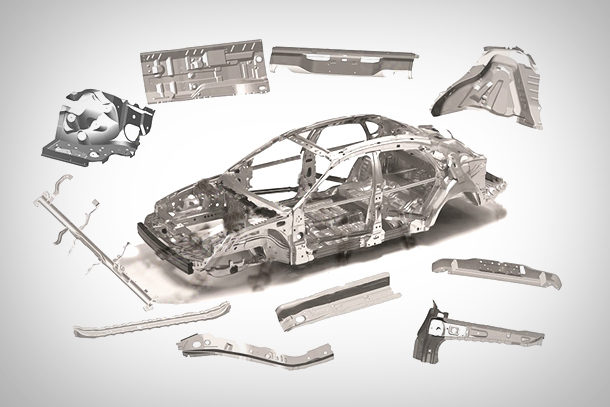
Sill beams, seat frames, chassis reinforcements, fuel tanks, and heat shields all use 5754. Its medium strength and fatigue resistance meet the durability demands of these components.
EV battery systems (fastest‑growing segment)
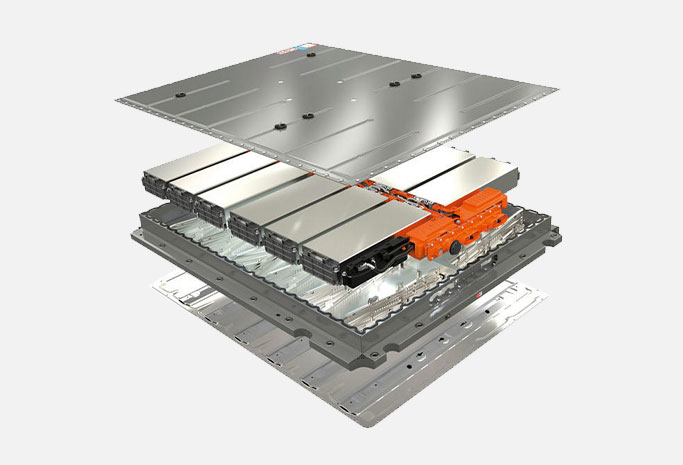
Battery pack covers, motor housing lids, and enclosure components are increasingly specified in 5754. Light weight directly extends driving range, while corrosion resistance and sealable welds protect sensitive electronics.
Commercial vehicles
Tank trailers, truck side panels, and refrigerated van interiors rely on 5754 for its corrosion resistance and weldability in heavy‑duty service.
5754 vs. 5182: Which One Should You Choose?
Within the 5xxx series, 5754 and 5182 are often compared. The distinction is simple:
- 5182 excels in formability – its elongation is higher, making it the go‑to for extremely complex deep‑drawn parts like door inner panels.
- 5754 offers broader balance – it trades a little formability for better strength and corrosion resistance, covering a wider variety of applications.
Choose 5182 when the part shape is exceptionally complicated. Choose 5754 when you need a single alloy that handles strength, corrosion, and forming all at once—it is the more versatile workhorse.
Three Practical Tips for Sourcing 5754 for Automotive
When purchasing 5754 for production, focus on these three points to avoid costly issues:
1. Select the correct temper
O temper (annealed) gives maximum formability for deep‑draw operations. H111/H112 provides light strain‑hardening for a balance of formability and stiffness. H22/H24/H32 offer progressively higher strength. Match the temper to your forming process and final strength requirement.
2. Confirm dimensions carefully
5754 sheet thickness ranges from 0.15 mm up to 600 mm, with widths up to 2650 mm. For automotive, common thicknesses are 0.5–6.0 mm for body panels and 8–20 mm for structural parts and battery trays. Incorrect dimensions disrupt stamping and assembly.
3. Check quality certification
Automotive production demands batch‑to‑batch consistency and full traceability. IATF 16949 is the industry‑recognized quality management standard. A supplier with this certification ensures that every coil meets the same specs, reducing scrap and warranty risks on your line.
FAQ
Q: Why is 5754 preferred over steel for automotive parts?
A: It reduces part weight by 20–30% while providing sufficient strength, corrosion resistance, and weldability for most body and structural applications.
Q: What automotive parts are commonly made from 5754?
A: Door panels, hoods, seat frames, fuel tanks, chassis reinforcements, and EV battery enclosures.
Q: How does 5754 compare to 5182?
A: 5182 has higher formability for very complex deep‑draw parts, while 5754 offers a better overall balance of strength, corrosion resistance, and formability for broader uses.
Q: Which temper is best for stamping 5754?
A: O temper is ideal for complex forming; H111 or H32 are used when higher stiffness is needed after forming.
Q: What certification should I require from a 5754 supplier?
A: IATF 16949 is essential—it guarantees consistent quality, traceability, and process control required by automotive OEMs.
Q: Is 5754 suitable for welding and sealing?
A: Yes, it welds well with MIG/TIG and has low crack sensitivity, making it reliable for fuel tanks and battery pack covers that need leak‑tight joints.
For automotive projects demanding consistent performance and certified quality, 5754 aluminum sheet for automotive delivers. Mingtai Aluminum supplies IATF 16949‑certified 5754 coils and sheets with strict batch‑to‑batch uniformity. Contact us to discuss your specific gauge, temper, and delivery requirements.