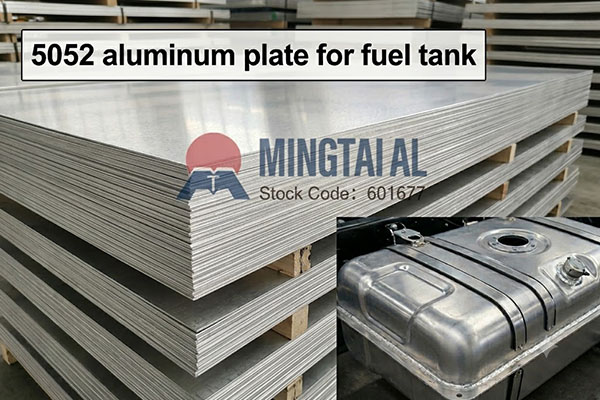
5052 aluminum plate for fuel tank
The Shift to Aluminum Fuel Tanks – and One Material That Leads the Way
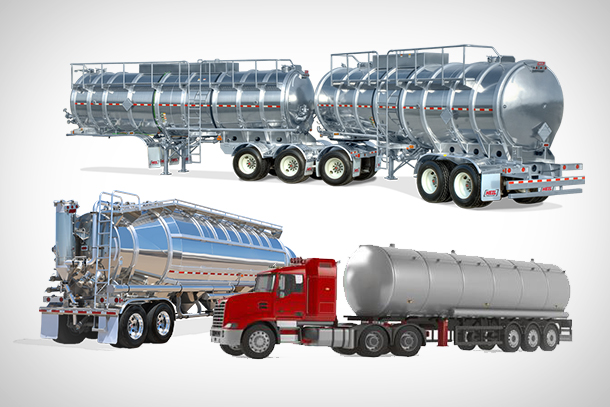
Walk into any modern truck or bus manufacturing plant today, and you will notice a clear change: traditional steel fuel tanks are being rapidly replaced by aluminum ones. In fact, over 80% of heavy-duty trucks and buses now use aluminum fuel tanks, and global brands like Mercedes-Benz and MAN have fully adopted aluminum designs for their vehicles. Behind this shift, one product stands out above the rest – 5052 aluminum plate for fuel tank applications. So what makes this particular alloy the "go‑to" answer for fuel tank builders?
Five Core Advantages That Make 5052 Irreplaceable
5052 is an Al‑Mg anti‑rust alloy containing 2.2–2.8% magnesium. This chemistry gives it a unique set of properties that are hard to match.
① Superior Corrosion Resistance – The Key to a Long‑Lasting Tank
Fuel tanks are constantly exposed to fuel, moisture, and corrosive air. Ordinary steel rusts and perforates quickly. 5052 aluminum naturally forms a dense oxide layer on its surface, which effectively resists sulfides, ethanol, and other aggressive components in fuel. In salt‑spray tests, the corrosion rate of 5052 is about 90% lower than that of plain carbon steel. What does this mean in practice? A 5052 aluminum fuel tank typically lasts over 10 years – more than twice the service life of a comparable steel tank.
② Lightweight Construction – Direct Fuel Savings and More Payload
Aluminium has only about one‑third the density of steel. A fuel tank made from 5052 weighs just 40% of a steel tank with the same capacity. For a heavy‑duty truck, swapping to an aluminum tank cuts weight by 80‑100 kg per unit. Studies show that every 100 kg of weight reduction lowers fuel consumption by roughly 0.4 litres per 100 km. Over the lifetime of a truck, the fuel savings are substantial.
③ Excellent Balance of Strength and Formability
5052 offers tensile strength between 170 and 305 MPa, with elongation remaining at 12‑20%. It has good cold‑forming properties and can be stamped, bent, and deep‑drawn into complex tank shapes. Whether you need the fully soft O temper (ideal for deep drawing) or the popular H32 temper (which gives a great balance of strength and formability), 5052 can meet different design requirements.
④ Outstanding Weldability
Fuel tank fabrication relies heavily on welding, and 5052 is recognised as one of the most weldable aluminium alloys. Using MIG or TIG processes, weld strength can reach over 90% of the base metal. This ensures tight seals and strong structural joints, significantly reducing the risk of fuel leakage.
⑤ Safety and Environmental Friendliness
The alloy’s good ductility means it is less likely to rupture on impact. It also resists sparking and has antistatic properties, which further lowers fire and explosion risks. And when the tank eventually reaches the end of its life, 5052 aluminium can be almost fully recycled.
5052 vs Other Materials – Making the Right Choice
Many buyers struggle with which aluminium grade to pick. Here is a quick comparison:
- vs 3003 aluminium: 5052 is significantly stronger. For example, 3003‑H24 has a tensile strength of 145‑195 MPa, while 5052‑H24 reaches 230‑280 MPa. In short, 5052 is more robust and more durable for demanding tank applications.
- vs 6061 aluminium: 6061 can be heat‑treated for higher strength, but 5052 offers better cold formability and weldability. Since fuel tanks require extensive stamping, bending, and welding, 5052 is the more practical choice.
- vs 5083 aluminium: 5083 contains more magnesium (4.0‑4.9%) and is stronger, but 5052 has better ductility, easier forming, and a more attractive cost profile. For most commercial‑vehicle fuel tanks, 5052 delivers the best value for money.
The verdict: 5052 hits the sweet spot among corrosion resistance, strength, formability, weldability, and cost. For the vast majority of fuel tank applications, it is the most cost‑effective solution.
Real‑World Validation – The Numbers Speak for Themselves
5052 is not a lab‑scale novelty; it is a mature product backed by decades of field use.
- Market adoption: Over 80% of heavy trucks and buses now roll with aluminium fuel tanks. The technology has been proven since the first aluminium fuel tank was produced in Europe in the 1980s – it has stood the test of time.
- Performance data:
- Weight reduction: about 60% versus steel
- Salt‑spray resistance: far superior to ordinary steel
- Service life: 10+ years
- Total lifecycle cost: roughly 30% lower than steel equivalents
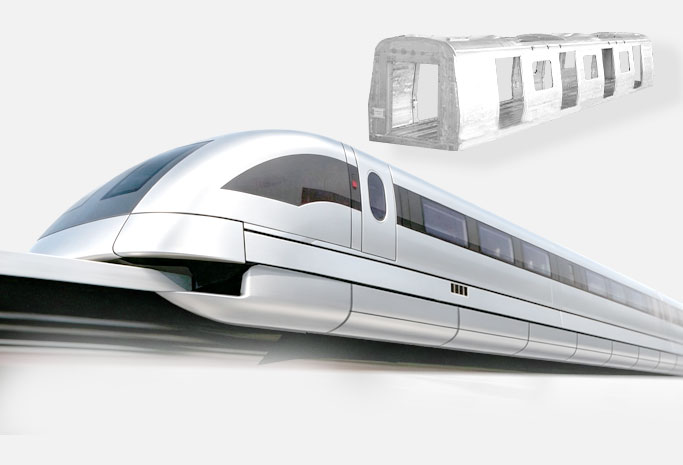
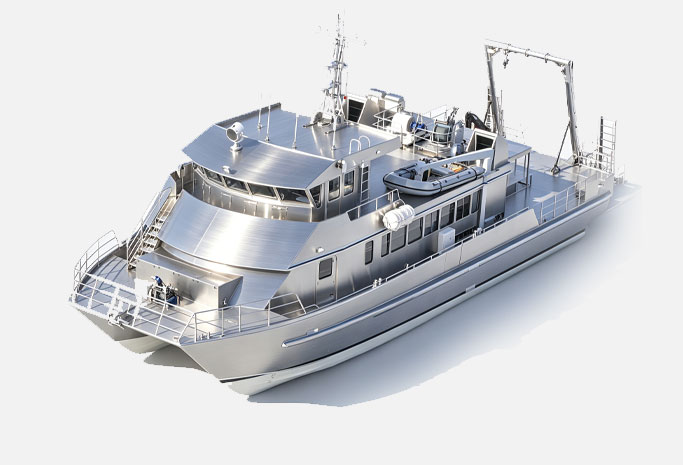
- Application scope: Beyond trucks and buses, 5052 is also widely used in marine fuel tanks, aircraft fuel systems, and piping. From highways to oceans to the sky, its reliability has been thoroughly validated.
Sourcing Tips – How to Choose the Right 5052 Plate
If you decide to go with 5052 for your fuel tank project, keep these points in mind:
- Temper selection: H32 is the top choice for truck fuel tanks – it provides an ideal balance of strength and formability. If deep drawing is required, consider O temper. H34 offers slightly higher strength and is also suitable.
- Size range: Thickness typically ranges from 0.15 mm to 600 mm, with widths up to 2650 mm. You can order custom dimensions to fit your tank design.
- Quality standards: According to the Chinese national standard GB/T 3880‑2012, 5052 aluminium plate is explicitly listed as a fuel‑tank material. Always verify that the product meets this standard and carries relevant quality certifications.
The Bottom Line
To sum up, 5052 aluminium plate offers unbeatable corrosion resistance, significant weight savings, excellent formability and weldability, and proven long‑term reliability – all at a reasonable cost. For fuel tank manufacturers looking for a dependable, high‑performance material, 5052 aluminum plate for fuel tank applications is a choice you can trust.
Mingtai Aluminum supplies a full range of 5052 plates in various tempers and sizes, backed by strong production capacity and quality certifications to support your fuel tank projects. Contact us for more details.
FAQ
Q: Why is 5052 the preferred alloy for fuel tanks?
A: Because it gives the best overall balance of corrosion resistance, strength, formability, weldability, and cost.
Q: What is the difference between 5052‑H32 and 5052‑O?
A: H32 is work‑hardened and partially annealed – ideal for truck tanks; O is fully soft and best for deep‑drawn complex shapes.
Q: How much weight can I save compared to a steel tank?
A: An aluminium tank weighs only about 40% of a steel tank of the same volume – that is a 60% weight reduction.
Q: How long will a 5052 aluminium fuel tank last?
A: Typically over 10 years, which is more than double the life of a typical steel tank.
Q: Is 5052 easy to weld for fuel tank fabrication?
A: Yes, it has excellent weldability with MIG and TIG processes, and weld strength reaches over 90% of the base metal.